Urban Fermentation

Recent Posts

How To Make Super Creamy Yogurt With Heavy Cream


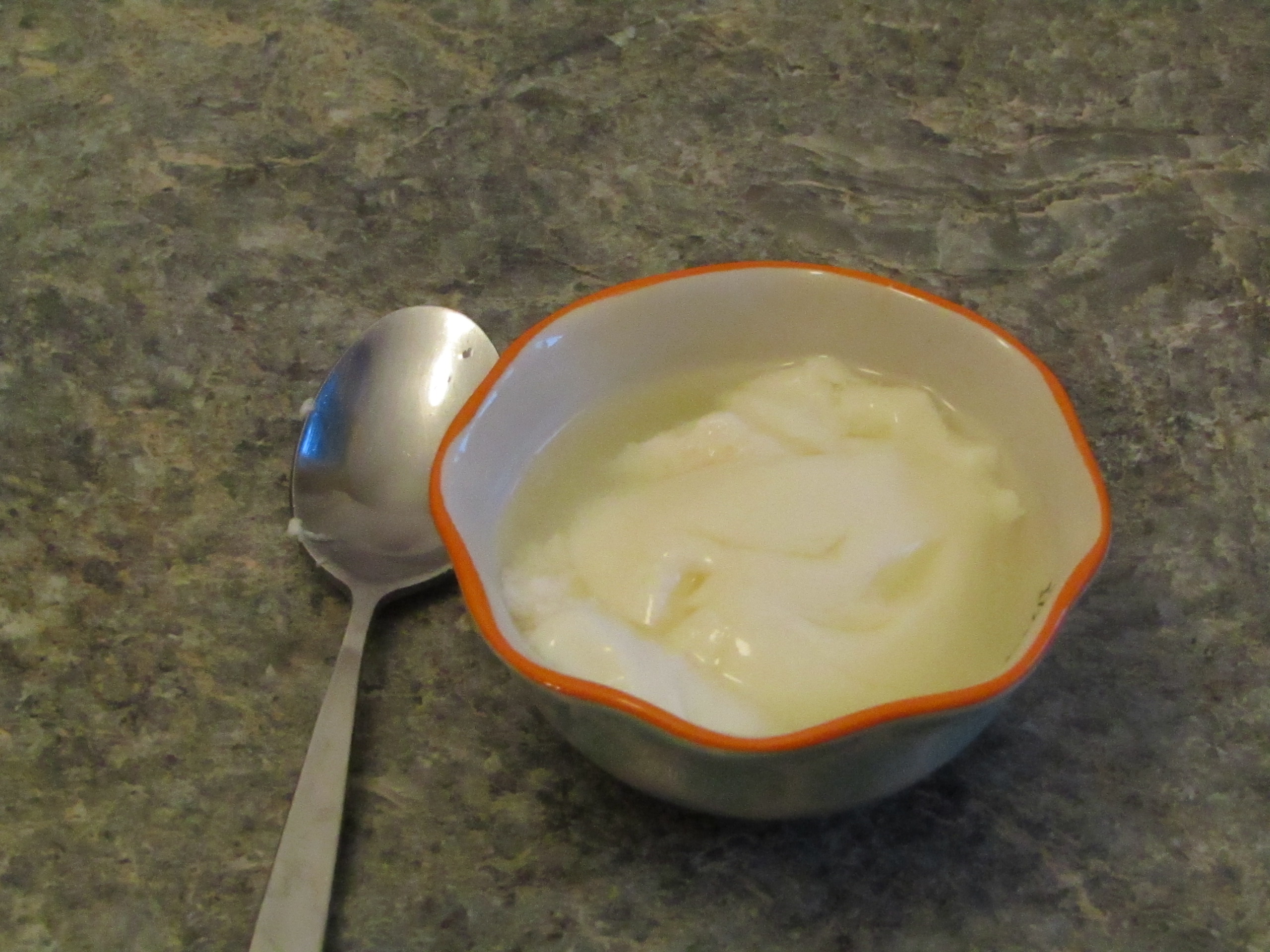
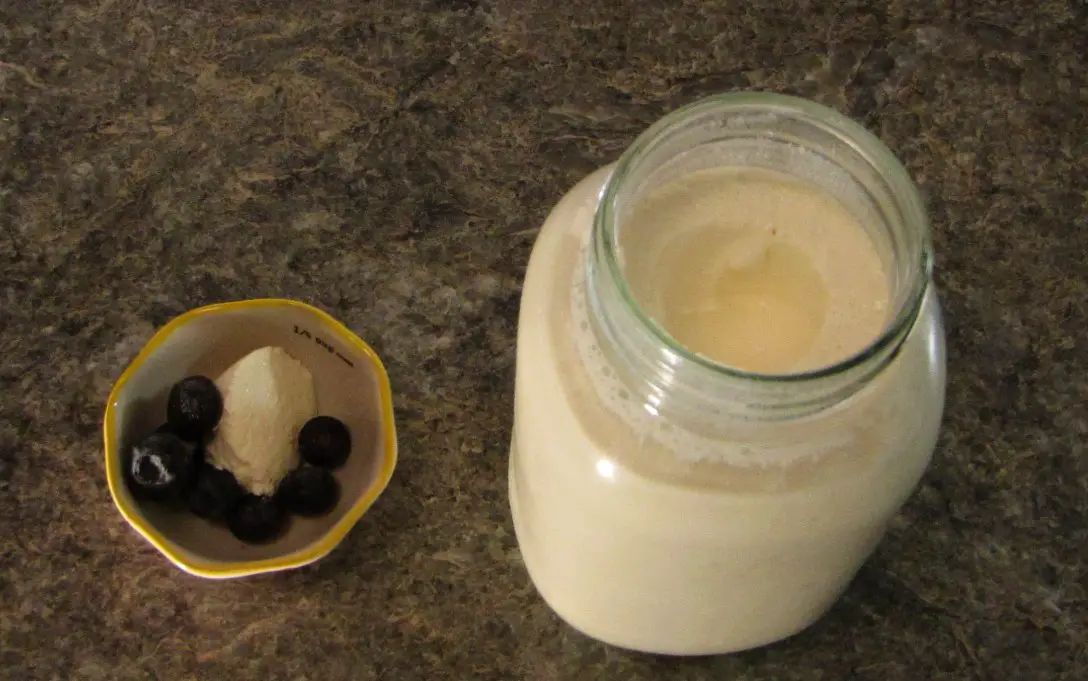
Top down view of a bowl of heavy cream yogurt with blueberries and a mason jar of heavy cream yogurt

How to make creamy yogurt is a common question when you are starting to make your own yogurt and it can be achieved in any number of ways (For several other methods of making thick yogurt read this article) but one of the easiest methods is to use a thick creamy milk from the start.  Using heavy cream to make yogurt produces a very thick, sweet yogurt which is great for desserts, dips and shakes.

To make yogurt from heavy cream heat the cream to 180℉(82℃) for 20 minutes, cool to 110℉(43℃) and add the starter.  Place in a warm place which can maintain a temperature between 108℉(42℃) and 115℉(48℃) for 6-12 hours.  Move yogurt to the fridge for at least two hours.

Yogurt made this way will produce a very thick and creamy yogurt which is great for making several recipes from creamy desserts to tangy dips and gravies.  It especially makes excellent thick shakes and smoothies.   There is a sample of possibilities below.

Step by Step Instructions to Make Yogurt with Heavy Cream

If you have made homemade yogurt before you will recognize these steps as they do not change from making normal yogurt.  Read through all the instructions before you start and you will have no problems.

Equipment Needed:
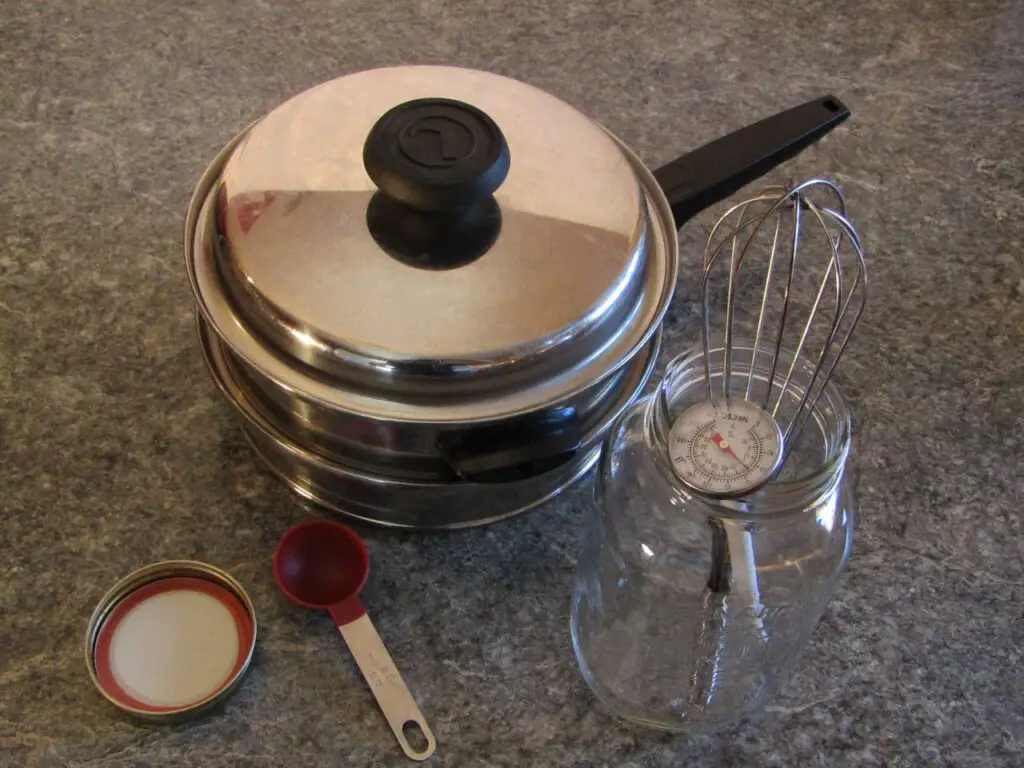
  1. Double boiler or some other way to indirectly heat the milk
  2. Mason jar or some other heat safe container
  3. Thermometer 
  4. Measuring spoon
  5. Whisk 

Ingredients:

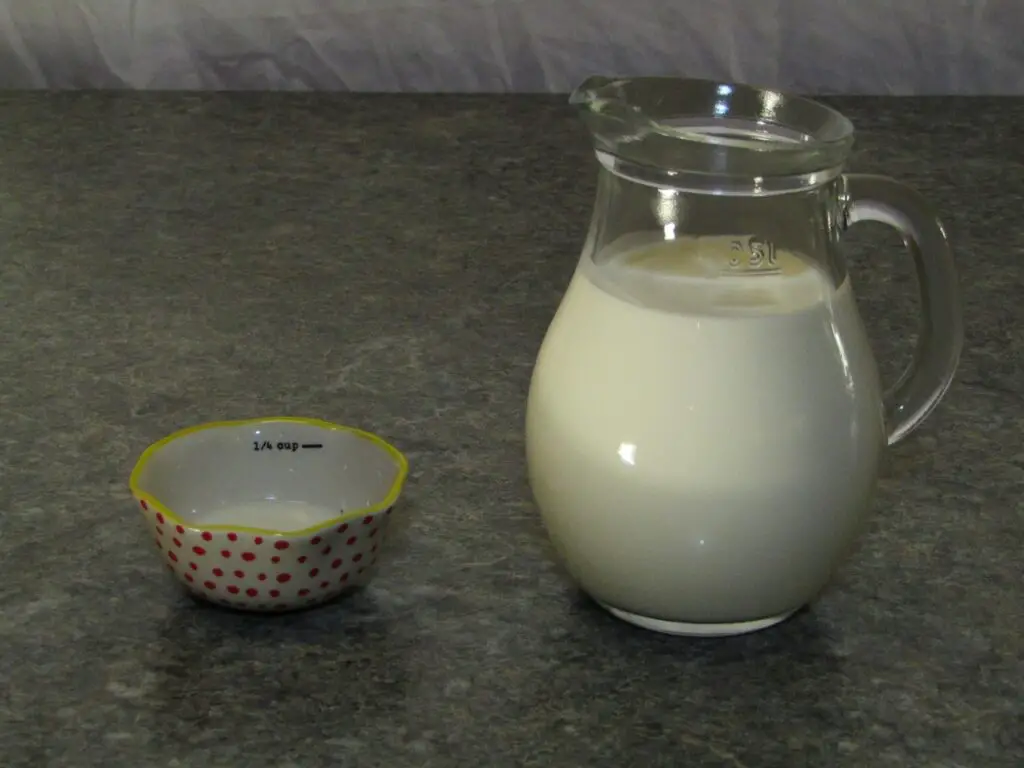
Pitcher of cream and a bowl of yogurt starter
  1. Heavy cream
  2. Yogurt starter

There are many types of yogurt starters which are on the market. I prefer using a heirloom starter which I have used continuously for over two years.  For your convenience here is a link to various yogurt starters on Amazon.

Instructions:

  1. In the double boiler heat the cream to 180℉(82℃)
  2. Maintain temperature for 20 minutes stirring occasionally 
  3. Pour the cream into the container and let cool to 110℉(43℃)
  4. Add the yogurt starter and whisk together
  5. Place the container in a warm place between 108℉(42℃)-115℉(48℃)
  6. Incubate for 6-12 hours
  7. Place the yogurt into the fridge for at least two hours to cool and set

When making yogurt from heavy cream it is important to stir the cream regularly when heating it to help keep the fat from dissociating itself from the milk proteins and to facilitate more water evaporation.  This will make the yogurt even thicker as the ratio of water to fat and protein decreases as the milk is heated.  For more reasons why heating the cream is important check out this article about 6 reasons it is important to the milk.

To incubate your yogurt you need a location to put it which will maintain a steady temperature between the recommended range.  This can be a yogurt maker, an oven with a pilot light or incandescent light bulb turned on or several other methods which you can learn about here (– ways to incubate yogurt without a yogurt maker).  It is important that the yogurt does not fall below the recommended temperature as it can make for stringy, slimy or ropy yogurt (post about slimy yogurt).

When incubating your yogurt it will thicken once it reaches a pH below 4.6.  This is the acid level where the proteins will begin to associate with one another and form a gel.  The longer it incubates after this level has been reached the tangier your cream yogurt will be.  You can incubate it for longer, some with lactose intolerance may want to incubate it for 24 hours or more.  For more about what happens to yogurt when it is incubated for extended periods of time read this article here.

Why Heavy Cream Yogurt is Thicker Than Low Fat Yogurt

The consistency of yogurt depends heavily on the ratio of fat to water in the milk.  Although there are other factors such as the length of incubation time, type of starter used and the length of time the milk was heated the main factor remains the amount of fat in the milk at the beginning.

Heavy cream has 5.0g of fat per cup of milk vs skim milk at 0.2g.  Fat in milk helps protein from separating into globules and keeps the yogurt smooth and creamy.  Low fat yogurt forms loose bonds within the milk and is prone to expelling water and doesn’t maintain its structure when mixed.

When yogurt incubates the lactic acid bacteria in the milk begin to acidify the milk by producing lactic acid.  As this happens the proteins in the milk will begin to associate with each other and form loose bonds (it gels) which is why yogurt is thicker than the milk it was made from.  

As the protein forms the gel it includes some of the surrounding components in the milk and the yogurt takes on a thickness which is a combination of the viscosity of the gelled protein and the additional components.  Heavy cream yogurt has less water in it then skim milk and as a result is included in the gel more then when skim milk is used.  Since fat is more viscous than water the yogurt becomes thicker.

The longer the yogurt is incubated the lower the pH becomes and the stronger the bonds between the proteins and forces them together.  This causes the included components in the protein matrix to be expelled.  Since water is a smaller molecule than that of fat the water is released first which produces whey.  

24 Great Ways to Use Heavy Cream Yogurt

So you have made some yogurt from heavy cream and you want to use it for something besides just eating it with a spoon (which is excellent by the way).  This type of yogurt is great for adding body to any recipe which uses yogurt, cream or any type of dairy.  It is a great substitute for greek yogurt as it is thick and creamy without the need to drain any of the whey out and then try to find something to do with it.  

Use Heavy Cream Yogurt For Breakfast

Creamy Yogurt Morning Smoothie

This is a simple way to start your day.  You can use any type of frozen fruit you have on hand, some type of juice or other liquid (I like to use kombucha) and some heavy cream yogurt. You will need a high powered blender to liquify and combine all the ingredients.

Cinnamon and Honey Yogurt Oatmeal Bowl

The blend of cinnamon, honey and heavy cream yogurt makes this a very satisfying morning breakfast.  Make the oatmeal with cinnamon to tie the dish together and serve under or beside the yogurt.

Nut/seed Flour Pancakes

Here is a great gluten free breakfast which closely resembles its gluten full counterpart.  The cream yogurt can be used in two ways for this recipe. Yogurt is added to the batter to add some fat and acidity to the batter. This helps the pancakes to rize better and hold its structure. It can also be used as a topping to add a level of decadance to a typically bland breakfast.

Fruit Bowl

Sometimes the most simple recipes are the best. Fruit bowls are great because you can use any type of fruit you have on hand. Simple cut the fruit into bite sized peices mix the m together if you are using a variety of fruit and load them into a bowl. Top with a generous spoonful of heavy cream yogurt and enjoy.

Use Heavy Cream Yogurt For Lunch

Vegetables and dilly dip 

Dilly dip is one of the classic dips used for vegetables.  It adds a nice tang and flavor to any fresh vegetable.  Dilly dip can be runny and not stick to the vegetable very well as it usually has a high amount of water in it which makes it not very viscous.  When heavy cream yogurt is used the dip becomes very viscous and will stick to almost anything. 

Soft Taco with Creamy Guacamole 

Guacamole is usually made simply with avocados, lemon, garlic and sometimes some type of oil.  Salted to taste and served as a cooling condiment for hot Mexican recipes. This recipe adds some tang and protein to the mix and makes it a creamier condiment.

It also keeps the guacamole from discoloring when it is exposed to oxygen.  The fat and acid in the yogurt acts as a buffer and slows the oxygenation.  This makes it great for a premade lunch filler for taking to go.  

Sliced Meat Pita Pockets with Tzatziki 

These are a great way to use any leftover meat but still not feel you are eating leftovers.  Any roasted meat will do, sliced thin and spiced accordingly.  Tzatziki made with heavy cream yogurt makes for a thicker spead which will not move around and soften the pita so you can make these in the morning and have them at noon without them falling apart.

Use Heavy Cream Yogurt For Supper

Beef Stroganoff

Beef Stroganoff is a classic Russian comfort food.  Full of tender slow cooked beef, onions and mushrooms this makes for a very satisfying main course.  With the addition of heavy cream yogurt rather than normal or low fat yogurt it becomes even better.  

The fat in the yogurt helps it to mix evenly with the gravy and forms a smooth sauce not achievable any other way.

Falafels and Yogurt Garlic Sauce

Falafels are a wonderful Indian comfort food.  High in fat and protein they make for a good side dish or addition to a dinner salad.  The yogurt garlic sauce made with heavy cream is a perfect addition as it cuts the fat and adds another layer of flavor which goes great with the spicy falafels.

Fermented Mexican Taco Salad

If you make Tacos properly you should need some type of cooling condiment to go with it!  Mexican food is supposed to be hot but of course not everyone can take the same amount of heat.  This is where the yogurt comes in.  Serve it as a side dish or served on top of the salad with some chives or herbs.  

Use Heavy Cream Yogurt in Baking

Yogurt, when used as a replacement for some of the liquid in shortbread baking, adds acidity to the recipe.  This does two things:

  1. It adds to the savory flavors of the baking, bringing out the tangy flavors more and cutting the sweet flavors some.
  2. Helps the baking rise with more power when the acidity of the yogurt reacts with the rising agent.

In addition heavy cream yogurt adds body to the baking helping to keep it moist and making it last longer.

Biscuits

When heavy yogurt is added to biscuits they are fluffier and nice and flaky.  The yogurt adds some tanginess and replaces some of the oil in the recipe.  This makes for a lighter biscuit which goes great with jam or marmalade.  If you can serve them hot out of the oven with butter as they are excellent when they are hot and fresh.

They do keep well though due to the added acidity in the batter which prevents mold growth for longer and the fat in the yogurt retains moisture.

Muffins

Good muffins are moist, soft and evenly risen.  It can sometimes be hard to make muffins without tunnels and tough batter (which is usually a result or over beating the batter).  With the addition of heavy cream yogurt muffins remain moist for longer, take less time to mix and produce much less gluten strings than muffins made with milk.  

Almond Flour Cookies

This recipe is for those who cannot eat gluten or are on a no carb diet like paleo or the specific carbohydrate diet.  Almond flour makes a great ingredient for cookies so long as it is not too fine.  It is the space between the granules of almond flour which makes these cookies light and crunchie.  

They are a real protein shot for those who want to boost their protein intake during the day.

Use Heavy Cream Yogurt For Dessert

Fruit Flavored Yogurt Cups

Any type of fruit can be used to make these but something with a bright color like fresh strawberries or blueberries add to their appeal.  They are made with only two ingredients and do not need any sweetener as the fruit has enough sweetness to balance the creamy yogurt.

Cheese Cake

Using heavy cream to make cheesecake produces a super creamy cake which is made without any form of gluten or other thickeners.  By lowering the liquid content of the yogurt the cake is much less likely to crack as it cools and makes a beautiful fancy dessert.

Ice Cream

There is nothing like creamy cool ice cream but there are some who cannot eat normal ice cream because of the lactose in it.  This recipe uses creamy yogurt instead of the more typical unfermented heavy cream.  This makes it a bit tangy which to me makes it all the more delicious. 

Use Heavy Cream Yogurt For Dips and Sauces

Cream Cheese

Although heavy cream yogurt is very thick it still has a fair amount of whey in it but when it is made into cream cheese it has a high fat content making this cream cheese velvety smooth and great for cream cheese icing, spicy dips or any other cream cheese recipe you may want to try.

Tzatziki

Tzatziki made with heavy cream makes a thicker richer condiment which can be added to almost any sandwich, salad or as a cooling dip for those hotter recipes.  The fat content in the heavy cream adds body to the tzatziki and helps it from separating as it sits.

Vegetable Dilly Dip

This is a great use for any older cream yogurt you have in the fridge.  The lactic acid bacteria in the yogurt continues to acidify the cream, even in the fridge, so as time passes it gets tangier.  This recipe is a great use for overly tanky cream yogurt.  The acidity brings out the dill and garlic flavors in the dip.

Creamy Guacamole 

Guacamole is usually made only with avocados, lemod and some spices but this recipe adds a creamy element which takes it to a new level.  The cream yogurt smooths out the guacamole and adds a bit of tanginess which is much mellower than the acidity added from the lemon.

Raita

A light and refreshing condiment which can be made spicy or cool depending on the amount of chillies you add.  It goes great with lamb, naan bread or with a spoon.  The heavy cream adds body to the raita which helps it to stay put when using it as a dip or filling.

Yogurt Garlic Sauce

If you like a little sour cream on top of your baked potato or a creamy sauce added to your lunchtime wrap this is a wonderful addition to your choices.  The garlic cuts the heaviness of the sauce while the heavy cream adds body to the sauce.
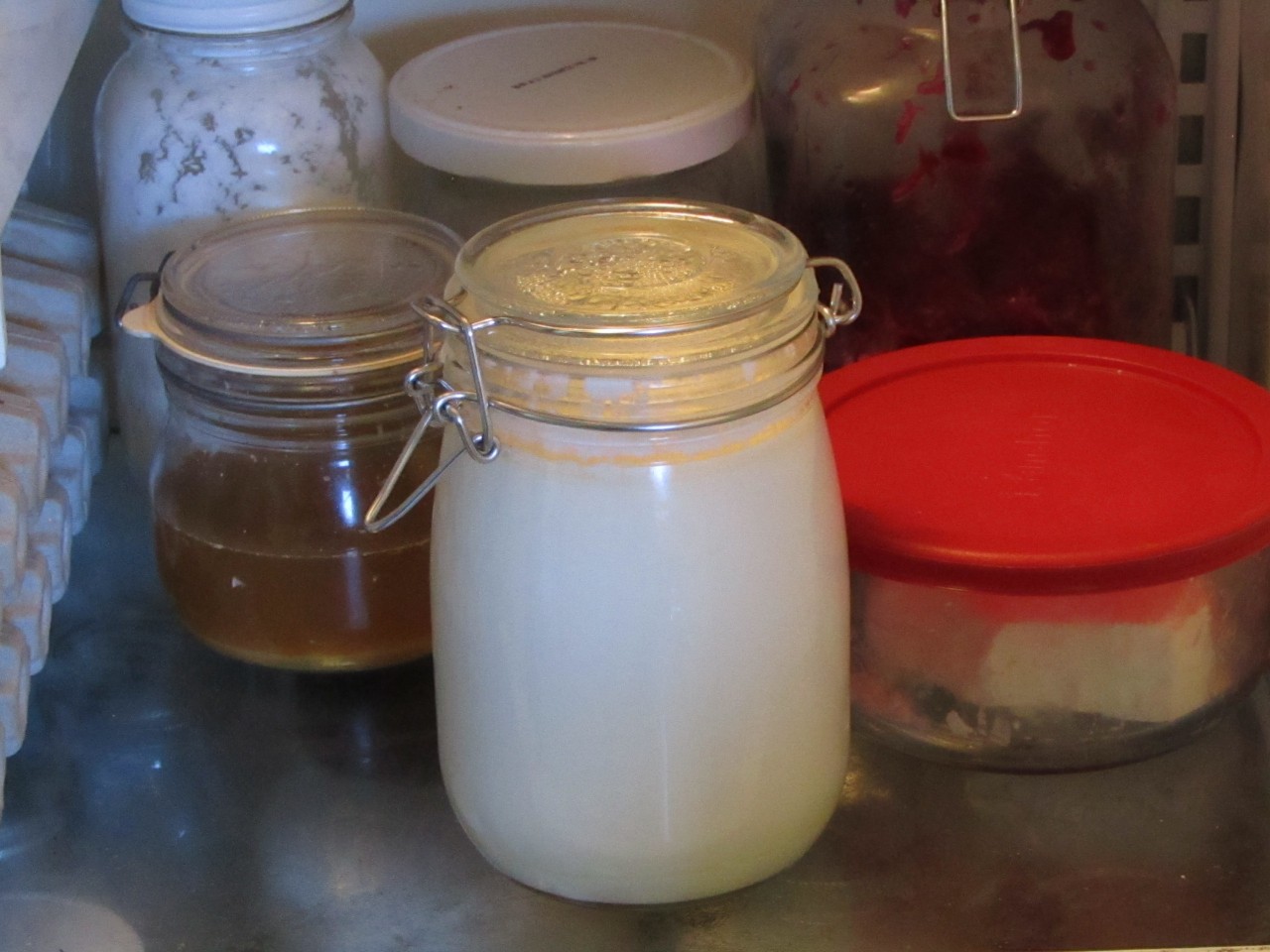
How To Properly Store Homemade Yogurt


There is nothing worse than opening a container of yogurt only to find it has little green fluffy growths dispersed all over the surface.  Actually there is, not noticing the green fluffy growths until the first spoonful.  To prevent such an experience it is important to know how to store homemade yogurt and how long it will last during storage.

Store homemade yogurt in the fridge at a temperature between 40-35℉ (4.5-2℃) with a sealed lid, use clean utensils when dishing out yogurt and do not replace leftover yogurt back into the container.  Molds are aerobic, resistant to low pH environments and consume complex carbohydrates.  

The main spoilage organisms of yogurt are molds.  Molds produce mycotoxins which are compounds which protect its environment from invasion from other competing microorganisms.  Mycotoxins produce the off smells and flavors which indicate your yogurt has gone off.  Not only do they taste bad but they can be toxic.

Molds grow well in warm conditions with easy access to oxygen, they can use any type of carbohydrates as an energy source and can grow rapidly in warm environments.  It is for these reasons why it is important to keep your homemade yogurt in the refrigerator in a sealed container. 

Homemade yogurt has fewer complex carbohydrates than store bought because most store bought yogurt contains thickeners which help to maintain its texture during transportation.  Unless you are after extra thick yogurt it is rare that a yogurt recipe contains any added thickeners like cornstarch, guar gum or agar agar.  If you are interested in ways to thicken your yogurt checkout this article about various ways to thicken homemade yogurt.

How to store homemade yogurt after opening

After you have opened your homemade yogurt it gets exposed to oxygen and heat which give spoilage bacteria access to the yogurt.  Yogurt when properly incubated will have a pH below 4.0 which is below the recommended pH by the WHO to be food safe.  A pH below 4.0 inhibits the growth of many spoilage microorganisms including bacteria like Clostridium botulinum but a low pH does not prevent the growth of molds.  

To prevent the growth of mold, keep your yogurt in a sealed container.  Mold is an anaerobic organism (it needs oxygen to grow) by keeping yogurt sealed while in the fridge the growth of mold will be slowed, extending its shelf life.   

Once your yogurt container is less than half full either transfer it to a smaller container or use the remaining yogurt quickly.  This is because the extra space in the jar will allow more oxygen into the container each time you open it, providing the ever present mold a chance to grow.

How to store yogurt to extend its best before date

There are ways to extend the life of your homemade yogurt, all of which rely on the prevention of the growth of mold on the surface of the yogurt.  Mold is pervasive in the environment and cannot be eliminated from the kitchen.  It grows on any surface where there is any water and availability of oxygen.  

The key to preventing mold from growing on your yogurt is taking advantage of mold’s two main weaknesses which can easily be used to slow its growth.

  1. Mold needs oxygen to grow

Mold in an aerobic organism, just like mammals it cannot survive without free oxygen in the air.  Therefore to prevent the growth of mold keep your homemade yogurt in an airtight container and only open it when you need to use it.  Replace the lid as soon as you are finished dishing it out.

  1. Mold likes warm environments

Mold grows quickly in warm damp locations with lots of carbs available.  Since yogurt has many indigestible complex carbohydrates in it and it is a semi-liquid gel, two of these conditions are fulfilled just by the nature of your yogurt.  The only remaining condition which you can control is the temperature.  Therefore keep your homemade yogurt in the fridge except when dishing it out into serving dishes or directly onto your food.

Other ways to extend the life of homemade yogurt

Yogurt has been cultured way before the prevalence of refrigeration so there must be ways in which yogurt was preserved without temperature control.  It is true that store bought yogurt needs to remain in the fridge simply because it is full of additives, has few bacterial strains and is made as cheaply as possible.

One of the  benefits of making your own yogurt is you can control the ingredients you put into it.  Basically you will need two ingredients: some type of milk and a starter.  Both of these ingredients can affect the shelf life of homemade yogurt

How the type of milk affects the shelf life of homemade yogurt

Yogurt can be made from any type of milk.  The usual choices are cow, goat and sheep but any type will gel into a yogurt product.  Some milk types will make yogurt which will naturally last longer due to the various components of the milk.

Milk with a high lactose content will produce yogurt which will last longer.  This is because the lactic acid bacteria in the milk use the available lactose as an energy source, producing lactic acid and other protective compounds.  With a higher amount of lactose the lactic acid bacteria can produce more lactic acid then low sugar milks.

Low fat milk is higher in sugar than high fat milk and goat and sheep milk have more lactose and less fat than cow milk.  Therefore yogurt made with these milk types can last longer than higher fat and protein milk types.  For a very tangy and long lasting yogurt make yogurt with skim or 0% milk.  The texture is less creamy and the flavor will be tangier than the high fat yogurt made with 10-14% milk.

How the type of starter affects the shelf life of homemade yogurt

There are many types of starters which can be used to make yogurt.  There are types which need warm conditions (thermophilic) and some which can incubate in ambient temperatures (mesophilic), some have few bacterial cultures (one time use) and others have many (heirloom).  

Heirloom yogurt starters are starters which can be used continually over and over without concern of weakening or contamination of the culture.  This is because the culture is made up of many different types of bacteria and some yeasts which resist invasion from spoilage bacteria and mold.  If you are interested in trying a heirloom yogurt culture here is an Amazon affilite link of collection of them. I have tried the Bulgarian cultrue which I have been using for at least a year continuously.

Just like mold, lactic and acetic acid bacteria produce compounds which protect their environment from invasion from unwanted microorganisms such as mold and other spoilage bacteria.  These compounds are not toxic to mammals so they make great additions to yogurt as they improve the health effects of yogurt and extend its shelf life.

Incubate the yogurt for a longer period of time

As the incubation time increases the pH of the milk decreases.  As the pH decreases the environment inhibits the growth of spoilage bacteria and increases the number of lactic acid bacteria, making it even more difficult for unwanted microorganisms from getting a foothold in the yogurt.

The incubation time used to make store bought yogurt is kept to a minimum as the longer it is incubated the more expensive it is to make. When making homemade yogurt you can incubate it for extended periods of time which increases its shelf life.  For more information on the effects of extended yogurt incubation check out this article.

How long does homemade yogurt last? 

The length of time homemade yogurt will last varies depending on the type of starter and the type of milk used to make the yogurt, how long it was incubated for and the temperature it is stored in.  

Typical homemade yogurt will last two weeks depending on how it was made and stored.  As it ages it becomes increasingly tangy so for sweet yogurt, consume it within a week.  For sour yogurt use older yogurt which has had a longer time to acidify.  

If you used store bought yogurt or one time direct set yogurt starter then after two weeks begin to watch for mold growth on the surface of the yogurt or around the lid of the container.  These types of starters only have two to four lactic acid bacteria strains in them making them susceptible to spoilage.

If you make your yogurt using a heirloom type of yogurt starter your yogurt should last much longer.  Some heirloom yogurt cultures are hundreds of years old and have been handed down from parents to children for generations.  These cultures are very robust and contain many types of bacteria which work together to protect itself from infection from spoilage bacteria.  

Yogurt made with these types of cultures will last longer but as they age the yogurt continues to sour and the population of the culture shifts to favor those bacteria which prefer acidic conditions.  For a healthy heirloom culture make smaller batches of yogurt more often rather than larger batches less frequently.  This will keep your yogurt fresh and sweet as the remaining lactose in the milk sweetens its flavor.

How do I know if my homemade yogurt is bad?

Once you have been making yogurt for a while you may end up with a jar of it being pushed to the back of the fridge and ignored for a period of time.  When the time comes to clean out the fridge do you just pitch it all or do you check to see if it is still usable?  If you are like most people you will have to open it and give it a smell and inspect it, even just because you are curious.    

Homemade yogurt which has gone bad could smell rancid, have mold growth on its surface or around the top of the lid or it could have yeast growth giving it an off smell and a fizzy texture.  Each of these are good indications that your homemade yogurt is past its prime.  Pitch it and start again.      

When it comes to knowing when something has gone off or not just trust your instincts.  If your yogurt smells bad, has a strange texture or color and seems to be pressurized in any way then it is safe to say that something has gone amiss.  If you have incubated your yogurt properly you will not have to worry about the more dangerous bacteria and mold species which can infect milk products but yogurt which is past its prime doesn’t taste very good.  To be safe just pitch it.

For a complete explanation of how to make yogurt at home check out this recipe but as a reminder here are the three most important things to remember while making yogurt:

  1. Use only fresh milk which is well before its best before date
  2. Use clean utensils and containers 
  3. Pasteurize the milk before incubation

How To Buy The Best Yogurt Maker


If you are anything like me you have a cupboard full of unused kitchen appliances which someone thought would be super useful.  There are indoor grills, pizza makers, bagel slicers, mini crockpots and the list goes on.  Most of these appliances were neat for a time but in the end were retired to pasture (or the big cupboard above the fridge).

Many or these appliances ended up in the ignored category due to their single purpose design.  Cheapism.com has a list of fifty useless kitchen gadgets starting with an asparagus steamer to a rapid pizza reheater and guess what… a yogurt maker is on the list! 

So, before you go out and purchase a yogurt maker because you are excited about making your own yogurt to; save money, improve your health, diversify your menu or whatever else, take some time and consider the features you really need in a yogurt maker.

For your convenience I have provided the following chart which will assist you in determining your ideal yogurt maker.  To use the chart, determine what features you require in a yogurt maker (which are all explained below)  and find the closest match on the chart.  I have conveniently provided an affiliate link for each yogurt maker, simply click on it to make a purchase.

Individualsized containers Large capacity Incubation timer Electrically operated Insulated container Multi-purpose appliance  Recommended Yogurt maker

Most important features for a yogurt maker

Not all of these features will be important to everyone as everyone has their own needs when it comes to functionality but here is a rundown of the advertised features found on the current yogurt makers, the benefits of each feature and any drawbacks.

Individual sized containers

Individually sized containers divide the amount of yogurt the yogurt maker makes into several smaller serving sizes.  Each container will have a sealable lid, fit specifically into the yogurt maker and can be made from either glass or plastic.  

Benefits:

  • No repackaging needed for taking yogurt on the go
  • Can make different types/flavors of yogurt simultaneously
  • Can make smaller amounts of yogurt
  • If one or more of the containers get lost or broken yogurt can still be made (as long as you have at least one
  • Easily fit into dishwasher (if dishwasher safe)

Drawbacks: 

  • Must keep track of containers and lids
  • Only containers designed for yogurt maker will work
  • Cannot make large amounts of yogurt

Large capacity container

Yogurt makers of this type have one big container where the milk is added to make the yogurt.  It is made from glass or plastic and has a lid which seals the container for incubation and storage.

Benefits:

  • Large amounts of yogurt can be made in each batch
  • Only one container to keep track of
  • Other containers can be used if they fit in the main body of yogurt maker
  • Dishwasher safe
  • Recipe ratios do not change 
  • Can choose the right size for current needs

Drawbacks:

  • Only large quantities can be made efficiently
  • Container and/or container lid often made from plastic

Incubation timer

For yogurt to turn out the same every time there are many variables to take into account.  One of which is the amount of time the milk is incubated for.  Yogurt can be made in 4-6hrs when using an active starter but sometimes it is beneficial to incubate the milk longer.  With a timer in the yogurt maker the incubation time can be set to stop incubating the milk and beep to indicate the yogurt has incubated the prescribed period of time.

Benefits: 

  • Timer will inform user when yogurt is done (and how much time is left)
  • No need to check incubation stage
  • Less power usage

Drawbacks:

  • Yogurt will continue to incubate after timer goes off

Electrically Operated

Having a yogurt maker which plugs into an electrical socket has its advantages.  It will have a heater which will maintain the incubation temperature, may have a timer and maybe it will even be able to adjust both the time and temperature.  

Benefits:

  • Will maintain incubation temperature automatically
  • May have a timer 

Drawbacks: 

  • Must have a plugin available
  • Costs more to use
  • More likely to breakdown

Insulated Container

Yogurt makers of this type have an insulated container which is meant to hold the heat in the milk once it has been pasteurized.  These incubators will slowly lose heat during the incubation time depending on the ambient temperature of the room the yogurt is incubated in.

Benefits:

  • No electricity required
  • Simple to use
  • Makes larger amounts of yogurt

Drawbacks:

  • Inconsistent incubation temperature
  • Must make large amounts of yogurt for best results

Multi-purpose yogurt maker

Multi-purpose appliances can be a great addition to a kitchen when the purposes it is used for are not already covered by other appliances.  There are appliances which have yogurt making settings on them.  Temperature controlled slow cookers, dehydrators and smokers all can be used to make yogurt while able to make other things as well.

Benefits:

  • One appliance can replace several others in cupboard

Drawbacks:

  • Can only make one thing at a time
  • More expensive
  • May have purposes mostly covered by other appliances currently owned
  • More settings can make it complicated to use 


What to do before you purchase a yogurt maker

Before you go out and purchase a yogurt maker you should evaluate why you want one. Yogurt is a popular product which is sold anywhere where you can get dairy products.  It is not expensive and is made with standard bacterial cultures which have been shown to have beneficial effects on health.  It cannot be because you just need your yogurt but can’t find any at the store.

There are many reasons why you may want to make your own yogurt such as:

  • You want to avoid additives
  • Want less lactose in your yogurt
  • Have specific probiotics to make yogurt
  • Like heritage style yogurt
  • Like the challenge of making everything from scratch

Whatever the reason, the last thing you want is to add another appliance to your already full cupboard which you are not going to use.  With that in mind here are some things to do before you purchase a yogurt maker.

Make yogurt using current equipment

Yogurt can be incubated using a variety of appliances including slow cookers, dehydrators, coolers and hot water bottles and even in the oven with the light on.  Although these methods are a little cumbersome and can be inconsistent they do work, in fact some people use these methods exclusively rather than purchasing a yogurt maker.  For an explanation of how you can make yogurt without a yogurt maker checkout this article, at the bottom you will find several options you can try before purchasing a dedicated yogurt maker.

Just because an appliance does not have a specifically labeled yogurt making button does not mean it cannot be used to make yogurt.  The only requirement for yogurt incubation is to be able to maintain the temperature the culture grows the best in.  For most yogurt cultures this temperature is between 108-115℉ (42-46℃).  

Make several batches of yogurt before purchasing 

Making yogurt is inconvenient.  It takes time, has a learning curve which can lead to failed batches and it is always not the same as store bought yogurt.  Before you go out and buy a yogurt maker, ensure you like the yogurt you can make at home, make several batches to be sure you can consistently make the yogurt you will eat and compare your yogurt with store bought yogurt.

3 Easy Ways To Make Powdered Milk Yogurt


Powdered milk has been used in making yogurt for a long time.  In commercial yogurt it can be  called modified milk ingredients and is used to thicken and provide added structure to the yogurt.  This helps the yogurt to remain firm during transportation and handling.  

Powdered milk can be used to thicken homemade yogurt, alter its texture and add additional protein to the yogurt.  Adding powdered milk to homemade yogurt alters the flavor of the yogurt slightly and can add impurities from the industrial equipment used to produce it.

Most homemade yogurt recipes do not use powdered milk as an ingredient normally as there are many other ways to thicken yogurt (for a list of other choices check this article out here) but it can be used if prepared properly.  Before you use powdered milk to make yogurt you should know for what purpose you are using it.  

Add powdered milk to thicken homemade yogurt

Using powdered milk for the purpose of thickening your homemade yogurt is a good option for a variety of reasons.  Since it can be easily measured the amount of powder used can be controlled to achieve the result you want.  By adding more or less powdered milk you can achieve the thickness you desire.

Why powdered milkthickens homemade yogurt

Before you start using powdered milk to thicken your yogurt it is a good idea to understand why it works.  When making anything new, having the knowledge of why it works is valuable as it helps you to diagnose problems and alter the ingredients to get a specific result.  Here are two reasons why yogurt is thickened with powdered milk.  For 11 additional ways to thicken yogurt read this article here.

Powdered milk absorbs some of the water in the milk

This is the most obvious way powdered milk thickens yogurt.  The milk is heated and sprayed in a fine mist where the liquid evaporates away while the solids in the milk fall to the bottom of the evaporation container.  This process provides a milk product which is high in protein with very little water.  When it is added to the milk you are going to use to make yogurt it absorbs some of the water in the milk until it is the same hydration level as the surrounding milk.

Powdered milk adds additional protein to the milk

The reason why yogurt thickens into yogurt during incubation is the proteins in the milk form a loose association with each other forming a loose matrix.  This happens due to the acidification of the milk as the lactic acid bacteria in the starter use the sugar in the milk (lactose) and produce lactic acid.  

With an additional amount of protein from the powdered milk the acid produced by the starter forms stronger protein bonds in the milk forming a stronger matrix.  This firms the texture of the yogurt and helps it to maintain its form during transport and serving.

The added protein will help the yogurt’s structure to remain intact while being handled and jostled around during transportation.  

Another benefit is the added protein content for those who want to increase the amount of protein they consume.  Powdered milk is high in protein as it is mainly made from low fat milk.  Low fat milk is higher in protein than that of whole milk because as the fat is removed from the milk the protein remains behind.  Since the water is then removed you are left with a powdered milk which has a higher than normal protein content.

When powdered milk is added to liquid milk it increases the amount of protein without adding to the volume of the milk significantly.  As a result the yogurt made from such milk has a higher protein content.

How to use powdered milk to thicken yogurt

When using powdered milk to thicken yogurt you have to understand that powdered milk has a different flavor than fresh milk.  Fresh milk has not been processed to the extent that powdered milk has and as a result does not take on the chemical flavor which powdered milk has.

When using powdered milk to thicken yogurt add 1-2 tbsps per quart of milk.  The milk powder will absorb some of the water as it rehydrates and add some protein to the yogurt, making it thicker.  Adding too much milk powder can alter the flavor and texture negatively.

Equipment: 

Equipment needed to make yogurt with added powdered milk: double boiler, glass mason jar with lid,  whisk, thermometer and a measuring spoon
  • Incubation chamber
  • Double boiler
  • Non-reactive container with lid
  • Thermometer
  • Whisk
  • Measuring spoon

Ingredients:

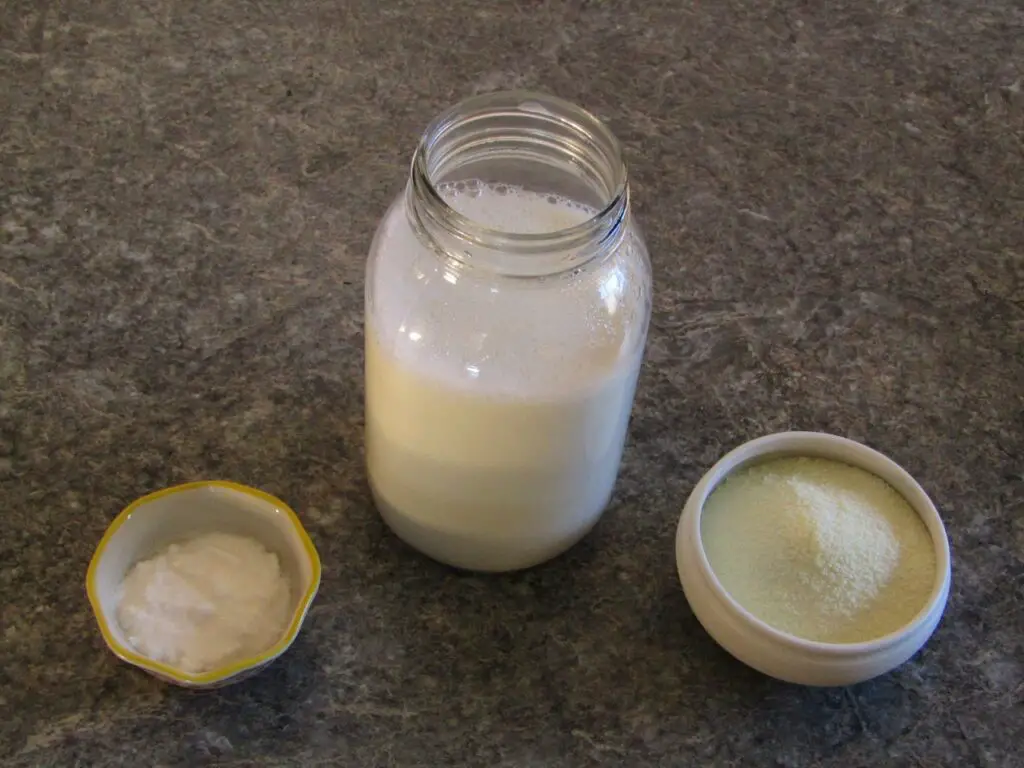
Ingredients for making yogurt with added milk powder: milk, powdered milk and yogurt culture
  • One quart (½ liter) Milk
  • 1-2 tbsp Milk powder
  • 1 tsp Yogurt starter

Instructions:

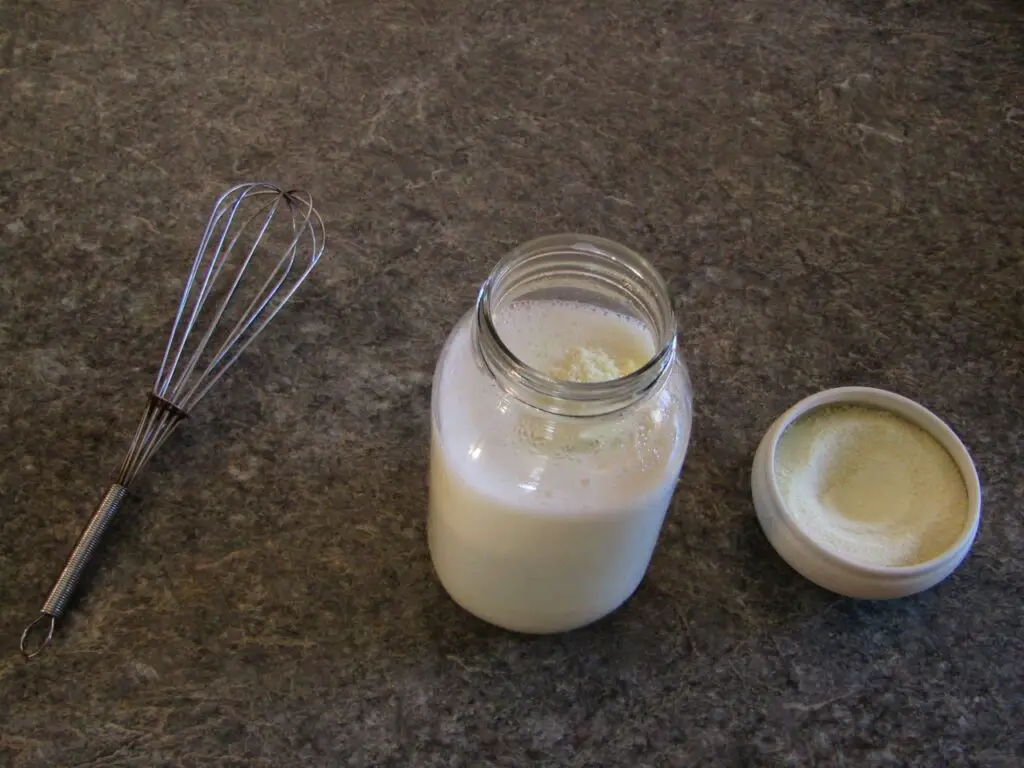
A mason jar with powdered milk added.  a whisk for mixing the powder into the milk with a bowl of milk powder beside
  • Add milk to the double boiler
  • Add milk powder and whisk until thoroughly mixed
  • Heat the milk gently to 180℉ (82℃) stirring frequently
  • Maintain temperature for at least 20 minutes continue stirring
  • Pour milk into non-reactive container
  • Cool to 115℉ (48℃)
  • Add starter
  • Incubate 6-12 hours
  • Refrigerate 1-2 hours before consuming

Why make yogurt with only powdered milk

When given the option of using fresh milk or powdered milk to make yogurt the choice should be clear but there are circumstances for which using powdered milk for yogurt is a good option.  

  • limited access to a reliable source of fresh milk
  • Limited access to refrigeration
  • Lack of space 

For most of us in North America there is little reason to use only powdered milk for yogurt making as we have access to all of the above in ample quantities but on occasion such resources are in limited supply.  

When camping the space needed for fresh milk and the added weight can be too much.   Most RV’s have limited refrigeration space as well as have restricted access to fresh milk.  Refrigerators are also power hungry appliances that add to the desire to not store items which need long term cool storage.

Backpacking is another scenario in which these limitations apply.  A backpacker will not want to carry fresh milk as it is heavy, must be consumed quickly and has a poor weight to food value ratio.  In this case using powdered milk to make yogurt is ideal for a morning breakfast.

Powdered milk is a highly processed food.  The process of dehydrating milk requires specialized equipment which heats the milk, places it under high pressure and forces it though small nozzles to form a fine mist.  As a result the valuable enzymes, proteins and many vitamins found in fresh milk are lost.  When it is made into yogurt some of these drawbacks are ameliorated.

The lactic acid bacteria found in the starter produces various vitamins and enzymes of their own which provide food value to yogurt made with powdered milk.  The tangy flavor of the yogurt masks unwanted flavors found in normal powdered milk and improves the storage time without refrigeration.

How to make yogurt with only powdered milk

Two methods which can be used to make yogurt with powdered milk are described below.  The first is relatively the same as the above procedure with the addition of preparing the powdered milk prior to making the yogurt.  The other is a simplified method for backpacking and can be made with only a thermos and a spoon.

When preparing the powdered milk add additional milk powder to ensure the yogurt will have enough protein to gel and form yogurt.  By adding ½ to ⅓ more milk powder than the instructions call for you can be sure the yogurt will thicken.  Too little milk powder and you will end up with mostly whey, which is good for you but does not resemble yogurt.

How to make yogurt with only powdered milk: method 1

This method assumes you have access to a kitchen such as an RV or other camping vehicle.  

Equipment:

equipment for making yogurt
  • Double boiler
  • Thermometer
  • Whisk
  • Measuring spoon
  • Incubation container
  • Incubation chamber

Ingredients: 

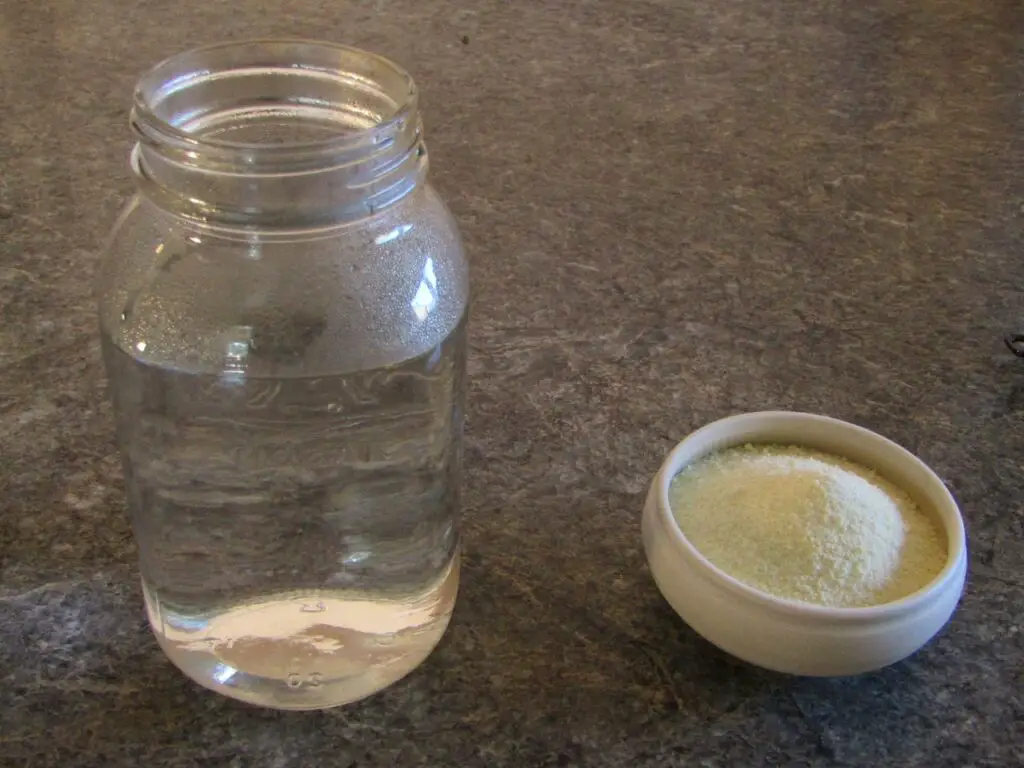
hot water in a mason jar and powdered milk in a bowl
  • Water
  • Powdered milk
  • Yogurt culture

Instructions: 

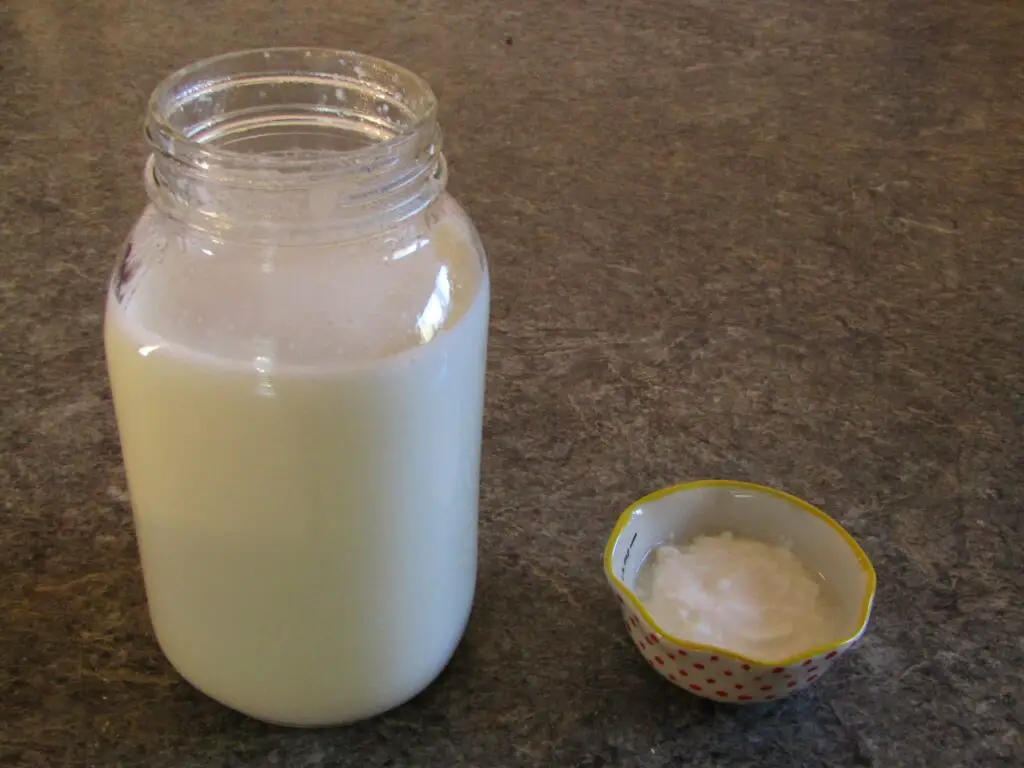
rehydrated powdered milk and a bowl of yogurt culture
  • Mix the milk powder and water until thoroughly mixed in the double boiler
  • Heat the milk on stovetop until it reaches 180℉℃
  • Remove from heat and cool to 115
  • Add yogurt culture and whisk together
  • Place lid 
  • Incubate milk for 6-8 hours (over night)
  • Refrigerate yogurt at least an hour before serving

How to make yogurt with only powdered milk: method 2

This is a simplified method of making yogurt for backpacking or other forms of light equipment camping.  It uses a minimum amount of equipment but requires some practice to make successfully.

Equipment:

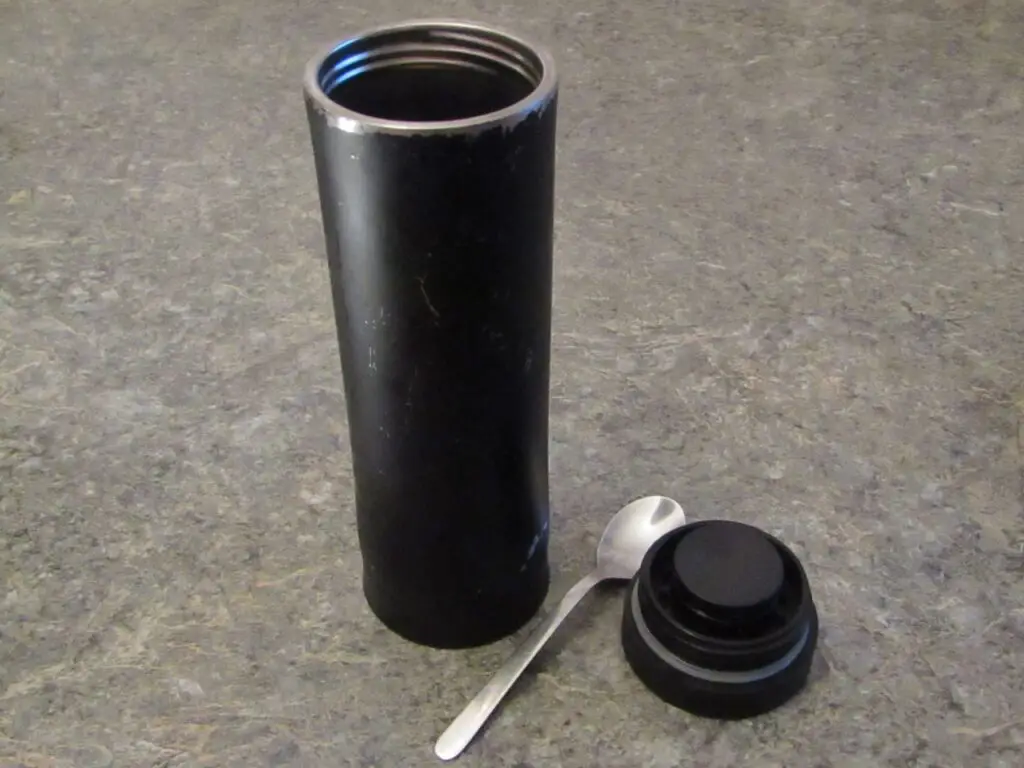
A spoon and a black thermos with lid
  • Thermos
  • Spoon
  • Camp Stove or other method of heating water
  • Camp pot

Ingredients:

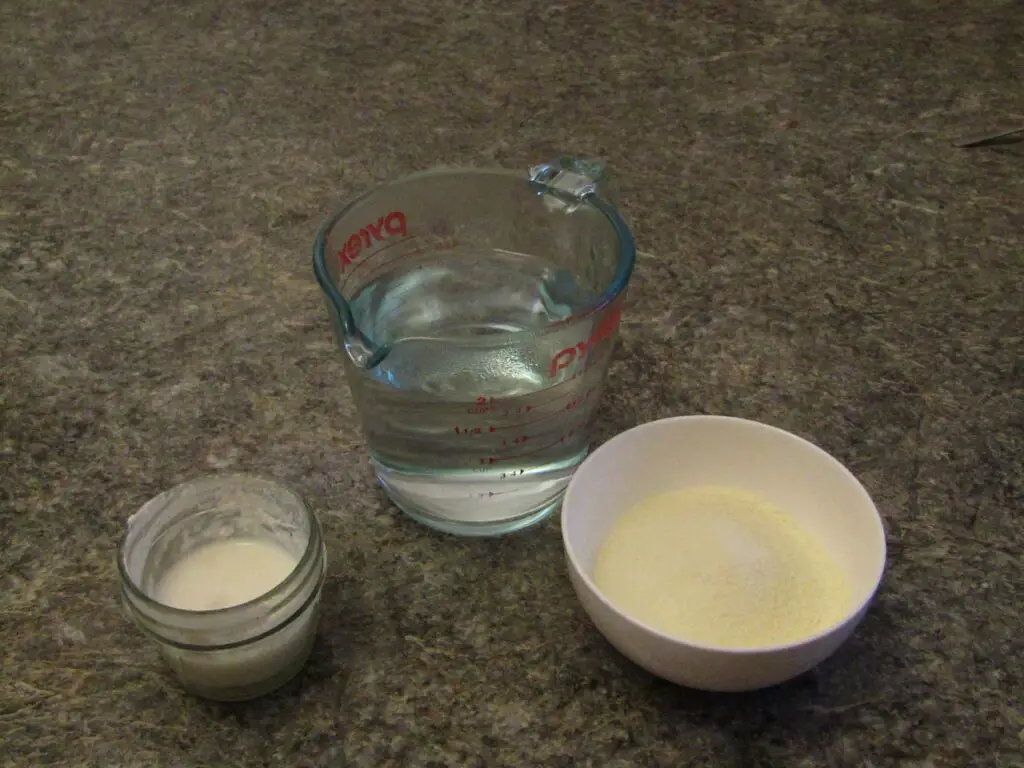
Ingredients for making powdered milk yogurt. Hot water, yogurt culture and powdered milk
  • Hot water
  • Milk powder
  • Yogurt starter

Instructions: 

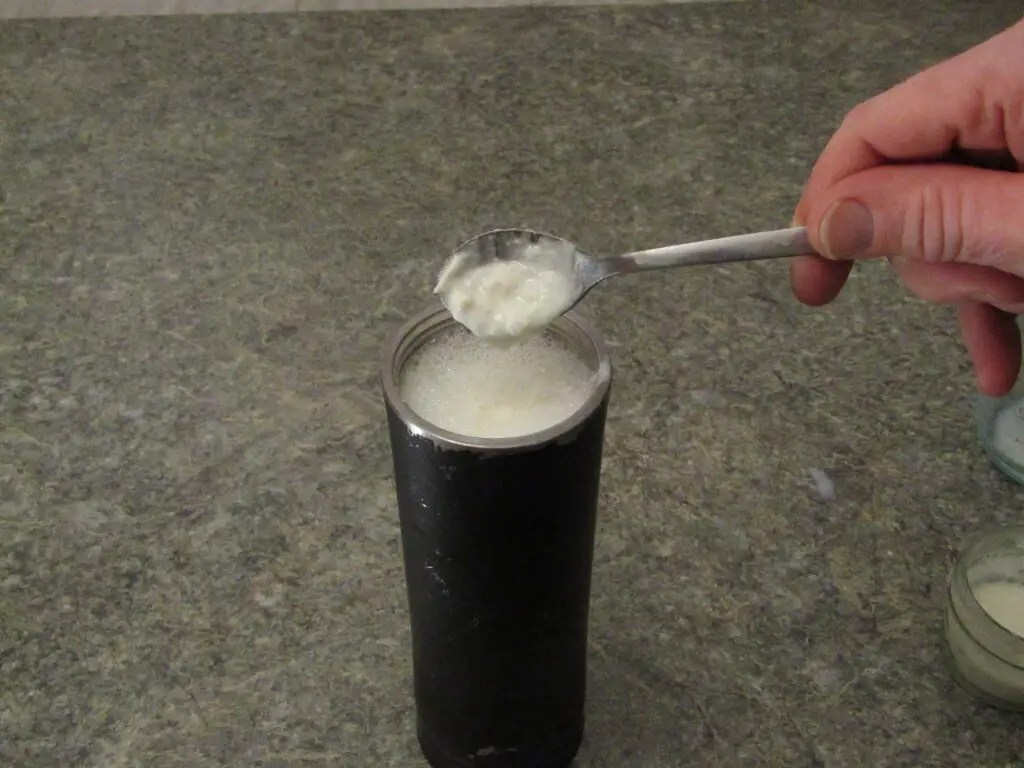
Adding yogurt culture to powdered milk in a thermos
  • Heat water to boiling in pot
  • Pour into thermos
  • Add milk powder and stir
  • Let cool to slightly higher than skin temperature (115℉ (48℃))
  • Add yogurt starter
  • Place lid on thermos
  • Store somewhere out of the elements

In the morning the yogurt culture should have converted the milk into yogurt.  Serve it with granola or sweeten it and eat it with a spoon.

Uses for yogurt made with added milk powder

As mentioned above the flavor of yogurt made with added powdered milk is different from yogurt made with only milk but if the proper amount of powdered milk is used it is not detectable for uses such as fruit topping, adding to oatmeal or adding to a morning smoothie.

Extra thick yogurt is often used in sauces, dips and as an ingredient in recipes to improve the texture of a recipe.  The thicker structure of the yogurt helps the sauce to coat the other ingredients which adds to the presentation of the dish.

7 Reasons Not To Keep A Kombucha SCOBY Hotel


A mason jar filled with kombucha SCOBYs

Most home brewers still transfer their SCOBY from one batch to another with almost a religious belief that somehow it contains some extra power which can only be passed on by its addition into a new batch of sweet tea.  For this reason the SCOBY has become a hallowed and sought after ingredient in the kombucha making process.  

Some brewers recommend that you remove the old SCOBYs from your kombucha and save them in a jar called a SCOBY hotel.  This is basically a jar filled with sweet tea or kombucha that contains several old SCOBYs stacked one on top of another.  The thought is that if you need a SCOBY for some reason you will always have one available. 

There are several reasons why this is not a good practice and is basically a waste of time and effort.  Here are six of the main reasons why storing old SCOBYs in a SCOBY hotel is not worth the trouble. 

Maintaining a SCOBY hotel takes time 

A SCOBY hotel needs to be maintained. It needs proper care otherwise the culture in the jar will become weak and ineffective.  To properly maintain a SCOBY hotel it needs to be fed at regular intervals.  The old liquid in the jar needs to be removed and replaced with new liquid with some sweetener in it to feed the culture in the jar.

As the number of SCOBYs in the jar increases so does the rate the liquid needs to be changed, increasing your work with every new SCOBY in the hotel.  

A SCOBY is not needed to make kombucha

It is a common myth that a kombucha SCOBY is a necessary ingredient to making good kombucha.  The truth is that most commercially made kombucha is made without using the SCOBY produced from a formar batch.  Rather the culture is propagated by using only the liquid starter from the former batch.  They do this to maintain consistency in flavor and fermentation time.

A SCOBY is not a living thing, nore is it special or unique to kombucha, rather it is a pecille which is a formation of cellulose produced by the culture found in the kombucha starter.  It is believed to be formed from biofilm which thickens as it is exposed to the air and grows from the top down.

If the culture has the bacteria which produce the biofilm which a SCOBY is made up of it will produce a new SCOBY every batch.  All that is needed is the starter liquid from a previous batch of kombucha and a new SCOBY will form on the surface of the container making all the extra SCOBYs in your hotel irrelevant.  

There are many ways to get another SCOBY

Some advocates of the SCOBY hotel recommend the saving of old SCOBYs so you can always have a replacement ready if something goes wrong and you need a new one or if you want to start another batch of experimental kombucha which you haven’t tried yet.

If you feel you still need to have a SCOBY for every new batch of kombucha then there are many ways you can get another in short order.

  • Buy a bottle of raw kombucha and use the little SCOBY found in the bottle to start a new batch.  
  • Use a vinegar mother instead
  • Use some kombucha from any previous batch 
  • Ask a fellow kombucha brewer for one
  • Make one from scratch

For a full explanation of how you can make your own kombucha SCOBY checkout this article here.

Each of these solutions to not having a SCOBY if your main kombucha batch fails are better than having to maintain a SCOBY hotel for two reasons:

If your main batch failed your method of kombucha brewing needs refinement

If your main kombucha batch fails then you have a serious problem with your method of making kombucha.  It is rarely the case where a culture gets contaminated with spoilage bacteria and yeast for no reason.  Usually the problem comes from improper methods while making kombucha.  Not keeping equipment clean, not using enough starter fluid or not securing the top to prevent unwanted bugs and debris from entering the brew.

A new SCOBY will not fix these problems and if you have problems with your main kombucha brewing method why do you think your method of maintaining a SCOBY hotel will be better?  Although kombucha is a fairly straightforward fermentation it still takes time and attention to maintain consistent results.

A failed batch of kombucha is seldom the result of a one time event

If your kombucha gets moldy, does not acidify properly or just tastes off somehow it is seldom the result of a one time event.  Instead it is a problem which has been growing for a while.  

The culture may become infected with unwanted bacteria or yeast which inhibit the growth of the culture which makes for good kombucha.  At first it may not be noticeable but as time passes it can get worse until finally it stops working or is bad enough for you to notice.

If you keep a SCOBY hotel as a backup for this purpose you will be adding a SCOBY to your hotel after every few batches of kombucha.  When you add the contaminated SCOBY to your hotel it will infect the culture in the jar.  This will make all your SCOBYs in the jar unusable.

Experimental batches can be made using kombucha from a previous batch

If you want to start a new experimental batch of kombucha you only need a little kombucha in a mason jar.  You can start an experimental batch of kombucha with a half a cup of kombucha this way.  

This is much easier and produces a better, more consistent result in your experimentation than digging out an old SCOBY from a jar in the cupboard and using it.  An old SCOBY may have a higher than normal acid content, have flavors from previous batches which can be unpleasant or have a high amount of dead yeast on them which can alter the flavor of your new experimental batch.

To get the best idea of what your experiment tastes like you need to control all the variables you can.  One of which is the flavor added by an old SCOBY.

Storing extra kombucha SCOBYs takes up valuable space

If you are into fermentation then you probably have several different things fermenting away in the cupboard; milk kefir, sauerkraut, pickles and maybe even water kefir or ginger ale.  Each of these takes up space in the cupboard, some of which need to be stored for longer periods of time.  With each jar of unused SCOBYs in your kitchen your capacity to experiment and try new things is lowered.

Although making kombucha is a fun and interesting pastime it does have a fairly large footprint in the usable space in the kitchen.  A warm cupboard, location on the fridge or on the counter.  By adding extra jars filled with unused SCOBYs its footprint gets larger for no reason.

There are better uses for the extra kombucha SCOBY

With every batch of kombucha you will get another SCOBY.  It just grows on the surface of the fermentation without any help from you.  So rather than treating it as a precious resource why not use it for something.  There are several things SCOBYs can be used for.  For a list of interesting ideas read this post here.

A kombucha SCOBY is a cellulose mat which has dead bacteria and yeast in it.  As a result it is a good source of B vitamins and can feed the healthy microbiome in your gut.  It can contain several probiotic species which make it a good addition to smoothies or other blended drinks or sauces.  The natural acidity of the SCOBY adds a tangy flavor to any recipe.

The SCOBY inventory will just continue to grow

With every batch of kombucha a new SCOBY will grow on the surface of your kombucha brew.  This new SCOBY grows where the liquid comes in contact with the air on the container and can grow up to a ¼ inch thick in a short 7-14 day fermentation time. 

So for each new batch of kombucha you will get another SCOBY.  If you make a new batch of kombucha every two weeks or so then you could have saved over 25 SCOBYs.  What are you going to do with 25 SCOBYs?  You will have to have several jars filled with SCOBYs in your cupboard taking up space and time which you should be using for other purposes.

The How And Why Of Making Killer Kombucha


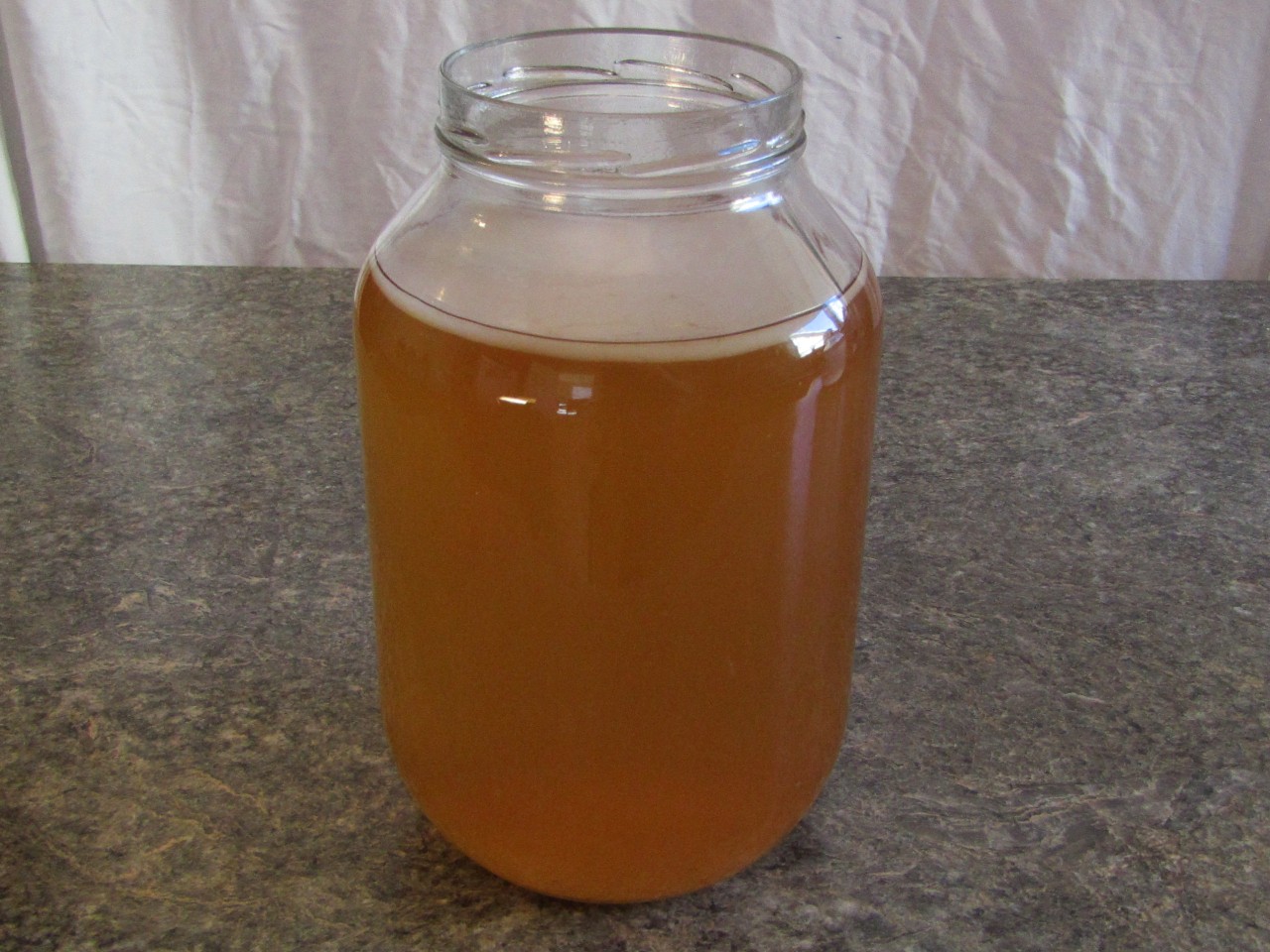
a one gallon jar filled with kombucha with a SCOBY floating on the surface

If you are new to the world of fermentation and kombucha is the first fermented drink you are going to make then you are in good company.  Many people use kombucha as their first fermentation because it is relatively easy, popular and can be made with a minimum of equipment.  All you need is a container big enough to hold enough kombucha for a week or so and some bottles to ferment it into soda if you wish.

Kombucha is a popular probiotic drink which can be made at home by fermenting sweetened tea with a kombucha culture for about 7-14 days depending on ambient temperature and personal taste.  It can be second fermented into a flavored soda which is how it is usually consumed.

There are many reasons why people consume kombucha which range from perceived health benefits, its flavor and for use in culinary recipes.  Some benefits of making your own kombucha include:

  • Its cheaper
  • Can be flavored anyway you want
  • Can be sweet or sour depending on your preference
  • You can make it with the tea you want
  • You can sweeten it with a wide variety of sweeteners
  • It is fun and creative

The cost of making homemade kombucha 

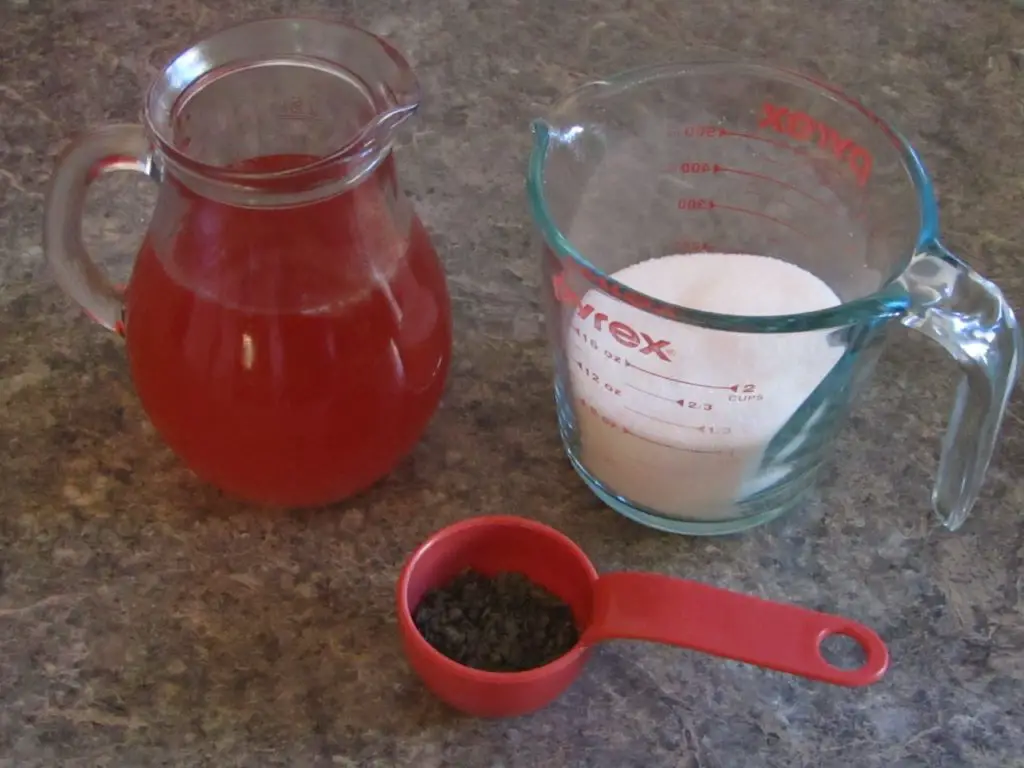
Kombucha uses very common and simple ingredients which you can get at any grocery store.  All you need is some form of non-flavored tea, some kombucha culture and a sugar source.  For a one gallon batch of kombucha you will need:

IngredientQuantity Cost
Tea (loose leaf or bagged)¼ – ⅓ cup or 6-8 bags~ $1.00 – $2.00
Sugar sourceOne cup per gallon$0.10 – $1.00 depending on type

Once you have made your kombucha you have the option of flavoring it.  You can either drink it without carbonating it or you can second ferment it.  The flavoring can be anything you like, fruit juices, fresh fruit, ginger, herbs and roots or anything you wish to try.  The cost of these can range from a dollar or two to $5.00 depending on your choice.

Kombucha flavoring options

There are thousands of ways to flavor kombucha.  It can be flavored and consumed without carbonation (second fermentation)  or flavored and bottled to make into a soda.  If making kombucha soda the only requisite is it must contain some sugar, either natural or refined.  The sugar is used by the kombucha culture to make carbon dioxide which pressurizes the bottles.

If you are not second fermenting your kombucha you can use any flavoring you like.  Sweet juices, herbs and rhizomes like ginger and turmeric are great for flavoring kombucha. 

For some examples of how to flavor kombucha check out this article here.

Kombucha can be made sweet or sour 

Kombucha is made by the action of the kombucha culture consuming the sugar in the tea and converting it into mostly acetic acid but also some alcohol and lactic acid.  The longer the fermentation period the more sour your kombucha will get.  

This is the great thing about making your own kombucha, you can determine how sweet or sour you like it.  Some people like their kombucha sweet and only ferment it for 5-7 days.  This leaves a fair amount of sugar in the finished kombucha whereas some like to ferment it for 14-21 days.  This makes for a sour kombucha with little sugar left in it.  After a long fermentation period the kombucha contains high amounts of acetic and lactic acid.  

Kombucha can be made using a variety of teas

Most commercially made kombucha is made with regular black tea.  It has the familiar flavor which everyone who started drinking kombucha knows but this is not the only option.  Kombucha can be made from many different types of tea ranging from black, green, oolong, pu arh.  

Other options are not tea at all even though they are often called tea.  They include yerba mate, rooibos and some herbal teas.  Some people have even made kombucha with coffee so your options are limited only by your imagination.  

The only limitation is to not use tea which contains added oils or additional flavors.  These types of teas can hinder the growth of your culture.  Some even contain preservatives which are meant to keep the tea fresh.  These preservatives actually kill microorganisms which is very unhealthy for your kombucha culture.

Kombucha can be made with many types of sweetener

The sugar in the tea is what the kombucha culture uses for energy.  It will break down the sugar into mono-saccharides and use them in their respiration.  Although all commercial sugars are a combination of two types of simple sugars (monosaccharides) there is controversy as to which is better, shouldn’t be used and the positive or detrimental affects various sugars have on kombucha.

All sugar sources for kombucha are plant based sugars so they are made up of two monosaccharides, glucose and fructose.  Depending on the source the ratio may change slightly but they are basically 50% glucose and 50% fructose with some exceptions discussed below.

The differences in the sugar sources stem from the various minerals and other compounds found in the different sugars.  

Sugar type% glucose%fructoseminerals
White 5050No detectable amounts
Brown 5050Calcium, iron, magnesium, selenium, manganese, and potassium
Molasses 5050Manganese, magnesium, copper, selenium, potassium, iron, calcium
Honey4060calcium, copper, iron, magnesium, manganese, phosphorus, potassium and zinc
Coconut 5050iron, zinc, calcium, and potassium
Agave 4060potassium, calcium, and selenium
Malt 1000Potassium, calcium, sodium, magnesium, sulfate, chloride, iron, phosphate

White sugar is the usual form of sugar added to kombucha but others are also used.  Some people believe that the kombucha culture needs minerals and other compounds from the “unrefined” sugar to maintain their health.  Although it is true that they need some minerals to remain healthy they get these mainly from the tea leaves used to make the tea.

The use of any type of sugar is perfectly acceptable.  Depending on the type of sugar used the flavor of the kombucha will change.  White sugar has almost no flavor (due to its low mineral content) others will change the flavor, some subtly while others substantially.  

Besides malt, which contains almost 100% glucose, the other sugar sources contain enough fructose to feed the bacteria strains which metabolize fructose.  

Kombucha making is fun and creative

Although kombucha has a standard recipe which includes amounts of tea, sugar and water, the variations for making kombucha are endless.  You can alter the type of tea, steeping time, tea to water ratio.  You can also alter the type of sugar, amount (to a degree).  Other things which can be changed include:

  • Fermentation time
  • Fermentation temperature
  • Continuous method vs batching
  • Second fermentation vs non-carbonated
  • Second fermentation flavors

If you get bored you can also try making your own culture (instructions can be found here) or try making Jun, which is a version of kombucha made with green tea and honey.

How to make kombucha

Kombucha is one of the easier fermentations to make as it requires little equipment and the culture is very robust.  It can be made in varying amounts with a simple calculation to determine the ratios of tea, water, sugar and starter.  Once a routine is developed it can be made with a consistent flavor and is cheaper than store bought.

Equipment:

  • Kettle or other way to heat water
  • Large heat tolerant mixing container
  • Fermentation container
  • Measuring cups
  • Tightly woven cloth
  • Elastic band

Ingredients:

  • Tea leaves (bagged or loose leaf)
  • Sugar
  • Kombucha culture
  • Water

Kombucha ingredient ratios

Before you begin you will have to calculate the ratios of ingredients for your size of container.  As you continue to make kombucha you will adjust the ratios of tea and sugar to water but in the beginning it is a good idea to start with these ratios and to start small.

The tea to water ratio

The standard ratio of tea leaves to water is about ¼-⅓ cup loose leaf per gallon or about 6-8 tea bags.  The tea should be fairly strong with a nice dark hue.  

The sugar to water ratio

The standard ratio of sugar to water is 1 cup per gallon of water.  If you use less the culture may find it difficult to lower the pH low enough to protect itself from invasion from unwanted bacteria and mold.  Using more can cause your kombucha to get highly acidic or be overly sweet prior to bottling of the second fermentation which can cause highly carbonated kombucha.

The kombucha starter to water ratio

cooled tea in a one gallon jar with two cups of kombucha culture in a glass container

The standard amount of kombucha starter (kombucha from a previous batch) is 10% of the volume.  Therefore for a gallon of kombucha use 1 ⅔- 2 cups of kombucha for a gallon of kombucha.  It is a good idea to err on the plus side when adding the culture for two reasons:.

  • The extra culture will pre-acidify the batch protecting it from contamination 
  • The extra culture will start the fermentation quickly 

Ingredient details

There are basically three ingredients to kombucha (unless you include the flavoring for the second fermentation).  They are tea, water and culture.  There is a lot of debate about what type of tea can be used, should the water be filtered and what makes up the kombucha culture.

What tea you should use

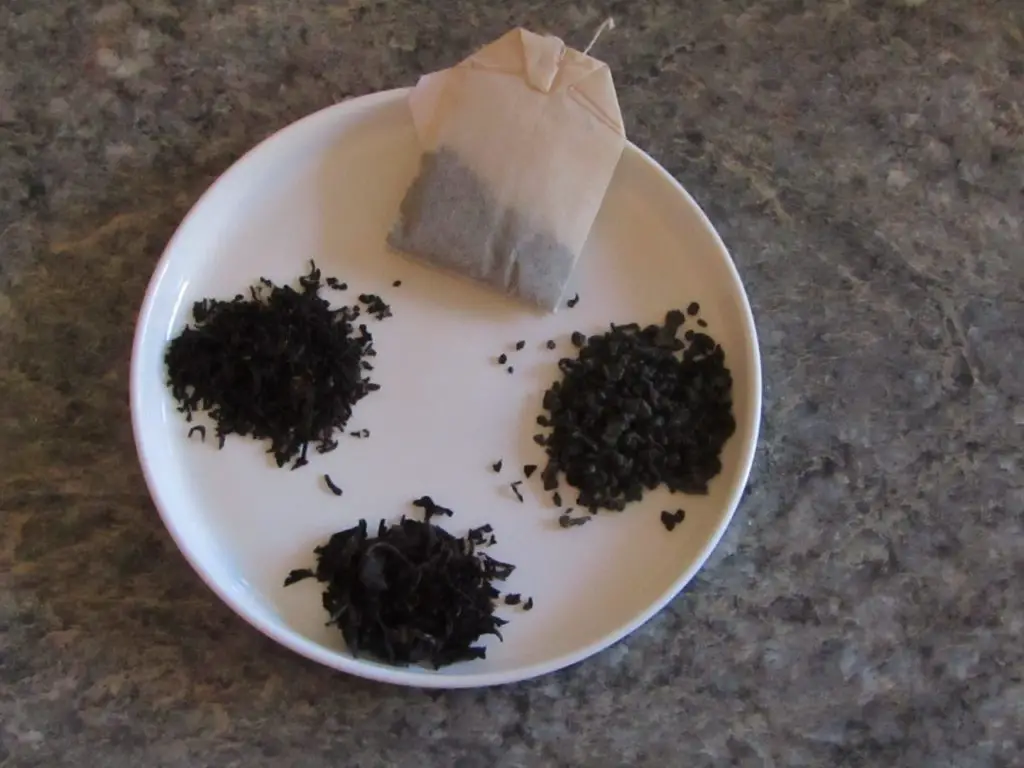
Four types of tea for kombucha: loose leaf green, black and oolong with a black tea bag

Commercial kombucha is made with black tea without any flavoring such as ceylon and in the beginning it is a good idea for you to keep it simple.  Once you have been making kombucha for a while you can experiment with different types of tea like oolong, green or pu erh which will produce a slightly different flavored kombucha.  These teas have different processing methods which produce tea with different makeup.

It is important to stay away from flavored teas as they usually have oils and other ingredients which are not good for the culture.  

There are many options for making kombucha for the more adventurous so once you get started making it there are lots of options to try.  To learn more about your tea options read this post here.

What kind of water

The debate over what type of water which should be used for making kombucha will continue to eternity so here are some details which you can use to decide for yourself.

Most tap water is chlorinated which is not good for the kombucha culture.  Chlorine is used as a disinfectant killing bacteria indiscriminately, boiling will not remove the chlorine so it is a good idea to use filtered water or some other source of unchlorinated water. 

It can be distilled water but since distilled water does not contain many minerals you should use a source of sugar which supplies some minerals.  

Where to get the starter culture

There are several options you have for obtaining a kombucha culture.  Depending on your spirit of adventure you can either purchase a commercially produced starter, use some kombucha from either a friend who makes kombucha or raw kombucha from the store or make one yourself. 

Using a commercial starter

There are many online resources you can use to purchase a kombucha starter.  They will send you some liquid starter culture with a SCOBY.  The SCOBY is a pecile which is formed by the liquid kombucha culture.  You may also find one at a well stocked health food or farm store.

Acquire one from a friend

Kombucha is made by using some of a previous batch to inoculate the next batch.  By getting some kombucha from a friend you will be able to start your own batch.  You don’t need a SCOBY so long as you use the high end of the ratios for kombucha starter to water for your first batch.

Make your own 

The bacteria and yeasts which makeup a kombucha culture are everywhere.  They are mostly made up of acetic acid bacteria, yeasts and some lactic acid bacteria.  These can be found in every environment and if you are patient you can make your own culture using the bacteria found in your environment.  For a full explanation of how to make your own kombucha starter read this article here.

Step by step instructions for making kombucha:

  1. Boil enough water to fill the fermenting container after adding the starter
  2. Add the tea to the container and pour the boiling water over them
  3. Steep the tea for at least 5 minutes.  Longer will not change the flavor
  4. Strain out the tea bags or leaves into the fermentation container
  5. Add sugar and stir to dissolve
  6. Let tea cool to room temperature
  7. Add the culture and stir briefly to mix it into the sweet tea
  8. Place the cloth over the top of the container and secure with an elastic band
  9. Store in a warm dark location
  10. A SCOBY should start to form after 3-4 days
  11. After 4-5 days begin tasting the kombucha using a straw carefully slipped under the SCOBY
  12. Once it reaches the tartness you like you can either drink it plain or second ferment it

How to make kombucha soda

Kombucha soda is what most people understand to be kombucha.  It is a result of bottling the finished kombucha and adding some form of flavoring and sugar.  The flavoring can be anything you like, fruit juice, whole fruit, spices or some type of sugar.  This is how kombucha is sold in stores with a constantly growing list of flavor options.

You can get some ideas of how to flavor kombucha by reading this article here.  Which will  provide you with an incomplete list of options but does give you a good idea of how many ways kombucha can be flavored.  

The common feature of all flavorings is additional sugar.  The sugar in the flavoring, either added or present in the flavoring, feeds the culture in the bottle which produces carbon dioxide, pressurizing the bottle and making it fizzy.

Equipment:

  • Pressure safe bottles
  • Funnel if using a liquid flavoring
  • Siphon if making a large batch
  • Marker or other labeling device

Ingredients:

  • Fermented kombucha
  • Flavoring agent

Instructions:

  1. Remove the SCOBY from the top of the fermented kombucha
  2. Prime the siphon with kombucha
  3. Fill the bottles ¾ full from the siphon
  4. Add the flavoring.  
  • If liquid flavoring is used fill bottle leaving an inch or so at the top of the bottle
  • If solid flavoring is used add flavoring and top up the bottle with kombucha or filtered water
  • If using herbs add the herb and sugar then fill 
  1. Cap the bottles and store in a warm dark location for 3-5 days
  2. Check carbonation level on one bottle
  3. When it reaches desired level of carbonation refrigerate