Urban Fermentation

Recent Posts

Does milk kefir need to breathe?


Milk kefir is regarded as one of the best probiotic foods you could have.  The reason for this is the wide variety of bacteria and yeast species which live in and around the kefir grains. 

Kefir grains have acetic acid bacteria(AAB) and lactic acid bacteria(LAB) present.  AAB requires oxygen to grow but LAB does not.  Since both types of bacteria will acidify the milk causing it to thicken either way will produce kefir but the resulting kefir will vary in flavor and texture.

There are a few important things to understand before you decide which method you are going to use to ferment you kefir.

How much alcohol you want in your kefir

For more information about alcohol formation in kefir read “Does Milk kefir have alcohol?” but in short an anaerobic fermentation will increase the amount of alcohol in the kefir because of three main reasons.

  1. The action of the yeasts especially Saccharomyces cerevisiae (The yeast used in the wine industry) produces a high amount of alcohol in an anaerobic environment.
  2. The growth of the acetobacter is limited.
  3. No alcohol is dissipated into the air due to the lid

Yeasts grow the best in aerobic (with oxygen) conditions but can change their respiration to continue to grow in anaerobic (without oxygen) conditions.  When they do that they are not as efficient at consuming the available sugars which produces more alcohol and carbon dioxide. 

Fermenting kefir in an aerobic environment reduces the amount of alcohol which is produced by the yeasts and increases the growth of acetobacter.  Acetobacter converts the alcohol into acetic acid otherwise known as vinegar.

The rate alcohol evaporates is dependent on three main conditions.  Temperature, concentration and surface area.  By putting a lid on the kefir no alcohol can escape so it will have a higher alcohol content.

What you want your kefir to taste like

Promoting the growth of different cultures in your kefir grains alters the flavor of the kefir. 

A fermentation which is dominated by yeasts will give it a yeasty flavor

Of the three main types of cultures the yeast has the most identifiable flavor.  The flavor of sourdough bread or freshly baked leavened bread.  Which in bread is great but you may not like it so much in kefir.

One which is dominated by lactic acid bacteria has a sour flavor and make kefir grains slimy

Lactic acid bacteria produce the sour flavor in the kefir which many people like but it also produces the biofilm on the kefir grains which protects the grains from pathogenic bacteria and is thought to be part of the building blocks of the kefir grains.  A certain amount of biofilm is good but too much gives the kefir a sticky slimy texture which may not be pleasurable to drink.

Lastly one dominated by acidic acid producing bacteria will have a vinegar flavor

Acebacter is the main acidic acid and is the bane of wine making.  Wineries go thorough great lengths to keep Acebacter out of their wine culture but in kefir it is a natural symbiotic partner of the yeasts in the grain.  It imparts the tangy flavor in the kefir which makes it great for a morning milk substitute although too much of it makes it unpleasant to drink.

Each of these three main cultures are normally found in kefir grains and have different optimal growing conditions. 

Culturing your kefir without oxygen will allow the yeasts and lactic acid bacteria to grow but will slow down or stop the growth of acebacter and other acidic acid forming bacteria.  This is good if you want a higher than normal alcohol content and more biofilm production.

This is because the lactic acid Lb. kefirin reproduces well in an anaerobic environment which is one of the main producers of the slimy biofilm which coats your kefir grains.

What to cover a kefir fermentation with

For aerobic fermentaiton

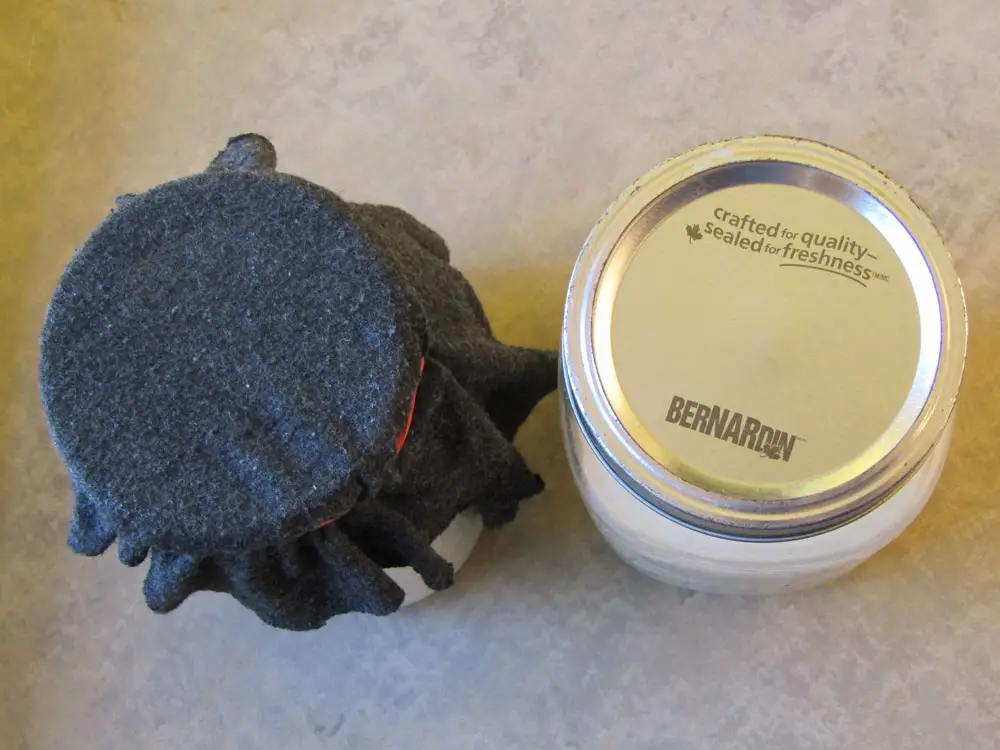
If you have just started making kefir then I suggest you make it with a breathable lid.  There are many choices which I have seen floating around the internet.  Everything from coffee filters to special kefir making lids on special bottles.  My suggestion is to tear up an old cotton T-shirt into small squares and find an elastic band.  Just as long as the cloth does not have any holes large enough for insects or dust to get into the container it will work fine.

When you use mason jars for making your kefir one T-shirt will make at least ten jar covers which allows you to always have a clean one on hand when you go to move your kefir along.

For anaerobic fermentation

If you are using mason jars then anaerobic fermetation can be achieved simply by using a canning sealer lid or a plastic jar lid which does not allow the free flow of air. These lids should be burped every once in a while to prevent the buildup of carbon dioxide gas.

Another option is to use mason jar air locks. These are essentially a plastic lid with a wine air lock in the middle. They can cost up to $16.00 but are worry free so if it is worth it to you they are available.

Another option is to use any glass bottle with an opening large enough to place a large wine stopper and air lock in it. Wine air locks are cheaper and easier to find, will last a long time and can be cleaned easily.

Once you are experienced at making kefir then you need to determine what you are going to use the kefir for before you make it.

Characteristics of kefir made with oxygen
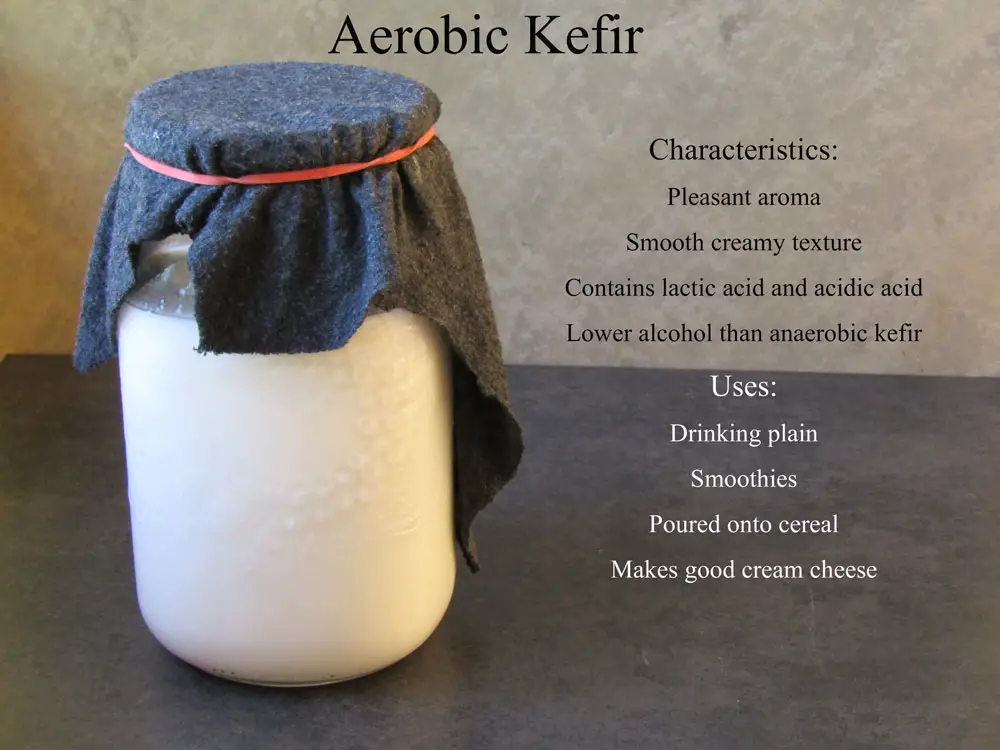
Kefir made with a permeable lid has all three main culture types active in it.  The sugar in the milk is consumed by the yeasts and the lactic acid bacteria in a competitive way.  This keeps the yeasts and lactic acid bacteria healthy but not allowing the other to dominate, making for a kefir which is not too yeasty or sour. 

The acidic acid bacteria acebacter has access to oxygen so it produces acidic acid and removes some of the alcohol from the kefir making for a kefir which has some tanginess to it.

This type of kefir is great for the morning smoothie, to pour over cereal or to just drink as a milk replacement.  It is low in lactose and has a lower alcohol content.  This is the type of kefir the grocery store tries to produce with only a few bacterial cultures.

Characteristics of kefir made without oxygen
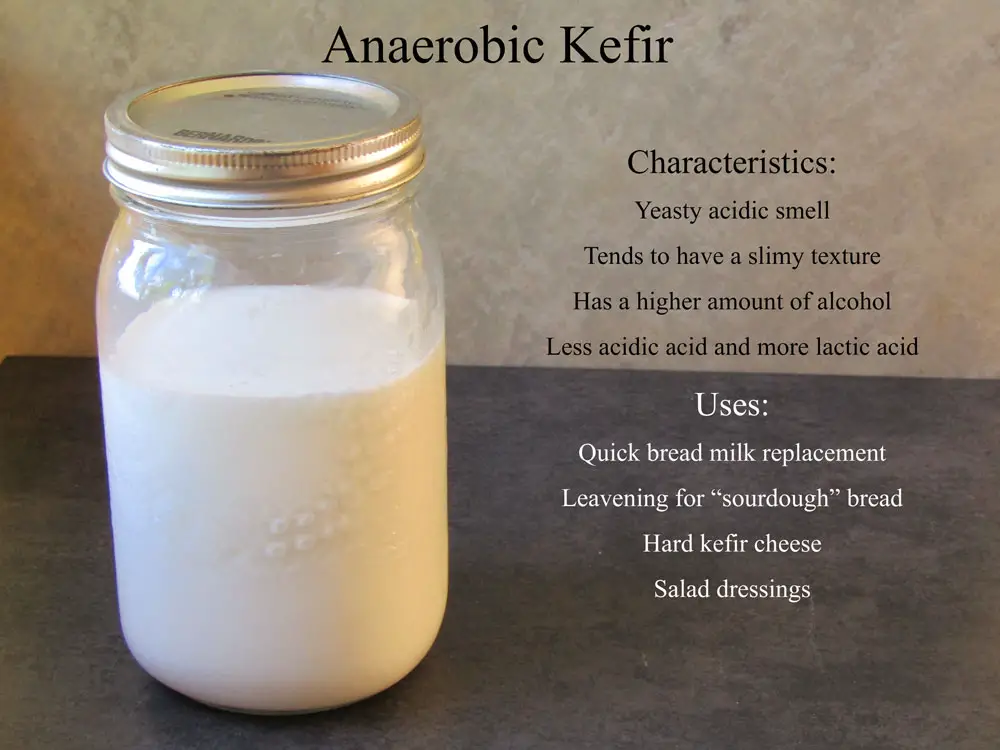
Kefir made in an anaerobic environment is high in lactic acid and may have more alcohol because this culturing method allows the growth of lactic acid bacteria and the yeasts but eleminates acebacter.  These produce carbon dioxide as a by product and therefore must be treated differently than aerobically fermented kefir.

The texture of kefir made this way has a stringy sticky texture.  This is because the lactic acid bacteria which are anaerobic in nature have the edge on the yeasts which can survive in this environment but are less efficient.  The lactic acid bacteria produce a high amount of biofilm which surrounds the kefir grain protecting it from pathogenic bacteria. 

Kefir which is made this way is great for salad dressings, quick bread baking as well as can be used as sourdough starter due to the acidic nature and presents of the yeasts.

Kefir cream cheese made with anaerobically fermented kefir makes a really creamy zesty cream cheese and if it is pressed can make a great hard kefir cheese which if it is stored in a refrigerator will last a long time.

Which is the right way?

When it comes to making kefir there is no right or wrong way.  There is only the way the maker likes it.  Fermentation is an active process which is full of experimentation and learning.  If you are not sure which way you like your kefir try it both ways.  Compare how they taste and make your own decision.

You can even make some of both for different reasons.  Make some for baking and some for drinking.  Try making some into ice cream or fruit rollups.  The possibilities are endless and the method is open for you to decide which you prefer.
Does milk kefir have alcohol?


There are two types of kefir which need to be considered, store bought kefir which does not contain alcohol and homemade kefir from kefir grains which on average contains 2.5% alcohol.

Store bought kefir is alcohol free but homemade kefir can have between 0.5-3.0% ABV.  The alcohol is produced by the yeast cultures found in the kefir grains and varies depending on the milk’s lactose content, fermentation time, oxygen availability and fermentation temperature.

The amount of available fermentable sugars

It is well known that the amount of alcohol that yeasts produce is dependent on the amount of fermentable sugar present.  The use of a hydrometer which measures the specific gravity of a solution is used in wine and beer making to determine how much sugar is dissolved in the solution before the yeasts begin to ferment it. 

Milk is not like a fruit juice or wart which is used to make wine or beer but it still contains a fair amount of sugars which the yeast use to produce alcohol.

The amount of oxygen

In general yeasts require oxygen to grow which has led people to believe that if they ferment their kefir in an anaerobic environment their kefir will have less alcoholic content but that is not exactly true.

Alcohol is not something which the yeasts need or want in the solution rather it is a byproduct of respiration.  This means that the yeasts excrete alcohol into the solution as waste.  This waste is produced in higher amounts when the yeasts are stressed, like surviving in an anaerobic environment.  One yeast which exists in kefir grains is Saccharomyces cerevisiae produces a high amount of alcohol when placed in an anaerobic environment.

The ambient temperature

The ambient temperature of the fermentation affects the cultures in the kefir grains differently.  Saccharomyces cerevisiae, which has been used in the wine industry fermention process, produces alcohol over a wide range of temperatures.

Generally the yeasts are less active at lower temperatures allowing the bacterial cultures to use the sugars to produce lactic and acidic acid.  This makes the kefir more tangy and acidic tasting and will take longer to ferment. 

If the kefir is fermented in the higher range the yeasts especially Saccharomyces cerevisiae produce large amounts of alcohol quickly. 

The activity of acetobacter

Acetobacter can be a problem in the wine industry as it converts the alcohol in the wine into acetic acid changing the wine into vinegar.  Not something which they want in the wine industry but when it comes to kefir we appreciate the action of the acetobacter in the kefir.  It lowers the amount of alcohol simply by using it as food.  The more acetobacter in the kefir fermentation the more alcohol will be converted into acetic acid.  The problem with this is the change in pH with the added acidic acid makes the kefir sour.

How to lower the alcohol content in kefir

To lower the alcohol content of your kefir and still get a kefir you like may take some experimentation.  The above factors all play a part in the final taste and texture of the kefir so changing one will affect the others. 

The amount of sugar in the milk

Each type of milk whether it be cow’s milk in some form, goat, sheep or any other available milk has a different chemical makeup which includes how much available sugar it contains. 

Cow’s milk varies depending on the amount of milk fat in it.  Homogenized milk has the least amount of available sugars as some of the energy is tied up in the milk fat.  This makes it less available to the yeasts.  Once you get down to 0% or skim milk the sugars are mostly available to the yeasts to produce alcohol.

Goat’s milk is naturally homogenized and has less sugars then cow’s milk and sheep’s milk is between the two.

Type of milkLactose content
Cow4.93
Sheep4.76
Goat4.33

Choosing the type of milk affects the final flavor and texture of your kefir so you will have to experiment with what you like.  Skim milk makes a thin fizzy kefir which is great for just drinking.  As the fat content increases the kefir gets thicker and less fizzy. 

Kefir made with 10% table cream or whipping cream makes a high fat creamy kefir which resembles yogurt in texture but has a buttery flavor with little alcohol or fizziness.

Ferment with Oxygen

Fermenting your kefir in an aerobic environment helps to lower the alcohol content in three ways.

  1. It helps the yeasts respiration to be efficient and as a result they will produce less alcohol overall
  2. Some of the alcohol will evaporate due to the air exchange and its volatile nature
  3. Acetobacter can grow and convert some of the alcohol to vinegar

Acetobacter is the bacteria which consumes alcohol and produces acetic acid which is the main acid in vinegar.  The reason the activity of acetobacter is important to the alcohol content is that it uses the alcohol in its respiration.  Acetobacter is most active within the temperature range of 25 to 30 degrees Celsius

Ferment your kefir at a temperature between 20 to 25 degrees Celsius.  This range helps to keep the various organisms healthy and growing.  Both the Acetobacter and the lactic acid bacteria grow rapidly at a temperature range of 20-30 degrees Celsius. 

The yeasts tend to grow rapidly in warmer temperatures which can overwhelm the other cultures like acetobacter and the lactic acid bacteria.  When this happens the kefir will be more alcoholic as more of the available sugars have been used by the yeasts. 

At lower temperatures the dominate cultures will change and as a result the flavor and mouth feel will also change.  At lower temperatures there will be less yeast activity and as a result less carbon-dioxide which makes it less fizzy. 

Can you get drunk off kefir?

To be considered drunk in a legal sense your blood alcohol percentage needs to be 0.08 or above for you to be considered drunk.  How much alcohol you must consume to have that much alcohol in your blood stream is dependent on factors like your weight, metabolism, gender and drinking pattern but on average this is a good number to use.

It can take only one drink of regular alcoholic beverage to reach a blood alcohol percentage of 0.08.  One 12 ounce bottle of beer at a 5% alcohol content consumed in an hour can do it so it is possible that if your kefir alcohol content was 2.5% and you drank 24 ounces of it in under an hour your blood alcohol may get close to 0.08%.  Essentially you will have to consume a large sized container of kefir in under an hour if only alcohol percentage and time were considered. 

Another consideration is the time it takes for the kefir to move from the stomach to the small intestine.  The stomach absorbs some of the alcohol in any alcoholic beverage at a rate much lower than that of the small intestine.  That rate depends on the concentration of the beverage.  For highly concentrated beverages such as hard liquor the rate is much higher than that of beer and would be even less with a concentration of kefir at 2.5%. 

This is important because milk takes about 90 minutes to pass from the stomach to the small intestine.  While the kefir is still in the stomach the alcohol is being absorbed into the blood and metabolized by the liver at a much slower pace than from the small intestine.  This allows the liver to deal with the alcohol and keep the blood alcohol level lower.

Once the kefir reaches the small intestine it has an even lower alcohol concentration making its absorption slower.

The bottom line is that yes you could get drunk on kefir if you were to consume high amounts of it quickly and consistently over a few hours but it is unlikely that you could consume enough kefir to reach that point.

How long should I let my kefir ferment?


Once you have activated your kefir grains and they are making kefir regularly you may wonder if you are fermenting the milk the correct amount of time. This is very subjective and depends on how sweet or tart you like your kefir.

Kefir grains use lactose found in milk to acidify it.  When it reaches a PH of 4.6 it will begin to gel and can then be considered kefir.  This process can take 12-24 hours but can vary depending on the grain to milk ratio, temperature, type of milk, activity of the grains and personal taste.

The ambient temperature of the room

The various cultures which make the kefir grain their home have a temperature range of 60 – 90 degrees but they are most active between 65-85 degrees.  Anywhere below 65 degrees their metabolisms will slow down and they will take longer to acidify the milk.  Anywhere above 85 degrees some of the strains in the kefir will die out and above 90 several will not survive if this temperature is maintained over a longer period of time.

The kefir grain to milk ratio

The higher the ratio of grains to milk the shorter the time it takes to ferment.  This is because the cultures in the grains need food and if there are a lot of grains per cup of milk the milk will become acidified sooner.

Over time the grains will continue to grow and the ratio of grains to milk will change unless you remove some from the fermentation jar.

Experiment a little to see what ratio you like and try to stay as close to it as possible.  If you find that you have extra grains there are lots of things you can do with them.  For some ideas read this post on what to do with too many kefir grains.

The type of milk used

Milk of different types have different chemical makeups which vary in the available lactose, fat and protein content.  The grains use all of these for energy but the lactic acid bacteria which produce the lactic acid need simple sugars like lactose to grow.  The more lactose available in the milk the faster the milk will turn to kefir.

How tangy you like your kefir

Kefir can be made to suit your needs.  It can be made sweet and fresh by fermenting it until it just starts to gel or it can be fermented longer to become a tangy kefir with lots of lactic acid in it.

The tanginess of the kefir depends on two things:

The amount of remaining sugars in the kefir.

The cultures in the kefir grains will grow surprisingly fast when there is available milk sugars.  The lactic acid bacteria can double in population every 2 hours if there is enough available sugars for it to grow.  As the sugars get consumed their growth will slow down but will still continue to consume the sugar in the milk.

The overall PH of the kefir

As the lactic acid bacteria grow it produces lactic acid which lowers the PH of the kefir until it reaches a PH of about 4.2.  Once it gets this low the action of the lactic acid slows due to lack of sugar but if left long enough it will continue to reduce the PH.  The range of acidity which some species of lactic acid bacteria can produce is down to a PH of 3.5.

The difference is the overall PH of the kefir and the remaining amount of sugars, mostly lactose, which is found in the milk.  The cultures in kefir grains grow surprisingly fast when there is a high amount of food energy available but as the food energy is consumed the growth slows and consequently the rate it acidifies.

Kefir is great for those who are lactose intolerant because the lactose is severely reduced as the kefir ferments.  If you are lactose intolerant the amount of time it takes to make a kefir which is low enough in lactose to be comfortably consumed is longer than those who are not lactose intolerant.  You may have to ferment your kefir 48 hours before you can use it.   It all depends on your situation.

The current state of the kefir grains

Kefir grains are full of living cultures of bacteria and yeast which need food energy to survive.  These cultures are hardy and can survive a wide variety of environmental conditions like dehydration, cold temperatures or highly acidic PH.  The challenge is that the cultures in the grain grow at different rates depending on the environment.

This is what people mean when they talk about the health of their kefir grains or letting your kefir grains acclimatize to any new conditions.  Every time the environment changes the ratio of cultures will change in the kefir.  Since there are up to 50-60 different cultures in the grains at any environmental changes can affect the rate the kefir ferments.

Kefir grains which have been refrigerated for a long period of time may need longer to ferment until the population of the cultures equalizes.  It may take a few batches of milk before the grains produce a pleasant kefir you like.

How do you know when kefir is ready?

Once the milk has reached a PH of 4.6 it will begin to gel and at that point would be considered kefir but when it is ready is up to you.  It may take some experimentation to find just how long you ferment it with how many grains and at what temperature.

Kefir can be made with a short fermentation time producing a kefir with lots of milk sugars and whole proteins and tastes sweet and slightly fizzy or it can be fermented longer to lower the lactose and increase its acidity making it tangy and less fizzy.

How you like your kefir is up to you so do some experimentation with varying temperatures, fermentation times and types of milk.

What if I let it ferment longer?

The longer you let your kefir ferment the tarter it becomes.  This is because as the cultures ferment the milk it consumes the sugars in the kefir.  As the lactic acid bacteria consume the sugars they produce lactic acid which lowers the PH of the kefir.  The acidity of the kefir will reach a threshold at about a PH of 4.2 but as the sugars are consumed the kefir will get sourer.

The milk fats will continue to solidify and form curds on the top of the container.  If left long enough it will begin to smell like cheese.

Kefir made with kefir grains is a very stable environment and will remain usable for a long time but it may no longer be to your liking to drink it or pour it on your cereal.  It is okay there are lots of things to do with over fermented kefir just check out this post of 23 ways over fermented kefir.

How do you know if kefir is bad?

If you detect mold growing on the surface of the jar or it begins to smell off, like sulfur or rotten milk then your kefir should not be consumed.  Although this is a very rare occurrence as kefir made with kefir grains as it is a very stable product.

Even after the grains have been removed the active cultures in the grains will continue to protect it from spoilage by maintaining an environment which the spoilage bacteria cannot grow in.  At the same time it will compete for food within the culture and as it ages the population of each culture will rise and fall depending on the available food sources.  This makes the kefir a very stable micro-environment which ages well.

Since the cultures in the milk continue to ferment the milk even in the fridge it is best to consume your kefir within a week of making it before it gets too sour for you to drink it.

Why are my kefir grains slimy?


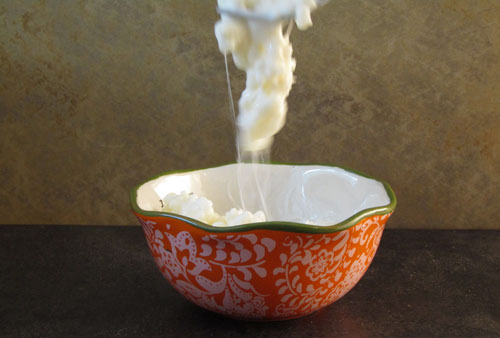
Slimy kefir grains falling into a bowl

Once your kefir grains are activated they will start to get bigger and softer as they get hydrated from the milk they are fermenting. You may start to notice a slimy coating forming around the grains as you strain them out of the milk.

Kefir grains become slimy when microorganisms found in the grain begin to produce a biofilm around the grains.  It appears in varying amounts once the grains have been fully hydrated and is a sign of healthy grains.  If the kefir is overly slimy, changes in environment can slow its production. 

This biofilm acts as a protectant from invading bacteria.  It is anti-microbial and anti-fungal making it an effective barrier against environmental pathogens.  It is also one of the materials used in the construction of kefir grains.  Lb. kefiri is involved in the production of a exopolysaccharide which is one of the materials used in production of the kefir grain.  The presence of this biofilm is a sign of a healthy kefir grain and kefir grain growth.

Is it okay to eat kefir made with slimy kefir grains?

Kefir made with slimy grains may not be as appetizing as fresh slightly fizzy kefir but it will not harm you.  A slimy consistency of kefir indicates that there is a high amount of biofilm produced by the kefir grains which has been dispersed into the kefir. 

This biofilm will adhere to most surfaces and provide protection from pathogenic microorganisms.  Much like the mucus in our digestive tracks and lungs protect us from sickness by capturing and destroying foreign objects. 

It also may also help the probiotic species which are active in the kefir to get past the high acidity of the stomach acting as a buffer and therefor increasing their survival rate.

What the slimy stuff is made of

The slimy stuff (biofilm) is made up of mostly polysaccharides which are several sugar molecules linked together to make one long chain.  Polysaccharides are what makes up sugars and carbohydrates and can be different shapes and sizes.

Depending on the length and shape of the chain of sugar molecules they can be anything like starch, lactose or white sugar.  The polysaccharides which make up the biofilm come mostly from the lactose found in the milk once it has been broken down into smaller pieces.  They store concentrated energy, help with cellular communication and can be made into a variety of structures.

How to alter the amount of biofilm produced by kefir grains

The cultures which are present in the kefir grain are varied depending on the source of the grains, its current environment and its food source.  There have been up to 50-60 different culture species found in a single kefir grain.

Each of these species react differently to variations in environment and perform different roles in the kefir grain community.  Yeasts such as Lb. kefiranofaciens and others produce a biofilm which is thought to be crystalized further by Lb. kefiri in the formation of the grains. 

Some lactic acid bacteria act as biofilm inhibitors which reduce the amount of biofilm produced.  They may prevent some yeasts from making the biofilm or they may use some of the biofilm as food, converting it into even smaller polysaccharides. 

This push and shove relationship can make it difficult to produce a consistent kefir at home and sometimes the kefir may be slimier than expected. 

There are several factors which alter the consistency of your kefir such as temperature, fermentation time, condition of the grains and the milk it uses for food.  For an in depth method to adjust the conditions of kefir fermentation read Five Reasons Kefir Separates: Plus The Real One

Briefly if you want to reduce the amount of biofilm produced you need to increase the action of the lactic acid bacteria and reduce the yeast activity.  Since lactic acid bacteria are less temperature sensitive if you reduce the temperature the kefir is fermented this may reduce the slimy texture. 

On the other end of the scale you may have noticed if you have stored extra kefir grains in the fridge that the slimy texture of the grains is higher after about a week of storage.  This is because even though the fermentation is cooled it still continues to ferment the milk it is stored in.  The yeast in the grains will continue to convert the lactose into shorter chain polysaccharides while the lactic acid bacteria produce lactic acid.  This environment when left alone for a week or so will slowly acidify the milk and produce abundant amounts of biofilm. 

Some people believe that the kefir grains produce more biofilm in cooler temperatures but this is untrue.  Kefir cultures are more active in warmer temperatures then cooler ones so they will produce more biofilm then when cool. 

It may take a few days for the grains to readjust to its new state so be patient.  If the kefir is still too slimy for you then shorten the fermentation time or reduce the amount of grains to milk ratio.

How to reduce the slimy texture of kefir

Sometimes the biofilm on hte grains can get excessive and start to effect the texture of hte kefir itself. If you find yourself in this situation you may want to reduce the slimy texture of your kefir which is already made.

To do that try adding some fresh milk to the jar and let it ferment for 12-24 hours. Since the cultures are still present in the keifr the milk will be converted into kefir but without the added slimy texture from the excessive amount found on the frains.

Lb. kefiri the yeast which is thought to be key in the production of the biofilm grows quickly in warm temperatures so if you reduce the ambient temperature where you ferment your kefir the yeast will produce less biofilm overall and the kefir will have better texture.  The lower the temperature in the room the slower the action of the yeasts which produce the main components of the biofilm.

What to do with slimy kefir

Slimy kefir has not gone off.  It still has value and can be used for a number of things even if you don’t want to drink it like you would non-slimy kefir.  In fact some of the properties of kefir with a high amount of biofilm is useful in a variety of recipes.

Smoothies

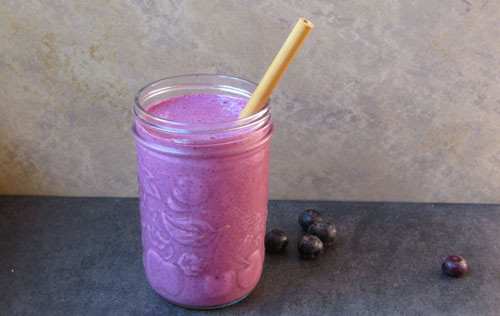
Smoothies are an ideal way to use kefir which is high in biofilm.  The stickiness of the biofilm helps the smoothie remain uniform. 

The usual method to prevent a smoothie from separating is to use bananas or other soft fruits which have a creamy nature.  The problem with this is the high sugar concentration of these fruits can make the smoothie hard to digest, higher in calories and add flavors which some may not like.

Kefir which has a high amount of biofilm in it tastes essentially like kefir which has a low amount of biofilm.  This means that the use of kefir with a high biofilm content will not change the flavor substantially but the biofilm will help the smoothie from separating in the glass.

Dressings

Creamy salad dressings have the same problem as smoothies when made at home.  This is because when they are made at home emulsifiers like gaur gum are not added.  This can lead to your salad dressing separating into oil on top and water based ingredients on the bottom.

With the addition of kefir with a high amount of biofilm in it the dressing will stay combined longer.  It will also help the dressing stick to the contents of the salad rather than sinking to the bottom of the bowl.

Fruit leather

Fruit Rollups

Kefir which is stringy and holds together is ideal for making a fermented fruit leather.  It provides an interesting tangy flavor to the fruit leather, helps it to last longer and helps to keep the leather together. 

It can be made with any type of fruit and is easy to make if you have access to a dehydrator.

Granola

Granola is usually a collection of oatmeal, dried fruits, nuts and seeds all held together with some type of syrup.  This makes granola full of vitamins and minerals and good for you proteins but with the added sugar which holds it together the benefits are severely reduced.

Granola which is held together with kefir on the other hand is lower in sugar content and if you dehydrate the granola rather than cooking it to remove the excess liquid the probiotics in the kefir remain intact along with the heat sensitive vitamins in the fruit, nuts and seeds.

With the addition of the kefir the granola will store for a long time due to the slightly acidic nature and the active cultures which remain.

Gravy

Gravy is usually made by adding some form of gluten containing starch to broiler pan drippings and then heated to form long strands of gluten which thicken the gravy.

Of course the problem with this is gluten is hard to digest and for some is not tolerated well.

Instead if you make gravy with kefir with a high biofilm content it can thicken the gravy without gluten and at the same time make the meal it is served with digest faster and better.

Baking

Kefir which is highly slimy has a high concentration of active yeasts in it.  It is these yeasts which eat the carbohydrates in the flour and make CO2 gas which causes the baking to rise.  This can be used as a fast way to make sourdough bread if you don’t have time or inclination to start a sourdough starter.

It can also be used in biscuits or other recipes using soda or baking powder.  The acid produced by the lactic acid bacteria react with the basic baking soda or baking powder and provide additional rising power making the recipe fluffier.

Are kefir grains edible?


Once you start making kefir you will soon begin to experience a problem most kefir makers come across.  Your kefir grains continue to grow and soon begin to overrun your containers.  Since you don’t want to just throw them out can they be eaten?

Kefir grains can be eaten since their makeup has four main components: proteins, lipids, polysaccharide and a symbiotic culture of bacteria and yeasts.  Kefir grains provide a highly absorbable form of protein, insoluble fiber and live probiotic cultures high in B vitamins and calcium.

Proteins

There are up to 1500 different peptides found in kefir, 609 of these peptides are unique.  Peptides are used by your body to build muscle and bone, are used in the production of collagen which helps maintain healthy skin as well as cell replication.

Lipids

Lipids in kefir grains come from the fat component of the milk the grains are fermenting.  Lipids are important fatty acids.  They are used in signaling, energy storage and vitamin transport to the cells in the body.

Polysaccharides

The polysaccharides which are found in milk is mostly made up of lactose, which is hard for some to digest but the cultures in the grains use this sugar for food and therefor break it down into simpler, more easily digested sugars.  Some of this sugar is included in the grains to help maintain the cultures which call the grains home.  As the various micro-organisms consume these sugars the saccharide chains get smaller and smaller. 

The smallest form of sugar in a mono-saccharide, meaning one sugar molecule.  This is the most easily digested form of sugar and is what your cells use for energy.  The closer to a mono-saccharide the sugar is the more readily available it is for your body.

Bacteria and yeast

The bacteria and yeasts found in kefir are not pathogenic in nature.  They have the ability to survive through the stomach and help the gut to remain slightly acidic.  This helps keep your gut healthy and strong.

How kefir grains taste

Kefir grains taste like slightly sour kefir.  The lactic acid the grains produce is concentrated around the grains making them tangier then the kefir milk they produce.  They have a firm texture not unlike a gummy bear. 

How to eat kefir grains

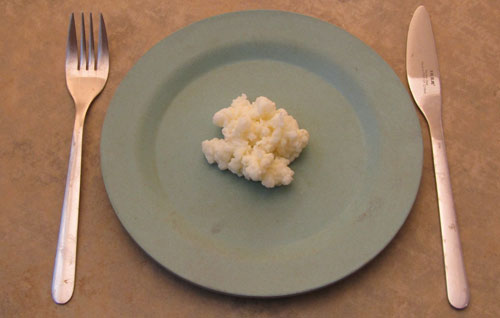
Kefir grains are white cauliflower shaped formations which seem to grow with time.  When they are first filtered out of the milk they don’t seem very appetizing but with a little imagination they can be consumed in a variety of ways.

Blended into smoothies

This is my favorite method of using extra kefir grains.  The grains are added into the smoothie along with all the other ingredients and if you are using a high powered blender you will not even notice they are there. 

The benefit of this method is the grains get reduced to tiny particles which adds a degree of creaminess to the smoothie and makes it a little thicker.  They do not change the flavor besides making it a little tangier.

Added to salads dressing

Another blender option is making salad dressing.  Just put all the ingredients into the blender and blend until smooth.

Kefir grains make a great addition to salad dressing as they make the dressing thicker and give it a creamy texture.  The fats in the kefir grains mix well with the oil used for the salad dressing and the vinegar reduces the stringy texture. 

The salad dressing is best made shortly before you use it.  This is because the cultures in the grains will remain active and will continue to acidify the dressing.  The yeasts in the grains will begin immediately to break down the sugar in the dressing making it less sweet, the lactic acid bacteria begin to produce lactic acid making the dressing sour.

Baked into casseroles

The kefir grains will soften and add to the creamy texture of the casserole.  Adding kefir grains to a creamy mushroom casserole or a mac and cheese add protein which is easily digestible. 

If the casserole has some type of pasta then the kefir grains will not be distinguishable but will add valuable fats and proteins which can be easily used by your body.

Added to a stir Fry

A stir fry is a perfect way to use some of those extra kefir grains.  Drain them and pat them dry.  Then slice them thin and add them with the mushrooms and onions just before the tender vegetables get added.

The kefir grains will add a new texture as well as a slightly sour tang to the dish.

Added into soups

Depending on how long you simmer your soup will produce different textures of grains in the soup.  If the kefir grains are added close to the end of the cook time the grains will retain their original texture.

When they are added at the beginning the grains will soften and may dissipate into the soup.  Which is okay as the proteins fats and lipids will still remain in the soup making it more nutritious without change in the texture of the soup.

Another option is blended soups like cream of mushroom, carrot or onion soup.  These can all be made in the blender easily with the addition of kefir grains.

Used as a thickener for gravies and salad dressings

Gravies are usually thickened using some form of gluten but they can also be thickened with concentrated proteins which is what kefir grains contain.

The process is a bit different then using gluten as the gravy doesn’t thicken by forming gluten strings but through making it less hydrogenated (less water per cup). 

Make kefir grain gravy by cooling the drippings slightly, ladle off the fat which rises to the top.  Pour the drippings into a blender along with some kefir grains and a few of the vegetables which were cooked in the roaster.  Blend until smooth.  Adjust for thickness by adding more grains or more drippings as needed. 

Season to taste and serve immediately.

Use them as a starter for sourdough

Kefir grains have similar characteristics to sourdough starter in that they are collections of bacteria and yeast cultures.  The yeasts convert the carbohydrates it comes into contact with into CO2 and alcohol.  The alcohol is then converted into lactic acid by the lactic acid bacteria.

To use kefir grains as a fast sourdough starter blend about a tablespoon of grains with some water and flour to make a runny paste.  Let sit in a warm location for 24 hours or so.

The sourdough starter should be bubbly and have a sour smell.

Use as you would a normal sourdough starter.

Kefir grain candy

This can be made by dehydrating the grains slightly with a syrup made with honey of white sugar.  The grains cultures will be less active due to the lack of water which slows the acidifying action of the lactic acid bacteria helping to keep the candy sweet longer.

Be aware that as the candy ages it will acidify making them sourer as time passes.

Fruit leather

Simply add some fruit, kefir grains and sweetener to taste into a blender.  Blend until smooth.

Pour the mixture onto a silicone sheet and dehydrate until it is thickened to your liking. 

For other uses for kefir grains see the post “What to do with too many kefir grains”.

What to do with too many kefir grains


When you first start making kefir you may find that your grains seem to take a long time to start to grow.  Each time you use them they may get a little larger or more abundant but it doesn’t seem to be very fast.  Until one day when you go to strain your grains and find you only get half a jar of kefir rather than the usual amount.

It is then that most people realize that they have a few too many kefir grains.  It gets even worse if you start storing grains in the fridge while you use other grains to make your kefir.  It can eventually get to the point where you have more grains than anyone could ever use.  

So what do you do with all those grains?   Here are a few Ideas which could keep your grain collection under control.

Make more kefir

When you first started making kefir you probably had bought kefir from the store and used it sparingly. Once you start making your own you have the opportunity to make as much (or more) kefir then you can consume with the regular methods you had when you were buying it from a grocer. 

If you want to try using kefir in other recipes this is an opportunity for you to increase your production. You can increase production simply by upgrading the size of your container.  This will lower the ratio of kefir to milk and at the same time you will produce additional kefir on a daily basis.

There are lots of ways to use this extra kefir so if you find yourself with a fridge full of jars of slowly fermenting kefir try using some to make kefir cheese, smoothies and baked goods. 

Your other option is to use the extra grains to make kefir with different types of milk.  This way you can experiment with making goat’s milk kefir or kefir with a high fat milk content like table cream without risking your normal kefir supply.

Kefir made with goat’s milk is great for making salad dressings or creamy goat cheese. Kefir made with table cream makes a great ice cream or a topping for fresh fruit.

Make nut or seed kefir

Making kefir from nut and seed milks is another option if you want to try a truly lactose free kefir.

Kefir grains feed on some type of sugar and protein which is perfect for making nut or seed kefir as there is sugar and protein in the nuts or seeds.  You may have to add additional sugar depending on how tart you like your kefir. If you want to continuously make this type of kefir you will have to ferment some milk with the grains weekly to keep the grains healthy.

The kefir will have a different texture but it will acidify and have less sugar in it then the nut or seed milk did before fermentation.

Store some for later use

Although kefir grains are hardy and strong they are still collections of living bacteria and yeasts which need regular feeding and care.

It can happen that life gets in the way of making kefir and your grains may suffer from neglect and die.  If that happens it would be good if you have saved some for later use, then you will have a backup set of grains.

There are basically two methods of storing kefir grains for long term storage

Dehydrate the grains

The cultures in the grains need liquid to multiply and grow.  If the water is removed from the grains the cultures will become dormant and require little energy to maintain a viable culture. 

If you purchased a packet of kefir grains this is how they were shipped to you.  The culture company dehydrated some kefir grains added some powdered milk to maintain any active cultures in the grains and packaged them in air tight packets.

You can do the same thing to save some of your extra grains.

The easiest way to do this is with a food dehydrator.  Spread the grains out onto a tray and set the temperature at low.  You want to drive the water out not cook the grains so take your time.  It may take up to 2-3 days depending on the size of the grains you are dehydrating.

Once they are dry and hard package them in a glass jar with some powdered milk.  Store them in the fridge until you want to begin making kefir again.

Freeze the grains

To freeze your extra grains all you need to do is to pat dry some kefir grains, add some powdered milk and place the grains in a plastic bag.  Put them in the freezer.  It is best to remove as much of the air from the bag as possible and to store the grains in a deep freeze which keeps the grains below 10 degrees Celsius. 

Normal frost free freezers tend to cycle the temperature up and down as they defrost.  This can reduce the viability of the kefir grains over a longer period of time.

To reactivate your spare grains simply add the grains to a small amount of milk and leave them to rehydrate/thaw for 24 hours.  Strain out the grains and repeat the feeding until the milk starts to thicken.  You can now slowly increase the amount of milk the grains are fed until you are back up to making the amount you need daily.

Add them to smoothies

Some people find the grains slimy and unappetizing but they are completely edible and are actually made up of three basic ingredients:

  • Polysaccharides
  • Lipids
  • Proteins

These make great additions to any healthy smoothie drink. 

Many people add protein powders which contain all three of these ingredients.  If the powder is made from whey it is made up of basically the same ingredients. 

Whey is the liquid which is produced in making cheese and is then dehydrated and packaged in a powder form.  The process uses industrial machinery, transport trucks and a fair amount of energy.  Not to mention the addition of plastic packaging to make it look good.

The kefir grains are simply packaged in a semi-solid form require no industrial machinery or transport so don’t be so picky.  With a high powered blender you will never be able to taste a difference.

Give them away

Kefir grains were a closely guarded secret which did not promote freely giving them to anyone.  They were thought to become less effective when they were given to others as if the magic of the grains was diluted when they were passed on to others.

Today we know better.  Instead having a giving attitude is a healthy practice, it promotes a healthy perspective and better overall mental health.   

There are lots of people who would love to try making kefir from kefir grains.  Why not ask around and see who in your circle of friends would like to try it.  You will be surprised to find how many are interested. 

Use them for baking

The cultures in the grains are surprisingly similar to those found in sourdough starter. 

Sourdough starter is made up of a collection of lactic acid bacteria and yeasts which both acidify the dough and consume some of the sugars forming CO2 gas which causes the bread to rise.

Kefir grains also contain a collection of lactic acid bacteria and yeasts which acidify the milk and consume some of the sugar (lactose) in the milk.

The cultures do not care where they get their food from so they will grow just as well mixed into flour and water to make a quick sourdough starter.  Just add some water and flower to the grains and blend them in a high powered blender.  Let the culture grow for 24 hours or so until it is fermenting actively. 

Once it is actively fermenting you can use it to make sourdough bread.  You can keep some back and feed it if you want to repeat the process again or use it all and make new when you are ready for more sourdough.

They can also be added to non-leavened bread recipes which helps them to rise more and be fluffier.  This is due to the acidic makeup of the grains reacting with the baking soda/powder.  They can also be used instead of kefir in this recipe for almond nut waffles for all those who can’t have gluten or are avoiding carbohydrates

As you can see there are numerous ways to use those extra kefir grains so don’t waste them, use them. On the other hand if you find kefir grains to be bothersome you could try making yogurt instead.  Although there are not as many probiotic strains in yogurt but they still have a positive effect on digestion.  For more on the differences between yogurt and kefir check out this article.