When you first start making milk kefir you will notice that your kefir grains will hang out in different locations in the milk. Most of the time they will hang out at the top of the jar.
Although kefir grains are denser than milk they are encased in a biofilm which is less dense than milk. CO2 produced by yeast and lactic acid bacteria can get caught in the grains which helps to raise the grains to the top.
Cow’s milk is mainly made up of fat, protein, and lactose. Each of these basic ingredients have a different density and each of these can vary depending on the health of the cow, stage of lactation and the breed. Other factors include the collection and processing method used, transportation and handling of the milk. Therefore the density of milk can be anywhere between 1.026 g/cm3 – 1.034 g/cm3 at 20°C.
The density of kefir grains is about 1.03 g/cm3 and is fairly steady in its composition. It may vary a little due to the composition of the cultures in the grains but since there have not been many studies concerned with its density it is not known what range it has.
Since the densities of the two is so close if bubbles form and get caught in or on the kefir grains they will act as little floatation devices and float to the top of the milk. In most cases this does not pose a problem but it produces a kefir which may have an uneven fermentation from the top to the bottom.
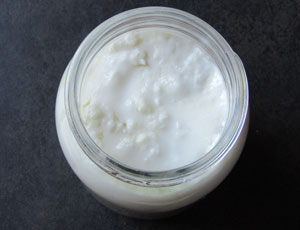
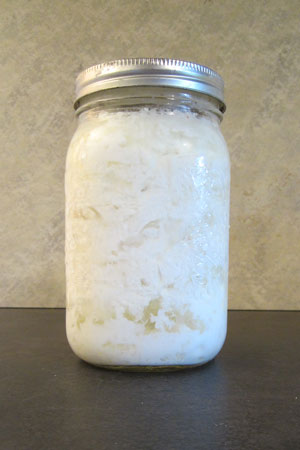
This can be seen by inspecting the kefir jar after 24 hours of adding the grains. On top you will notice the grains and thickened milk mixed in together. The further down the jar the higher the PH and the thinner the consistency.
What to do about it
For Small batches
If you make kefir in small batches like a quart sized Mason jar it will not be a problem.
Put the grains in first then pour in the milk. This will help mix the kefir which comes along with the grains into the milk spreading the kefir culture into the milk and as a result the bacteria and yeasts will be evenly mixed into the milk. Give the milk a stir before covering the jar to ensure the kefir grains have come in contact with as much of the milk as possible.
If you are available during the day you can give your kefir a stir every once and a while to redistribute the grains and to mix the growing culture around the jar.
For Larger batches
It is of more concern when larger batches are made. When making larger batches it is difficult to ensure that the milk has been properly inoculated with the kefir culture. If the grains float to the top of the jar the milk on the bottom may not have enough contact with the grains or the kefir which came along with the grains.
When the grains get concentrated at the top of the container the milk may get little contact with the cultures.
There are two problems with this.
The kefir may not thicken appropriately
The solids in milk begin to gel as the kefir acidifies causing the kefir to thicken. If the grains are concentrated at the top of the milk this acidification will be uneven, causing the milk at the top of the container to thicken more rapidly than the milk of the bottom.
It may appear to have thickened until the grains are strained out and you may find milk which has not thickened on the bottom.
When this happens give the container holding the kefir a good stir and ferment it for another 12-24 hours until it has properly acidified.
Some of the kefir may have a higher amount of lactose left
The sugar in the milk (lactose) is consumed by the cultures in the grains. This makes it easier to digest for those who are lactose intolerant. If the milk is not evenly fermented through there may be a higher amount of lactose left in the milk making it less digestible.
When this happens give the container holding the kefir a good stir and ferment it for another 12-24 hours until it has properly acidified.
When larger batches are being made it is important to mix the grains around in the milk occasionally to redistribute the grains within the milk. This will ensure that the culture in the grains will be distributed evenly in the milk.
Grains which sink to the bottom
There are a few reasons why kefir grains may sink to the bottom.
The grains are small with few crevasses for the CO2 to get caught in
As mentioned above kefir grains are denser than milk so they should sink. It is only the bubbles of CO2 gas which act as little flotation devices which get caught in the grains. If there are few places for the gas to get caught then the grains remain on the bottom of the jar.
The yeasts in the grains are not very active
The CO2 is made by the yeasts as a byproduct of their respiration. If the yeasts are not very active then they produce less gas and the grains do not float. To help the yeasts to be more active try placing the container in a warmer location.
Fermenting kefir under pressure
Some people like to ferment their kefir in an anaerobic environment. Which means without oxygen. This can be accomplished in a few ways such as using a Mason jar with a sealed lid or some other sealed jar.
Kefir grains in a pressurized jar can sink to the bottom because the CO2 which the yeast produces will go into solution rather than form bubbles on the grains surface.
This can be dangerous as the sealed jar tends to hold pressure in and can burst the jar sometimes with great violence which can cause serious injury from flying glass.
If you are going to ferment your kefir in an anaerobic environment either use a vapor lock or burp the jar regularly to prevent pressure buildup.
Once you begin making kefir you may find that it has small bubbles in and around the grains. This is especially noticeable when it is warm. These bubbles are made of carbon dioxide, the gas used to carbonate soda. It is natural and nothing to be concerned with.
It is natural for kefir to be slightly fizzy when it ferments. The yeasts and lactic and acetic acid bacteria found in the grains produce carbon dioxide as a byproduct of fermentation. Some of this gas gets caught in the milk and on the grains giving it an effervescent quality.
It is this gas which makes the kefir fizzy.
If kefir is fermented in an aerobic environment the carbon-dioxide will mostly dissipate into the air leaving the kefir only slightly fizzy but if the kefir is fermented in an anaerobic environment the carbon-dioxide can build up and pressurize the container.
Fermenting kefir in an aerobic environment
When your kefir grains produce an overly fizzy kefir in an open container then your kefir has too many yeasts actively converting lactose into CO2. There could be several reasons why this occurs.
The kefir is too warm
The main yeasts which are in the kefir cultures are Saccharomyces cerevisiae, S. unisporus, Candida kefyr, and Kluyveromyces marxianus ssp. Marxianus.
All of which are yeasts which are most active at higher temperatures. This means that these yeasts will produce a higher amount of CO2 making the kefir fizzier.
To correct this find a place to ferment your kefir in a cooler place. This will slow the growth of the yeasts which will in turn produce less CO2. It may take a few batches for the kefir to become less fizzy as the culture rebalances from the change in temperature.
High amounts of fermentable sugars in the solution.
Yeasts grow really fast when there are lots of available sugars (lactose) in the solution. Yeasts use simple sugars and carbohydrates for energy. This is why yeasts are used in the production of bread, the yeast grows fast when provided with enough food.
The sugar in milk is lactose which comes in two forms a monosaccharide and a disaccharide. It is water soluble not fat soluble. So when there is a higher content of fat in the milk there will be less fermentable sugars for the yeasts to use for food.
Skim milk has a higher amount of lactose per cup then milk with has a higher fat content simply because the fat content in the milk takes up space displacing the non-fat contents which contain the lactose. The ft in the milk needs to be broken down into simple sugars. This takes time which slows the fermentation process down.
So if you find your kefir is too fizzy for you then try using milk with a higher fat content. Not only does this slow the yeast down but it also will make a thicker creamier kefir which is great for smoothies and making kefir cream cheese.
Imbalance between yeasts and bacteria
Kefir is fermented with a symbiotic culture of bacteria, yeasts. To get good tasting nicely balanced kefir the proportion of the yeasts to bacteria needs to produce kefir which you enjoy. What this balance is will be dictated by your personal preference.
If the culture is dominated by yeasts then the sugars in the milk will be consumed mostly by the yeasts producing high amounts of CO2.
This can happen for a variety of reasons.
Regular long fermentation time
If you regularly leave your kefir grains longer than the 24 hours recommended the yeasts in the kefir may become overpopulated. This is because the yeasts in the culture have a greater range of tolerance to acid then the lactic acid bacteria (LAB).
It seems a little counter intuitive that the LAB do not thrive in an acidic solution until you think about it a bit. LAB convert sugar and alcohol into lactic acid. The acid is a waste product produced by the LAB which remains in the solution.
The yeast on the other hand produces CO2 and alcohol. The CO2 dissipates into the air and the alcohol is used by the LAB as energy. Therefor the waste products which the yeasts make do not overwhelm the solution, allowing them to continue to grow reproduce longer.
This gives the yeast culture a head start when exposed to new milk, overwhelming the LAB growth and making the kefir extra fizzy.
High ratio of kefir grains to milk
The amount of CO2 which is produced is directly proportional to the amount of yeast bodies in the solution. Even if the grains have a good balance of bacteria and yeasts the extra yeast can ferment the sugars quickly.
This will make your kefir fizzier because there are more yeasts available to quickly produce CO2. The action of the abundant yeasts continues as long as there are easily fermentable sugars.
Fermenting kefir in an anaerobic environment
To ferment kefir in an anaerobic environment you need to place your kefir into a sealed container. This limits the amount of oxygen which is available to the various cultures in the milk.
Warning:
Fermenting sugar with yeasts can produce a high amount of CO2 which can reach exceptionally high levels of pressure. If the containers which are used to contain an anaerobic fermentation is not meant for holding pressure they can burst and cause serious injury.
Do not ferment kefir in normal glass containers with sealable lids.
If you are fermenting kefir in an anaerobic environment be sure to use containers either release the pressure created by the CO2 produced or are designed to take the pressure.
Fermenting kefir in an anaerobic environment has two aspects.
Primary fermenting with grains
Primary fermentation with grains without oxygen can be done a variety of ways.
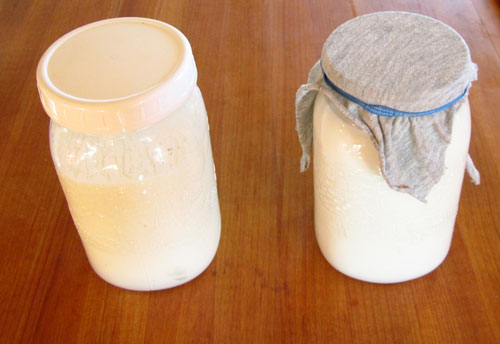
Some people simply put a lid on the Mason jar they are fermenting the kefir in rather than a cloth or some other permeable barrier.
Some use airlocks which are used in the wine of beer making process which allow one way flow of the gasses produced by the fermentation.
If you use the first method you will produce a kefir which is fizzier then the other simply because you will contain the CO2 which is produced rather than releasing it into the air, but both methods will produce a higher amount of CO2.
Since the milk thickens because of the reduction of PH to about 4.6 and the lactic acid bacteria do not need oxygen to grow the milk still thickens into kefir. The difference between fermenting in an oxygen rich environment and an oxygen deprived environment is the efficiency of the yeasts.
Yeasts can survive and grow in an anaerobic environment but their respiration is not as efficient. This produces more waste products, CO2 and alcohol. With a higher amount of CO2 produced comes a fizzier kefir.
This means that when you ferment kefir in a sealed container the resulting kefir will have a higher amount of CO2 as well as a higher alcohol level.
Secondary fermenting with additional sugars
The concept of secondary kefir fermentation is as simple as adding some type of additional sugars to filtered kefir which does not contain the kefir grains. It is great to add additional flavors to your kefir. Make the kefir resemble a soda rather than a milk product.
When making a carbonated kefir drink the kefir cultures which are left in the kefir after removing the grains use the sugar in the flavoring to grow rapidly. This produces a high amount of CO2 which is contained and goes into solution.
The flavoring can be anything from fruit juice, coconut water or even sweet tea, anything which has easily fermentable sugars can be used.
Again be sure you use bottles which are meant for holding pressure otherwise you may burst the bottles causing a huge mess as well as possible injury from flying debris.
This makes a great kefir soda which has active cultures in it and a lower amount of sugar. It can be flavored with any flavor you like and can produce a slightly fizzy to highly carbonated beverage.
The level of carbonation will depend on the sugar content of the flavoring, the temperature and the amount of time it is left to ferment. To get this how you want it you will have to do some experimentation.
For the first few times you do a second fermentation open the bottle in a location which doesn’t matter if it over flows the container. Sometimes it can spew the bottle contents great distances which can easily hit a ceiling and end up all over walls.
When you first start making kefir you may become concerned with how fast your grains are growing. They may be growing too fast or too slow for what you expect. This is a natural experience which most people have when starting something new. Kefir grains are the physical representation of the size of the culture in your kefir so changes in it can cause some concern.
There are several reasons why milk kefir grains fail to increase in volume as they ferment milk. There may not be enough lactose for the grains to increase much past their present volume, the temperature may not be conducive for growth or the culture is not populated with the needed bacteria.
Kefir grains themselves are not alive but are the structure the symbiotic culture of bacteria, yeasts and fungi create and inhabit. When the grains fail to multiply it is because the culture is either not big enough to maintain more grain structure or the environment where the kefir grains are placed prevents the formation of grains.
Kefir grains are a gelatinous mass of protein, lipids, and polysaccharide which provide an environment for the culture to live in. There is a wide variety of bacteria and yeast strains which make the kefir grains their home. These include bacteria which produce a biofilm which is used to protect the various bacteria in the culture. This biofilm is thought to be the precursor for the kefir grains as it thickens and becomes inhabited with the surrounding bacterial species.
Conditions which affect the growth of kefir grains
Although kefir grains are not living things themselves they are inhabited by a wide variety of bacteria and yeast species. It is these microorganisms which produce the kefir grains. Therefore anything which affects the growth of the culture affects the volume of kefir grains.
Ambient Temperature of the room
Kefir grains are active within the range of 16 to 32℃ (60 to 90℉) but the cultures cannot grow at optimum levels at either end. For your grains to be the healthiest and have the best chance of multiplying maintain a temperature between 24 -28℃ (75 to 82 ℉) in the room which you are fermenting your kefir. This temperature will produce great tasting kefir as well as help the culture to increase their population and produce adequate biofilms which form to make the grains.
How often the grains are fed
The rate the grains are fed has two cases.
Feeding too often
New kefir grains are produced by a symbiotic relationship between the cultures which are present in the original grain. The lactic acid bacteria produce an acidic environment which is better for other cultures production of the biofilms which eventually become parts of the kefir grain.
How the grains are formed is unknown but it appears to be important for the solution to be acidic to some degree so if the milk is changed too often it does not have time to acidify enough for the grains to grow.
Not feeding often enough
To build anything raw materials are needed. Kefir grains are made from the milk which the grains are fed on a regular basis, like anything else in the world they break down and need to be replaced.
This means that if you want your grains to multiply there must be enough raw materials available to maintain the original kefir grain but also enough for new construction. Not feeding your grains enough reduces the amount of raw materials available to make new grains.
What type of food the grains are fed
Milk kefir grains need adequate amounts of protein, lipids and polysaccharides to grow. Lipids are what the structure of most living cells are made from. If the type of milk you feed your grains regularly is highly processed, low fat or lactose free then this may be the problem. Switch to a different type of milk like 2%, homo or try goat’s milk as it is naturally homogenized.
The quality of the milk
To have a healthy culture which is viable and growing it is important to feed it quality ingredients.
Just like you can’t expect to be healthy if all you eat is junk food you can’t expect your grains to be healthy and grow with poor quality food.
For kefir grains that means fresh milk which has not passed its expiry date. Outside of that date the milk may have pathogens in it which cause the milk to go off. Feeding kefir grains milk which is past its expiry date inhibits the growth of the cultures in the milk. They have to change the environment which is currently conducive to the growth of spoilage bacteria to an environment which is good for the growth of kefir grains which slows the rate of growth of the kefir grains.
The current state of the grains
Your kefir grains need to be active and healthy to grow. If you have just rehydrated your grains or have had them hibernating in the fridge for a while it will take a while for them to regain the full strength of all the cultures in the grains.
The type of container the grains are stored in
Why metal containers are should not be used for making kefir
Kefir is an acidic bioactive culture. The grains produce an environment which is slightly acidic which is necessary for the production of biofilms which makeup the grains basic structure.
If you ferment your kefir in a container which has metal in it not only does this add a metallic taste to the kefir it slows the rate of acidification of the kefir as the acid in the kefir will react with the container and cause the solution to remain basic.
Why plastic containers should not be used for making kefir
There are two reasons why you shouldn’t use plastic containers for making kefir:
Plastic adds unwanted chemicals to the kefir
If you have ever stored water in a plastic container for a camping trip and left it for two or three days you may notice that the taste of the water has a plastic taste to it. This is because some of the chemicals in the container have leached into the water and given it a plastic flavor.
The same thing happens to the milk which you pour into a plastic container. Some plastics are safe for use for food storage but they are not recommended for the production of food. Plastic is made from petro-chemicals which are inherently toxic. Milk stored in plastic containers at room temperature will absorb some of the more volatile chemicals in the container. This affects the growth of the grains.
Even the use of food grade plastic is not recommended as these containers are often used repeatedly and as a result suffer damage. As plastic ages it starts to break up into smaller and smaller pieces. Once the pieces get small enough they can have serious effects on the environment and the health of those organisms living in it.
Whether or not the plastic container is breaking down into microplastics or whether the chemicals themselves are leaching into the milk you can be sure that the addition of petrochemicals into your milk will not help the health of the kefir grains or you.
For the best chance of having healthy grains, store your grains in a non-reactive container, like a glass jar of some type. Another option is ceramic containers but you must be sure it is not cracked and the glaze does not contain any lead or other compounds which are not good for you.
How much oxygen the grains get
The amount of oxygen which the grains get has an effect on the population of the various cultures in the grains. Some of the bacteria can replicate themselves indefinitely without oxygen just as long as they have enough food energy but the known bacterial species which produce the biofilm which is thought to be the precursor of the grains need oxygen to grow.
Reasons you want your kefir grains to grow
There are many reasons why you may want your kefir grains to grow, from ensuring they are healthy to having some for a backup in case you have grain failure.
To have some for a backup
Kefir grains are great because as long as they are treated well they will continue to produce kefir indefinitely, so long as they are getting regular feeding and care they will continue to make milk kefir. They are like any other living thing and so if they are not taken care of properly they can stop growing and die.
Since your grains are dependent on you if something happens to you which interrupts your ability to care for your grains it is nice to know you have some backup grains stored away when you want to start making kefir again. To learn how to store your grains for the short or long term check out this article here.
To give some away to friends
Friends are people who have similar interests and beliefs. If you are socially active and are truly interested in making and consuming your own kefir you will find friends who will also be interested in it. By having grains which multiply you will have extra grains to pass on to others.
To ensure they are healthy grains
Although healthy kefir grains tend to grow, grain growth is not the only indicator of healthy kefir.
Other indicators are smell, flavor, texture and color. If these indicators are pleasing to you then there is nothing to worry about. On the other hand if any of these seem to be wrong then you may need to change something.
For information on how to alter the way you ferment your kefir to better suit your needs read this post.
To increase the production of kefir
The amount of kefir your grains can produce is directly related to the number of grains you have so if you want to make more kefir you will need more grains. You can slowly build up your kefir production simply by gradually feeding more milk to your grains. Ensure that after 24 hours your kefir has thickened and smells nice and fresh. Over time you will be able to increase production to meet your kefir needs.
This is the same method you used to reactivate your grains if you purchased a packet of freeze dried grains. As you add more milk to the grains the population will grow and be able to produce more kefir.
Why kefir grain growth is not the most important consideration
Whether or not your grains are growing is not the issue. The issue is whether they produce enough kefir which is fresh and tastes good for your daily kefir requirements. If you are getting enough kefir which suits your needs then stop worrying about their growth.
If you get enough kefir on a daily basis and your grains grow slowly or not at all then great. You will not have to try and find other uses for your extra kefir grains. Which can be a problem all its own.
If your kefir does not taste the way you like it. It is too yeasty or too acidic then these are indicators that you should adjust the way you make your kefir. You should not adjust your kefir making routine just to produce more kefir grains.
Since kefir grains grow so slowly you may not even notice their growth until one day you sieve out the grains and find you are only getting half the amount of kefir you usually get and the rest of the volume is kefir grains. When this happens you will have to decide what to do with all those extra grains but until then just keep making kefir.
The real reason kefir separates is because the milk has become acidified. The kefir grains are made up of bacteria, yeasts and fungal cultures which use the milk sugars for energy. Specifically the lactic acid bacteria produce an acidic environment which protects the culture from invasion from pathogenic bacteria.
This is a good thing because you don’t want pathogenic bacteria in your kefir. You want fresh good tasting kefir to drink.
This happens in any milk with a lower PH. In fact it is a trick for those who want to make buttermilk pancakes but don’t have any buttermilk. They simply add some vinegar of some type and the milk curdles.
Here are 5 reasons why your kefir may be separating
1. Long fermentation time
Kefir is a living collection of bacteria, yeasts and fungal cultures which require food to live. This food comes in the form of milk sugars (mostly lactose) which the various cultures in the grains break down and use for energy. In the process of milk carbohydrates are converted into energy and lactic acid is produced and the milk acidifies.
This is a natural process and is why kefir has that nice slightly tangy flavor when it is freshly made. The key is to determine at what point you need to stop the fermentation and refrigerate or consume your kefir.
The longer the grains are left in the same batch of milk the more acidic the milk will become. This causes the curdling effect and the kefir will continue to separate until all the food energy are consumed.
To prevent separation you could try a shorter fermentation time but since kefir production is continuous to maintain a routine try to keep it in 12 hour increments.
2. The number of grains in the milk
Another factor is the number of active cultures which are consuming the milk. This is controlled by the amount of kefir grains which you add to the fresh milk. The more grains the more LAB which will be present to convert the carbohydrates in the milk to energy producing lactic acid and lowering the PH of the milk.
It is like ordering pizza for a bunch of teenagers. You know that all the pizza will be eaten but the ratio of pizza to teenagers will determine how long it takes them to eat it all. The more teenagers the faster the pizza will disappear.
The ideal ratio for kefir grains to milk is one to ten. This will produce kefir which is thickened nicely, will not be too sour and will have a nice slightly tangy flavor. The one to ten ratio helps the grains to remain healthy and grow well.
To keep your kefir from separating use less kefir grains for each batch but make sure your kefir thickens within a 24 hour period as too few grans may not be able to acidify the milk before unwanted bacteria start to grow giving the kefir an off smell.
3. The temperature of the room
The bacterial cultures in the kefir grains are affected by the ambient temperature of the room which they reside. This is why when you want to take a break from kefir production you put your grains in the fridge.
The range which kefir grains are active is between 60 to 90 degrees Fahrenheit. Therefor your kefir grains will be active anywhere in this range but the cultures are more active if they are cultured between 70-80 degrees Fahrenheit.
Each temperature change will favor a different selection of the population of the grains culture. If you are in the hotter zone then the cultures will be very active and produce lactic acid quicker than if they were cultured in a cooler temperature.
To slow the grains down place the fermenting kefir in a cooler place.
4. The type of milk
All milks contain different amounts of energy which ferments at different rates. Milk with high amounts of available sugars in it will ferment faster than milk with sugars which are harder to ferment.
Lower fat milk tends to acidify faster than milk with a high fat content. The percentage of available sugars in the milk is lower with high fat milk. This means that the kefir culture will first have to convert the milk fat into sugars which are then made available to the lactic acid bacteria. This process takes time and as a result will prevent the kefir from separating as quickly.
The type of animal the milk comes from also determines the available sugars in the milk.
The percentage of lactose in cow’s milk is about 5%, goat’s milk is 4.33% and sheep’s milk weighs in at 4.76%. Each of them have a different amount of easily fermentable sugars and therefor will acidify at different rates.
Try using milk with a higher fat content or a different type of milk. They will all produce a kefir with a different flavor and constancy and separate at different rates.
5. How active the grains are
This is determined by the history of how the grains have been treated.
If they just came out of the fridge after you have taken a break from making kefir it might take a little longer, it may have been hot in the kitchen for a while so the grains will be extra active or you have not paid attention to how fast your grains have been growing and there are too many grains for the amount of milk.
Active grains is good. This shows that they are healthy and growing which is something you want for your grains. The challenge is to figure out a balance between the rate your kefir grains make kefir and what works for your schedule.
What to do about it
The first thing to do is to strain the grains out of the kefir if you have not already done so and then shake the jar to disperse the milk proteins to mix the whey back in. Pour yourself a glass and taste it. If you like the flavor then refrigerate it and consume it within 24 hours or so.
The kefir cultures in the milk are still alive and require energy to live so they will continue to acidify the kefir even in the refrigerator so don’t be surprised if you leave your kefir in the fridge for a week and then pour a glass only to find it is too sour to drink. It is best to consume your kefir quickly once it has reached the flavor you like.
If you find the kefir too sour then you will need to adjust your method of making your kefir.
Sometimes it is difficult to determine just which factor to change to get the kefir which you like the best since each of these variables effect the flavor of the kefir in varying degrees.
To determine the best mix of these variables you will have to do some experimentation.
A longer fermentation time will change the population of the various cultures in the kefir. Yeasts and lactic acid bacteria which can survive lower PH levels will continue to grow whereas the ones which are sensitive to the PH will be inhibited.
The same goes for the other variables
As the population of the culture changes so does the flavor of the kefir. Each yeast and lactic acid bacteria will produce a different flavor. To get the flavor you want in a convenient period of time you will have to change the conditions which you ferment your kefir in a systematic way.
Keep a logbook or diary which records the time the kefir fermented, the temperature, how many grains were added and what type of milk you used.
Then change one of the variables for each batch. Note which changes improved the flavor and which ones were not to your liking.
Make a few batches before determining the results as it may take a while for the kefir flavor to stabilize with the new conditions. Keep notes about what changed and if you liked the result.
Some variables favor the yeast growth and some favor the lactic acid bacteria. The goal is to find the conditions which produce the kefir which you like the best and then have a record of it so you can closely reproduce it over and over.
It may be that you like your kefir like I do
I like to ferment mine for 24 hours at 18-22 degrees with about 1:8 ratio grains to milk in homo milk. I then strain the grains and sometimes if I want to make cream cheese or almond pancakes I will leave the kefir to ferment without grains for another 24 hours under the same environmental conditions. This further acidifies the kefir and will produce a well separated kefir which is ideal for making cheese and the lower PH also helps protect the cheese from spoilage as well as helping the pancakes rise better.
What the specific conditions are which make the kefir which you like may be entirely different than others. It doesn’t matter just as long as it produces a kefir you like.
Can I still drink it?
Of course! Kefir which has separated has not gone bad. In fact for some of us it is better to ferment for a longer time. Those who are lactose intolerant will find it easier to digest kefir which has a lower PH because this means there is less lactose (the sugar in the milk) present.
Kefir grains produce an environment which has a lower PH. With a lower PH the unwanted microorganisms which are present in your environment cannot grow in the kefir. This protects it and you from pathogens which can make you sick.
What to do with kefir which is too sour to drink
You may not like the taste of kefir with a low PH but that does not mean that it has gone to waste. It may not be to your liking to just drink but there are lots of things to do with kefir which is to tart.
You could add it to a smoothie, make thickened soups and sauces or make cheese.
Check out my post on things to do with over fermented kefir. It will provide you with a wide variety of options.
If this seems like it is too complicated it’s not. Making kefir is one of the easiest fermentations you can make. It only takes a little bit of time and once you have found the method which produces kefir which you really like you can continue to make it indefinitely.
Which is a great thing. It is cheaper, is always fresh and has more probiotics in it then most store bought versions. You can make it with any type of milk including nut milks like almond, soy and cashew milks. I even make kefir with pumpkin seeds which is great for a morning smoothie or to pour on top of a bowl of cereal.
The bottom line
Feel free to experiment and try different things. Kefir grains are very resilient and can take a fair amount of abuse but to get consistent kefir you enjoy you need to know what the conditions are which will produce that kefir. The only way you can do that is to try different things until you get what you want.
Urban Fermentation is about fermenting in your own kitchen. What can you make with limited space and a low tolerance for smelly things.
The answer is quite a lot actually. Fermenting does not have to take up a lot of space, make your house smell off or take a long time.
Kefir
Kefir made with kefir grains is easiest when made in a jar in small batches. I like to use wide mouth mason jars. This makes them easier to clean once the kefir is gone.
Kefir is a great ferment to start with because it not only tastes great it is very versatile. It can be used in smoothies, poured on top of cereal or you can just drink it.
It contains a wide variety of probiotics in high counts which help your digestion and is also easier to digest then regular milk as the probiotics in the kefir break down the lactose. This makes kefir a good choice for anyone who is lactose intolerant.
Not only does it provide probiotics but it also provides a variety of vitamins including several B vitamins, vitamin C, and vitamin D due its addition to most milks in North America.
Once you get into the groove of making kefir it takes less than a minute to make and you will always have a fresh jar in the fridge and a new one fermenting for the next day.
Yogurt
Yogurt made with a powdered starter culture is a great way to learn if you want to make your own yogurt. It takes 8-24 hours depending on how tangy you like your yogurt and how much lactose you want left in it after fermentation.
Yogurt can also be made from fresh yogurt purchased from the store. The cultures in the store bought yogurt are strong enough to make new yogurt one or two times but after that you risk losing a batch to unfriendly bacteria giving the yogurt an off smell.
The best method is to get a package of heritage yogurt starter. These starters have a wide variety of bacterial cultures in them making them very robust and can continue to make new yogurt indefinitely. There are different types, some which ferment without added heat and some which need a higher then room temperature to ferment properly.
If you are lucky you may get a starter from someone who has a heritage yogurt which has been perpetuated for years. Some yogurt cultures have been passed down through generations.
Sauerkraut
Sauerkraut
Although sauerkraut takes a little longer then kefir or yogurt it is still a great fermentation to make in a jar.
You will need a cool place to put it where you can forget about it for a while but not for too long as you will want to start tasting it as it approaches the level of tanginess you want.
Sauerkraut is basically salted cabbage fermented in an anaerobic environment. This gives lactic acid bacteria (LAB) an ideal environment for it to convert the sugars in the cabbage into energy and produce the acidic environment which protects the sauerkraut form spoilage.
For best results ferment sauerkraut in a cool location with a minimum of salt (2% salt by weight). This helps to reduce the amount of histamines in the sauerkraut which some people are sensitive to.
Pickled Carrots
Carrots have a lot of sugar in them. If you have ever had fresh carrot juice (not the stuff from the grocer but actually freshly made carrot juice) you will know just how sweet carrot juice can be.
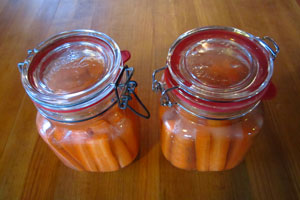
It is this sugar that the LAB consume to make the pickles so tangy and delicious. The carrots will ferment all by themselves if they are stuffed into a jar with a 2-3% salt brine added and left to ferment with a lid on for a week or two.
Depending on the type of jar you use you may have to let the pressure out of the jar daily to prevent any kitchen explosions.
Carrot pickles are crunchy additions to any meal. Are great with a sandwich, grated into a salad or just eaten as a healthy snack.
Kvass
This ferment can be made a number of ways. The original kvass was made from stale sourdough bread. The bread was added to water and sugar with a bit of starter then left to ferment for a short period of time. The result is a fizzy refreshing drink.
Other types of kvass are made by soaking vegetables in salted water for periods of one to two weeks. This makes a healthful drink with the vitamins and minerals in it which were in the vegetable it was made from. It also contains several vitamins which the bacteria in the kvass produce while they consume the energy in the vegetable.
One of my favorites is beet kvass for its earthy flavor and health affects it has on the liver and kidneys but carrot kvass is also good to try. If you want why not try lettuce, radish or pepper kvass. Each one will produce a unique flavor and vitamin profile.
Kimchi
Kimchi in a jar is a good way to perfect your recipe for this famous fermentation from Korea. Since there are as many recipes for kimchi as there are families in Korea, one more (yours) will add another dimension to what is kimchi.
The nice thing about the jar method is that the batches can be small so you can alter the recipe in stages without wasting anything.
Once you get a recipe you like then make a larger batch by just using a bigger jar.
Pickled beets
Red beets are full of sugar. Not as much sugar as sugar beets but they still store a lot of energy in the bulbous root.
This makes them ideal for producing pickles because the LAB need energy to produce the lactic acid which makes the pickles tangy while keeping them crunchy.
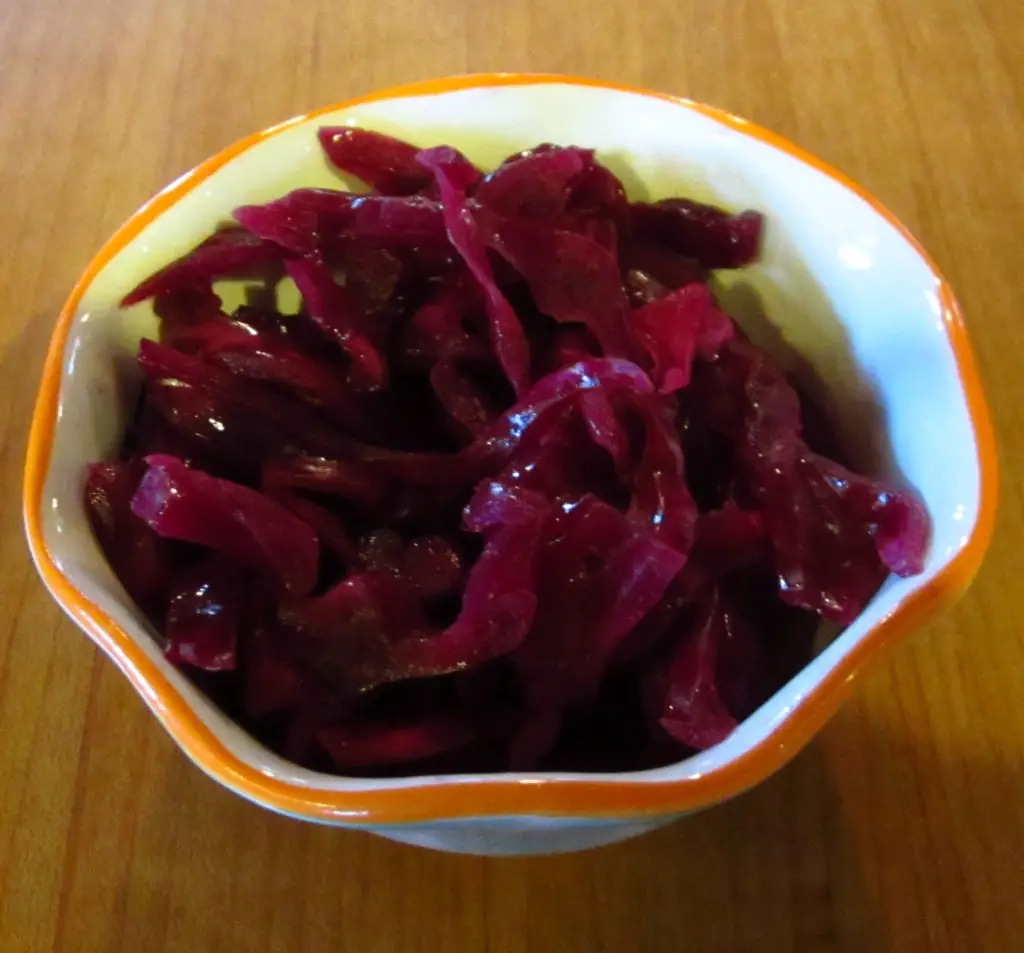
Simply cut the beets up into pieces of any shape you choose put them into a jar and add a 2% brine to cover the beet pieces. Ferment until the beets are tangy.
Fermented salsa
Salsa is a great thing to have around. It is a fast snack with chips, is an integral part of taco salad and has been known to garnish more than one smoky.
The store bought version is usually made with white vinegar and powdered spices. Not what anyone could consider health food.
But how about fermented salsa. It is full of probiotics, can be made as hot or mild as you wish and has great flavor. It actually makes it easier to digest the meal you have it with rather than the other way around.
To make a spicy cream dip you can add some fermented salsa to some kefir cream cheese. It goes great with chips or as a hamburger condiment.
Mango vinegar
Mangos are very sweet, especially when they are fully ripe. Eaten fresh they are wonderful additions to fruit salads, in curries or just eaten by themselves.
The hard part about mangos is getting all the flesh off the pit and skin so as to not waste any.
Mango vinegar is an easy way to use the entire mango and get a summer salad vinegar in the process.
Make sure you get ripe mangos and wash the outside thoroughly before slicing it up.
Salted preserved lemons
These preserved lemons are a great addition to your fermented food cupboard. They are best made with thin skinned lemons like Myers lemons but can also be made with thick skinned lemons. The lemons will slowly ferment producing tangy-sour lemons.
Salted preserved lemons are popular in Morocco where they are used in several dishes like tagines and meat dishes like baked lamb.
Pickled ginger
If you are a sushi fan you know the flavor of pickled ginger. It is usually added to a package of sushi as a garnish. It has a slightly hot and tangy flavor which goes nice with the sushi.
Naturally fermented pickled ginger is easy to make and has good for you bacteria which help digestion and improves the environment of the digestive system.
Once you have tried it you will start to add it to all sorts of things like salads, stir fries and curries.
You may find yourself opening the jar in the fridge and snacking on them by themselves.
Fermented ketchup
Ketchup was originally fermented. It has only been recently that condiments, including ketchup have been made with white vinegar, sugar and tomato paste.
Fermented ketchup can be made using tomato paste from the can or from fresh tomatoes made into a sauce. It needs to be acidified quickly so the use of some type of raw vinegar for best results.
The spices are up to you. Start with this recipe and experiment.
Fermented ketchup adds probiotics to anything it is added to (which is valuable when you try to digest a hotdog).
Fermented mustard
Just as ketchup can be fermented so can mustard. You can use seeds and make a grainy mustard or powder or make a smooth type out of mustard powder.
It is important to remember that as fermented mustard acidifies it gets hotter. This is because the heat in the mustard is released with the addition of acid. This means that the longer the mustard ferments the hotter it will get (up to a point). Taste it often and when it gets to the desired heat and tanginess refrigerate it to slow the fermentation down.
Kombucha
Kombucha
Full of probiotics, tannins and good for you lactic acid bacteria, kombucha has taken the world by storm. It has gone from a little known health drink to a mainstream grocery store item.
This is good and bad. Good because you can now buy kombucha almost anywhere, bad because not all kombuchas are the same.
Here’s a hint: If it isn’t refrigerated it does not have live culture in it. Before you buy any be sure to read the label or better yet make some of your own.
It can be made out of almost any tea, although for the most health benefits green tea or black tea are best. It can be as sweet or tangy as you want and can be sweetened with any glucose containing sweetener.
You can drink it plain as a tonic or make it into a soda by adding flavorings and sealing it in pressure safe containers.
Sourdough starter
Sourdough bread has many benefits over normal store bought bread. It is easily digested, provides vitamins and minerals which are not available in store bought bread and has a nice tangy flavor.
It also lasts longer on the shelf due to its slightly acidic nature.
But you can’t make sourdough bread without a sourdough starter.
For this you have two choices:
Buy a starter online or from a health food store
Make your own
To make your own all you need is a jar, water and flour and in a short time you will have more starter than you know what to do with.
Which is a great problem to have because it gives you a chance to make sourdough pancakes, banana bread and biscuits.
Of course you will be able to make sourdough bread as well.
Fermented chutney
Another condiment which has been altered to become a sickly sweet white vinegar concoction which can sit on a shelf indefinitely at a grocery store.
Not so with fermented chutney. It is full of good for you bacteria, vitamins and accessible minerals. It can help get all the food value out of the food you eat it with rather than adding to the burden on your digestion.
Ginger bug
Ginger bug is a starter for several tonics and non-alcoholic soda. It can be used to start your own root beer soda or ginger ale.
A ginger bug can be started simply by grating some ginger into a jar. Then add some sugar and a little filtered water and stir.
Every day for a week or so add a little more ginger sugar and water and stir. Once the mixture starts to bubble and fizz you will have a ginger bug.
Now use it to make ginger ale or add it to a smoothie for a probiotic kick.
Relish
The relish we know today is made with white vinegar mixed and a variety of sugars from corn syrup to palm sugar. It has no nutritional value besides calories (which most of us don’t need) and will add to the burden of digesting the hotdog or burger you are eating it with.
For a different experience try making a fermented relish. It is easy, can be made in a jar and will help your digestion of those hotdogs and burgers.
You can make it from cucumbers but don’t be limited. It can also be made with radishes, carrots or any other vegetable of your choice.
Hot pepper sauce
Hot pepper sauce has a place in anyone’s fridge. It adds zing to a meal, heat to a drink and probiotics to your digestion.
Some hot pepper sauces you get at the grocery store are still made by fermenting hot peppers, blending the result and bottling it for sale. You can do the same in your own kitchen.
The spice level is up to you. You can use mild peppers, hot peppers or stupidly hot peppers. You can mix the flavors up or just stick with one type throughout. This is the fun of fermenting in a jar as even if you get a hot pepper sauce which is inedible you can start again with a minimum of waste.
Tomato sauce
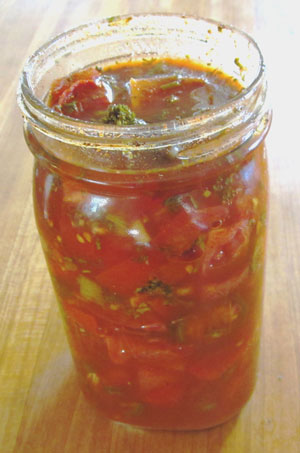
Fermented tomato sauce has to be tried to understand what it is like. It can be made with any variety of spices from Italian to Asian. It is handy to have to pour onto some pasta, add to a stir fry or used as a topping for burgers.
It is best made with fresh tomatoes and can be a great way to use up an over-abundance of tomatoes which can come out of the garden at harvest time.
Strawberry vinegar
Strawberries have a flavor which is reminiscent of summer. When you smell the fragrance of fresh strawberries it can take you back to hot days outside enjoying the sun.
For a healthy reminder of the summer season without buying strawberries grown thousands of miles away try making this vinegar from local in season strawberries.
Then in the winter you can make yourself a salad mix up a strawberry vinaigrette and remember the sun.
Pickled jalapenos
Jalapenos have great flavor and are pleasantly hot, but once you pickle them you will find another level of flavor you didn’t know existed.
Pickled jalapenos can be added to numerous dishes Mexican or not for an additional kick. I like to add them to most tomato based sauces including Italian sauces.
They make a necessary addition to taco salad both in the taco meat as well as added on top for that additional heat.
They are simple to make and keep for a long time in the fridge. Although once you have tried them they will be consumed long before they can go off.
Pickled Garlic
Garlic is another vegetable which has medicinal properties. It has been given a lot of attention from health practitioners. It has been recommended for cancer prevention, boosting your immunity and repelling vampires.
Obviously not all the recommendations are valid (who ever heard of garlic boosting your immunity) but the recommendations will not matter to you once you try fermented garlic.
The fermentation process mellows the flavor and adds a unique tangy earthy flavor.
Elderberry tonic
Another traditional health drink. Elderberry tonic is full of vitamins, minerals and probiotics which help the digestion and boost the immune system.
It can be made by adding elderberries to water and a little sugar and stirring regularly for about ten days or so.
When the mixture begins to fizz continue stirring for a few days. Then strain out the elderberries and put the resulting liquid into a pressure proof bottle. Store in the fridge and drink when you feel you are coming down with something (or when you want a tasty liquid shot).
Fermented oatmeal portage
Oatmeal portage is an old time favorite breakfast. It is full of energy, sticks with you all morning and is a great comfort food.
To add to its digestibility try soaking the oatmeal for 12 hours or so before you make it into portage. This will help break down the hard to digest anti-nutrients which the grain uses to protect itself from the environment while it waits to sprout in the spring.
Of course while the oats are soaking they are also fermenting and depending on the amount of time you soak your oatmeal will be more or less fermented.
As you can see there are lots of options for fermenting with little space, few ingredients and no equipment. All you need is a jar, a knife and your imagination so go find something to ferment.
10 Health Boosting vitamins preserved or produced by fermentation
Rather fermentation is the original method of healthy food storage. Not only does it extend the life of the food or drink but it also helps maintain a wide variety of vitamins for your bodies use.
It helps to maintain some vitamins which would normally decay with the passage of time.
The fermentation process does not require heat which is one of the biggest destroyers of vitamins in our food. This is one of the proponents of the raw food movement. Their belief is that raw foods contain more food value because they don’t heat their food above a certain temperature.
Some fermentations produce an acidic environment which is great for maintaining vitamins which are acid in nature. These include vitamin C, A, K1 and K2 and D.
The bacteria which cause our food to ferment also produce some valuable vitamins which we cannot produce ourselves.
Yeasts produce B vitamins which are vital to your emotional and physical health including vitamin B12 and folate.
There are several vitamins which we cannot produce but are produced in small quantities in our gut by our resident probiotic bacteria but the ability for our probiotic bacteria to produce enough for us is hindered by exposure to unnatural chemicals in the environment.
Antibiotics are everywhere. In our food, medicine and water.
Industrial waste can be found in the water almost everywhere on earth.
Our water is treated with bacteria killing additives like chorine (bleach).
Fermentation is a way to add some of those probiotic bacteria back into our systems in a safe and cost effective manner.
Here is a list of vitamins which are either preserved or produced by fermentation and the fermented foods or drinks which contain the vitamin.
Vitamin C
In the days of exploration there was a terrible disease which ran rampant through sailing ship crews. It was incredibly painful made bones soft and bendable thus causing the victims to become misshapen and usually die. It was called scurvy and was one of the reasons why navies were limited in size and scope in the middle-ages.
Of course we all know that scurvy is simply a deficiency in vitamin C and it was the English who developed their navy to a formidable size by the requirement that each of their crew members eat a lime every day.
This is where the term for the English seaman “limy” came from.
Eating a lime every day provided enough vitamin C to stave off scurvy while crews were at sea.
For the long journey taken by Captain Cook and his crew the vitamin C was provided by the barrels of sauerkraut which he took along. The sauerkraut did not produce any new vitamin C but it did preserve it throughout the trip.
Although we do not have the ability to produce our own B12 we do have a limited amount of yeasts in our digestive track to provide us with a small amount of B12. This amount is effected by our diets and the amount of exposure to antibiotics, which adversely impacts our digestive system.
It is one of the vitamins which is produced by the yeasts which are used by the beer industry as well as the yeast used for baking bread.
Various yeasts can be found naturally occurring on all fruit and Each with different characteristics. they all have unique flavors and arealso found in beer, wine and kombucha cultures.
Kombucha has a wide variaty of B vitamins including vitamin B12 . It also exists in kefir due to the wide spectrum of probiotic cultures present in the kefir grains.
Ferments which contain vitamin B12:
Kombucha
Kefir
Tempeh
Kimchi
B9 (folate)
Vitamin B9 comes in two forms. Folate which occurs naturally in foods like asparagus, avocados, Brussels sprouts, and leafy greens like spinach and lettuce and folic acid which is the synthetic form of B9.
Both folate and folic acid cannot be used immediately by the body but are converted into their active form in the liver.
Folic acid needs to undergo additional conversions in the liver to be useful and the conversion of folic acid is dependent on an enzyme which is limited in its availability.
You may have high amounts of folic acid in your bloodstream which has not been metabolized. This is due to the amount of folic acid which is added to industrially produced foodstuffs. It is mandatory in several countries to add vitamin B9 to foods which normally do not contain it. This can mask vitamin B12 deficiency which is prevalent in older populations.
The best form of vitamin B9 is folate. It can be converted into its active form quicker the liver making it easier to assimilate into your system. It will not build up in the bloodstream and if there is any extra in your system it is deposited into the small intestine to be used as food by the probiotics which are in residence.
Vegetable sources of B9 leafy like lettuce, collard greens and spinach are all vegetables which have a short lifespan in a fridge and also are victims of pesticide spraying. It is recommended that all leafy vegetables be washed and dried before use and consumed shortly after purchase.
Fermentation helps to reduce the amount of industrial chemicals on our food but also extends the storage time. There are several ways to ferment leafy greens including making lettuce pickles, kvass and provide added texture to kimchi.
Gundruk a ferment made in India and Nepal. It is made from fermented mustard greens and provides a good vitamin boost during the winter months when nothing fresh is available.
Fermenting leafy greens may not sound like a typical method of preserving lettuce but it can produce some of the most interesting pickles, kvass or provide added texture to a kimchi or mixed vegetable relish.
Vitamin B6
Vitamin B6 is used to maintain the myelin which is the cover of your nerves. Without myelin the electrical impulses, which is the method of communication of your nerves, will not work properly. This causes various nerve related diseases such as Parkinson’s disease and Alzheimer’s.
It also may help the cardiovascular system by preventing arterial plaque and improving blood flow.
Vitamin B6 can be found in carrots, spinach and sweet potato. Fermenting carrots is as simple as making carrot pickles, sweet potato makes a good base for a tonic called sweet potato fly.
Spinach can be made into kvass, fermented with salt like sauerkraut or added to other vegetable ferments.
Vitamin K1
Vitamin K used to be considered one group of vitamins which all have the same effect on the body. The main one was coagulation. Now it is known that this group of vitamins can be broken down into two groups. Vitamin K1 and vitamin K2.
The sources of these vitamins are completely different and their uses in the body are also just as different.
Vitamin K1 is used to produce blood clotting proteins which protect you from excessive bleeding. It also helps to reduce inflammation which can lead to cancer, heart disease and other chronic diseases.
There are even some indications that it can reduce the chances of developing type two diabetes which leads to all sorts of complications.
It can be found in green leafy vegetables like kale, collard greens and parsley. Since it is not destroyed by fermentation using any green leafy vegetable which is high in K1 will add this valuable vitamin to any fermentation. Try making kale kvass or add parsley to your fermented salsa or fermented Italian tomato sauce.
Vitamin K2
Vitamin K2 is needed for proper bone and teeth maintenance. It helps the calcium in our blood to be deposited into our bones. Without it we cannot absorb the calcium which we ingest. Instead it would be deposited in our soft tissues which complicates cardiovascular health, arthritis and gout conditions.
K2 can be found in high fat dairy products like hard cheeses, high fat yogurt.
It can be found in high amounts in natto, a traditional Japanize breakfast. Natto is made by fermenting soya beans with Bacillus subtilis and is the only known source of vegetable based K2.
Vitamin D
Known as the sunshine vitamin because our skin makes it with exposure to UV light. It is an important vitamin which has psychological effects. Improving mood, emotional stability and cognition.
Vitamin D production is dependent on our exposure to the sun and is therefore hard to get enough in winter time when there is not as much sunlight. Those who work indoors also find it difficult to get enough sunlight and as we age our ability to produce vitamin D drops, making it prone to deficiencies.
Fortunately there are natural ways to boost our vitamin D consumption.
Sources of vitamin D from fermented food include hard cheeses, high fat yogurt or kefir, brined mushrooms.
Vitamin A
Vitamin A is used throughout the body. It is known for aiding eyesight but it also helps maintain skin and gut tissues by improving the replication of surface tissues.
It also helps to produce the mucus which protects the surface of tissue in the lungs and gut. This helps to prevent bacterial and viral infections as the mucus acts as a line of defense capturing pathogenic bacteria and depositing it in the stomach where it cannot survive the acidic environment.
It comes in two basic forms from two types of sources.
Animal sources such as eggs, liver and milk
Vegetable sources such as green vegetables, carrots and sweet potato
The animal sources are the active sources of vitamin A and can be used immediately by your body. The plant sources can be stored and converted to the active versions when your body needs them.
You can get both types of vitamin A form fermented foods.
The active source can come from fermented dairy products like cheese, kefir and yogurt.
The inactive sources can come from fermented vegetables like brined carrots, sweet potato fly and apricot chutney.
Vitamin E
Vitamin E has been well researched. It has had many clinical trials which involve supplementation of varying amounts of vitamin E in its most absorbable form.
The result of these trials is that it is best to get the vitamin E you need through the food you eat.
So does this mean that you shouldn’t worry about getting enough vitamin E?
On the contrary. Vitamin E is a necessary vitamin which is used by the body to tame free radical activity in the body. It helps to slow aging by reducing free radical damage of the skin, helps cardiovascular health by preventing the blood platelets from clotting unnecessarily and can help the liver from suffering from non-alcoholic fatty liver disease.
But since supplemental vitamin E can have no or detrimental affects you should get your vitamin E from natural sources like nuts, seeds and leafy vegetables.
All of which can be fermented. In fact fermented nuts and seeds are healthier for you then raw and fermented vegetables are safer to eat then fresh (unless you are eating certified organic produce which is grown in your geographical area and you wash and dry it to prevent bacterial infections from organic fertilizer).
Fermentations like soaked nut or seed kefir, lettuce kvass and kimchi which contains green leafy vegetables.
Fermentation is a healthy food choice
As you can see fermentation is a healthy method of food storage with the added bonus of great taste. It is the way we stored food prior to refrigeration and canning and is much more environmentally friendly then either of them.
Why not try fermenting some of your own health boosters. You can start with a simple recipe like carrot pickles, sauerkraut or get some kefir grains and make some kefir.
Checkout the collection of fermented food recipes here and don’t be shy about adapting them to your tastes or dietary needs.
Urban Fermentation is a participant in the Amazon Services LLC Associates Program, an affiliate advertising program designed to provide a means for sites to earn advertising fees by advertising and linking to Amazon.com. We also participate in other affiliate programs which compensate us for referring traffic.