Urban Fermentation

Recent Posts

16 Milk Types Which Can Be Used to Make Kefir


Kefir grains are very hardy and versatile.  They can be used to make kefir from a wide variety of milk types which includes:

  • All types of cow’s milk
  • Goat’s milk and Sheep’s milk
  • Nut milks
  • Seed milks
  • Grain milks

Each of these types of milks produce kefir which has unique characteristics and can be used for a variety of purposes.  The following chart includes the type of milk, some of the main characteristics of kefir made from this type of milk and some recommended uses for each type.

Type of MilkMain CharacteristicsRecommended Uses
SkimThin consistency
Tangy
Sweet
Drink plain
Cereal milk
Smoothies  
Low Fat 1%Thin consistency Tangy
Sweet
Drink plain
Cereal milk
Smoothies
Milk shakes
Baking  
2%Thicker consistency
Smooth texture
Tangy
Drink plain
Cereal milk
Smoothies
Milk shakes
Baking
Cream cheese
Whey production  
Whole MilkYogurt like consistency
Smooth texture
Less acidity  
Smoothies
Milk shakes
Baking
Cream cheese
Whey production
Hard cheese
Light fat ice cream
Gravies and dips
Fruit rollups  
Light CreamCreamy consistency
Smooth texture
Less acidity  
Milk shakes
Whey production
Ice cream
Gravies and dips
Cream soups
Cream dressings
Soft kefir cheese
Hard kefir cheese
Thickener for cream soups
Topping for fruit
Dips
Baking  
Heavy CreamThick creamy consistency
Low acidity
Neutral sweetness  
Cream cheese
Hard cheese
Ice cream
Gravies and dips
Cream soups
Cream dressings
Dessert topping  
OrganicBetter omega-3 to omega-6 fat ratio
Less industrialized processes used
Healthier cows
Organic milks comes in all fat contents just as milk which is non-organic.  Use the recommendations for the milk fat content above for reference.
Goat MilkLess sweet than cow’s milkS
trong after-taste
Consistent smooth texture
Naturally homogenized
Strong flavored smoothies
Cream cheese
Hard cheese
Salad dressing
Gravies and dips  
Sheep MilkLess sweet than cow’s milk
Sweeter than goat’s milk
Pleasant tangy flavor  
Drink plain
Smoothies
Cereal
Baking
Cream cheese
Hard cheese
Salad dressing
Gravies and dips  
Almond MilkMedium fat
Tangy flavor
Thin consistency
Smoothies
Cereal
Baking
Drink plain  
Cashew MilkMedium fat
Tangy flavor
Thin consistency
Smoothies
Cereal
Baking
Drink plain  
Sunflower MilkHigh fat
Tangy flavor
Thin consistency
Smoothies
Cereal
Baking
Drink plain  
Pumpkin Seed MilkMedium fat
Tangy flavor
Thin consistency
Smoothies
Cereal
Baking
Drink plain  
Soy MilkMeduim fat
Tangy flavor
Thin consistency
Smoothies
Cereal
Baking
Drink plain  
Rice MilkNo fat
Tangy flavor
Thin consistency
Low protein
Smoothies
Cereal
Baking
Drink plain  
Oat MilkNo fat
Tangy flavor
Thin consistency
Low protein
Smoothies
Cereal
Baking
Drink plain  

Detailed description of Milk types used to make Milk kefir

Each type of milk makes a kefir with different textures, tastes and thicknesses which are good for different things.  Typically the higher the fat content the thicker the kefir.  The more sugar in the milk the tangier the kefir.  Following is a detailed description of each type of milk in the above chart.  The description will include the fat and sugar content, what it is best used for and why each use is recommended.

Dairy milk kefir

Dairy milk kefir is the natural environment for milk kefir.  It is where the grains were first discovered and used as a method of preserving fresh milk over a longer period of time.  The grains were fed daily with milk daily from fresh milk and the kefir was consumed throughout the day.  The grains therefor grow the best in this type of milk.

Today we consume mostly cow’s milk which is sold with a variety of fat contents from the least amount of fat, sold as skim milk to the most amount of fat, sold as heavy cream or whipping cream.  Although the differences between these types of milk is the varying amount of fat and lactose the protein content remains consistent throughout the types.

Skim milk kefir

Using skim milk to make your feed your kefir grains produces a thin drinkable kefir which is sweeter than the other types and depending on the ambient temperature can be very fizzy. 

Average lactose content of skim milk: 5.2%

Skim milk has the highest sugar concentration of all the types of milk with 5.2% lactose content.  It is this sugar that is converted into alcohol, lactic acid and CO2.  If skim milk kefir is fermented for longer than 24 hours it can become very tangy as the lactose in the milk gets consumed and converted into acetic acid and lactic acid. 

Average fat content: 0.007oz/3.5oz or 0.2g/100g

The kefir grains do not have any known bacterial species which utilize milk fat as energy so some of the fat in the milk gets included in the kefir grains but most of it will remain in the milk providing you with a healthy fat source

Best uses for skim milk kefir

Using skim milk to feed your kefir grains produces a thin drinkable kefir which is sweeter than the other types.  Its best uses are in drinks due to its consistency and texture.

It can replace milk in baking recipes and due to its acidic nature helps quick breads to rise well.  The tangy flavor adds interest to biscuits, pancakes and muffins.

Low fat (1%) milk kefir

As the amount of fat increases the amount of lactose by volume decreases.  This makes the kefir less digestible to the kefir grains as they do not have the ability to digest fat.

 Average lactose content: 5.0%

Low fat milk has a lower amount of lactose making it a little less sweet than skim milk as the remaining lactose in the milk will be lower after a 24 hour ferment.  The yeast will be less active in this type of milk due to the lower amount of easily fermentable sugars.  This will provide less alcohol to the acetic acid in the culture and produce less acetic acid which is tarter and harsher than lactic acid.

Again if you are lactose intolerant you will have to either ferment this type of milk longer or use a higher fat content milk to avoid the lactose in your kefir. 

Average fat content: 0.035oz/3.5oz or 1.0g/100g

The higher fat content in this milk will help the growth of the kefir grains as it is one of the components of the grains.  It will also provide a higher amount of Omega-3 fatty acids which are a healthy form of fat.  

Best uses for low fat milk kefir

Low fat kefir will produce a kefir which is creamier than skim milk kefir.  The texture is less grainy as the coagulated proteins in the kefir get mixed in with the fat found in the milk.  This makes a great kefir for smooth drinks and cooking.

  • Drink plain
  • Cereal milk
  • Smoothies
  • Milk shakes
  • Baking

2% milk kefir

Milk kefir made with 2% milk makes a good all round milk kefir.  The amount of lactose in the milk is balanced with the fat content allowing the grains to grow steadily while providing you with a very versatile kefir.

Average lactose content: 4.9%

As the amount of lactose goes down the kefir becomes less sweet after a standard 24 hour ferment but it will be less tart as the lactic acid bacteria do not have as much lactose to produce lactic acid.  There is still plenty of fuel for the culture to grow in this type of milk making it a good choice for continuous kefir making without concern for the health of your grains.

For those who are lactose intolerant this is a good choice for making kefir as once the species in the grains balance out they do a good job of reducing the amount of lactose in the kefir.  You may have to still adjust the fermentation time, ratio of kefir grains to milk or ambient temperature to produce get a kefir which you can tolerate.  For more information about how to adjust your kefir for taste, consistency and remaining sugars read this article here.

Average fat content: 0.18oz/3.5oz or 5.0g/100g

This is a good amount of fat for healthy kefir grains.  Kefir grains are made up of fats, proteins and insoluble fiber.  With this balance the grains have enough fats (lipids) to help provide structure and flexibility to the grain.

The higher fat content makes the kefir smoother and less grainy than lower fat milk which makes it a good kefir to drink plain.

Best uses for 2% milk fat kefir:

This is a very versatile kefir.  It is creamy with a smooth texture and nice flavor due to its lower lactose content.  It can be used in a wide variety of drinks, baking and general cooking with excellent results.

  • Drink plain
  • Cereal milk
  • Smoothies
  • Milk shakes
  • Baking
  • Cream cheese
  • Whey production

Whole milk kefir

Whole milk kefir is what traditional kefir would have most been like.  The milk is taken as is from the cow and not added to or taken from.  Most cow milk has altered amounts of fat vs lactose content which has changed what the resulting kefir would be like.

Average lactose content: 4.8%

As the lactose content continues to fall the flavor gets less tangy in a standard 24 hour ferment.  This is because there is less lactose available for the yeasts and lactic acid bacteria to convert into alcohol and lactic acid.   

Average fat content: 0.28oz/3.5oz or 8.0g/100g

This is the highest fat content milk for regularly making kefir.  The grains are happy in this type of milk as they still have enough lactose to grow but they are slowed by the high fat content in the milk.  There is a high amount of omega-3 fatty acids in this type of kefir which makes it good for you as well as easier to digest.

Best uses for whole milk kefir:

Whole milk kefir is smooth and creamy and a thick consistency reminiscent of yogurt with a more full bodied flavor.  It can be used as a replacement for yogurt once it has been refrigerated until cool.  It does not separate as fast as lower fat milks and produces less whey.

  • Smoothies
  • Milk shakes
  • Baking
  • Cream cheese
  • Whey production
  • Hard cheese
  • Light fat ice cream
  • Gravies and dips
  • Fruit rollups

Half and half

The thick consistency of half and half cream slows the mobility of the microorganisms found in the kefir grains.  This slows the rate which they acidify the milk because it takes them longer to reach the undigested lactose still available in the cream.  To ensure complete fermentation of this it any other thick creamed dairy product it is a good idea to stir the kefir a few times during the 24 hour fermentation time.

Average lactose content: 4.2%

With the reduced amount of lactose in half and half cream the yeast and lactic acid bacteria have less food available making it harder to acidify the milk quickly.  When using this type of milk to make kefir do not use the same grains for a long period of time as it may weaken the culture and make it vulnerable to contamination.

If your grains are healthy they will have no problem converting the cream into thick tangy kefir although if you want to increase the tang you may have to add more grains or ferment it longer.

Average fat content: 0.007oz/3.5oz or 0.2g/100g

The high fat content if this dairy product is what makes the kefir such a creamy rich product.  The resulting kefir is smooth and less acidic then others.  The fat content acts as a buffer for the acidity in the kefir which adds to its appeal. 

Best uses for half and half kefir:

This milk makes a kefir which is very creamy and thick.  It does not set like lower fat kefir tends to and produces less whey as the milk solids in the cream is higher than the others.  It has a naturally smooth texture and buttery flavor.

  • Milk shakes
  • Ice cream
  • Gravies and dips
  • Cream soups
  • Cream dressings
  • Soft kefir cheese
  • Hard kefir cheese
  • Topping for fruit
  • Dips
  • Baking

Whipping cream

Whipping cream can be used to make a very thick and creamy kefir occasionally.  The microorganisms in the grains find it hard to mobilize it such a thick product so to ensure the milk if fully fermented be sure to stir the grains around in the jar a few times during the ferment. 

After 24 hours taste the kefir before straining the grains to ensure the kefir has enough tang for you.  

Average lactose content: 2.9%

The low lactose content in the whipping cream makes for a kefir which has less tang than the other types.  The lactic acid bacteria have less food to use for fuel and as a result produce less lactic acid.  Whipping cream kefir makes for a great topping for those who are lactose intolerant as the remaining lactose in the kefir is very low after a 24 hour ferment.

Average fat content: 0.105oz/3.5oz or 3.0g/100g

With the high fat content in whipping cream the lactose content is very low even though the food energy found in the finished kefir is high.  Since the kefir grains do not harbor many microorganisms which can digest the fat in the cream the resulting kefir still maintains its high fat content. 

Best uses for whipping cream kefir:

  • Cream cheese
  • Hard cheese
  • Ice cream
  • Gravies and dips
  • Cream soups
  • Cream dressings
  • Dessert topping

Organic

Organic milk comes in a full range of fat content just like regular milk, the difference is what the cows eat to make the milk.  There are many definitions of organic milk depending on where you are in the world.  Organic milk is milk which has been produced by cows which eat a more natural diet without the addition of antibiotics and food additives.

The resulting milk has a better ratio of omega-6 to omega-3 fatty acids. 

Best uses for organic milk kefir:

Organic milk can be used for any of the above uses.  The fat and lactose content vary depending on the type so it can be used for any of the above uses. 

Milk from other animals

Goat milk kefir
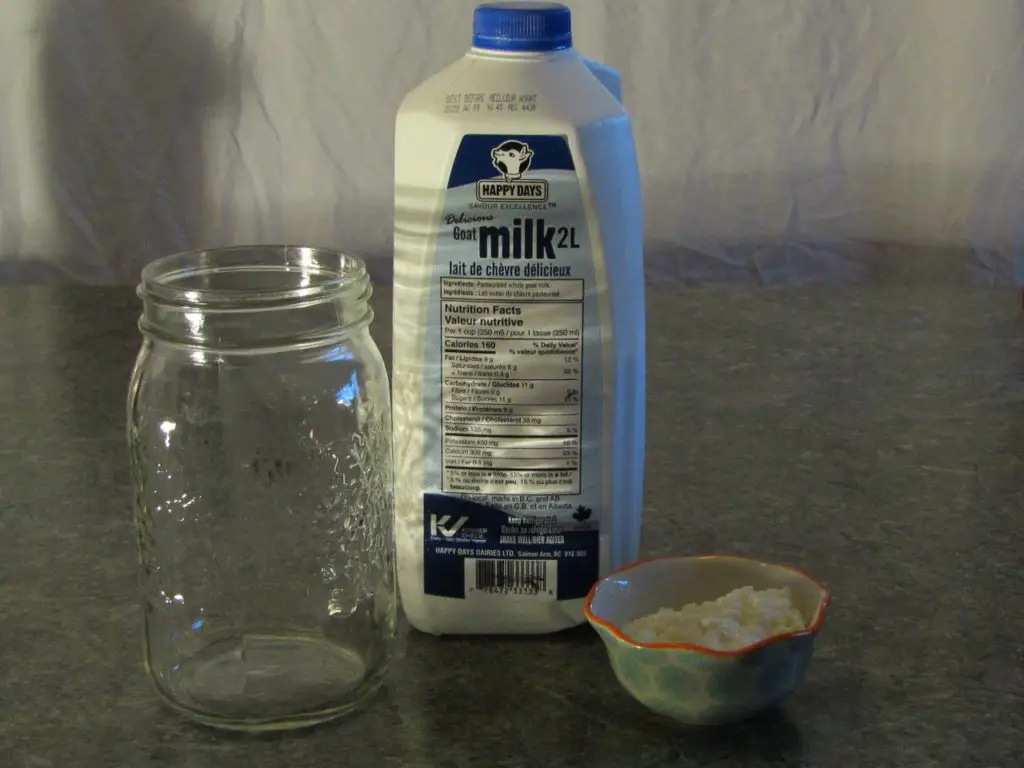
A jug of goat milk an empty mason jar and a bowl of kefir grains

Goat milk is naturally homogenized and comes with only one fat content.  The milk itself takes on the flavor of the diet the goats have been eating while producing the milk so it can vary from very strong gamey flavor to mild and creamy flavored.

Average lactose content: 4.20%

With a lower amount of lactose than some cow milk types with a lower amount of fat naturally.  This switch makes it great for those who want to lower their caloric intake.  The grains have enough lactose to grow well and produce consistent kefir.

Average fat content: 0.148oz/3.5oz or 4.20g/100g

The fat content in goat milk is lower than that of whole cow milk which makes for a thinner kefir.  The kefir has a smooth texture because the fat particles are smaller and naturally homogenized preventing the protein in the milk from forming a grainy texture.

Best uses for goat milk kefir:

Goat milk kefir has a stronger flavor than cow or sheep milk kefir.  It is good for providing depth of flavor to meals. 

  • Strong flavored smoothies
  • Cream cheese
  • Hard cheese
  • Salad dressing
  • Gravies and dips

Sheep milk kefir

Sheep milk has a lower amount of sugar than cow milk with a high fat and protein content.  This makes for a kefir which is smooth and creamy.  The protein dispersed throughout the milk makes the kefir thicker naturally than cow milk but it does not gel like yogurt but rather thickens.

Average lactose content: 4.76%

Less lactose then cow milk but more than goat makes sheep milk kefir less tangy with a milder after taste then goat milk kefir.  The yeast and lactic acid bacteria have ample food to maintain the grains and quickly acidify the milk.

Average fat content: 0.2.5oz/3.5oz or 7.0g/100g

The fat content in sheep milk is higher in proportion to goat or cow milk.  Since like goat milk it is naturally homogenized the kefir produced is very creamy and buttery flavored. 

Best uses for sheep milk kefir:

  • Drink plain
  • Smoothies
  • Cream cheese
  • Hard cheese
  • Dips and sauces

Non-Dairy milk

Kefir grains can also be used to ferment non-dairy milks with varying results.  The microorganisms found in the kefir grains are best at using the lactose in the milk as food energy but they can and will use other types of sugar as well. 

The type of sugar found in nuts and seeds is sucrose.  This is an easily fermentable sugar and the yeast in the kefir grains have no problem digesting it.  The lactic acid bacteria can also use sucrose as food energy but are at a slight disadvantage.  The yeasts tend to overtake a fermentation which has easily available simple sugar.

The protein found in nuts is a solid form and requires liquefying to make it similar in texture to milk.  This requires a high powered blender or industrial processer.  Protein of this type will not thicken like animal milk does. 

Animal milk thickens as the acidity in the milk increases and acts on the protein.  This causes the protein to begin to solidify.  The proteins in nut and seed milks do not have the same properties so they do not thicken although they do separate from some of the liquid in the milk.

Almond milk kefir

Almond milk kefir is a good choice for those who cannot have dairy products as if it is made properly it performs closely like skim or low fat milk kefir does.  The low amount of sugar found in the almonds requires the addition of some type of sugar if you are going to ferment almond milk for a longer period of time but if you can switch between regular milk and almond milk the grains will not suffer.

Sugar concentration of almond milk

Commercial almond milk comes in a variety of types.  The unsweetened version according to the label does not have any sugar in it, whereas sweetened varieties have 2.24 grams of sugar per 100ml of almond milk.

If you are making almond milk kefir with unsweetened almond milk you need to add some form or sugar for the yeast and lactic acid bacteria to eat.  Otherwise the milk will not acidify properly and can go off.

Homemade almond milk can have as much as 4.4 grams of sugar in 100 grams of nuts.  This is enough for the grains to use as energy but it is still a good practice to add a little sugar to ensure your grains have enough easily fermented sugar.

Fat content in almond milk

There is about 3 grams of fat in 240 ml of almond milk which provides enough fat to help smooth out the texture of the kefir once it has been fermented.  The fat does not get incorporated into the grains as easily as milk fat and there is substantially less biofilm around the grains after fermenting almond milk indicating the grains do not grow well in almond milk.

Best uses for almond milk kefir:

Almond milk kefir has a nice tang to it which can vary depending on the amount of extra sugar added and the length of time it is fermented.  The added sugar will help the lactic acid bacteria to acidify the almond milk through the production of lactic acid.

  • Smoothies
  • Cereal
  • Baking
  • Drink Plain

Cashew milk kefir

Cashew milk is a creamy thick milk substitute which when made into kefir can be quite sweet and tangy.  The consistency is closer to milk kefir although still thinner than whole milk kefir.   Commercial cashew milk does not contain any sugar (according to the label) which makes it a poor milk for making kefir without adding additional sugar. 

The nuts themselves have 6g of sugar per 100g of nuts

Best uses for cashew milk kefir:

  • Drink plain
  • Smoothies
  • Cereal
  • Baking

Sunflower milk kefir

Sunflower seeds come in a variety of forms

  • Roasted
  • Flavored
  • Salted
  • Raw

To make sunflower seed kefir you will need to start with raw sunflower seeds.  Once the seeds are cooked the sugar in the seed turns to starch making it unavailable to the yeast and lactic acid bacteria.

Average sugar content: 2.0%

The low sugar content of sunflower seeds requires the addition of some sugar to feed the grains and properly acidify the kefir.  The resulting kefir is also a little higher in alcohol as the yeast grows rapidly when using simple sugars like glucose and fructose (the usual forms of sugar found in the seeds and added sugar).

Average fat content: 1.75oz/3.5oz or 50g/100g

With half of the seed by weight being fat sunflower seeds are a high source of dietary fat.  This makes for a creamy type of kefir with a thin texture due to the lower ratio of protein available to thicken the kefir. 

Best uses for sunflower milk kefir:

  • Drink plain
  • Smoothies
  • Cereal
  • Baking

Pumpkin seed kefir

With its different greenish color and unique flavor pumpkin seed kefir is one of the most interesting types of non-dairy kefir.  It has an earthy flavor with a smooth finish and no bitterness which can be found in some non-dairy kefirs.

Average sugar content: 9.3mg per 100g

The low sugar content in pumpkin seeds requires the addition of sugar for the grains to properly acidify the kefir.  Pumpkin seeds are particularly low in sugar content unless they are sprouted.  Once they are sprouted the enzymes in the seed convert the carbohydrate into simple sugar for energy as the seed grows and puts down roots.

Depending on the type of pumpkin seeds you are using you may have to adjust the amount of sugar you need to add.

Average fat content: 0.75oz/3.5oz or 21.4g/100g

The higher amount of fat in pumpkin seeds makes a kefir which can be smooth with a thin consistency.  The protein in the pumpkin seed milk does not thicken well as the kefir grains acidify the milk which makes for a kefir which is ideal for drinks and non-dairy milk replacement.

Best uses for pumpkin seed milk kefir:

  • Drink plain
  • Smoothies
  • Cereal
  • Baking

Bean based milks

Beans have been used to make plant based milk for centuries.  These include soy milk, yellow pea milk and even peanut milk.  Beans are notoriously hard to digest because the sugar in the beans is mostly Raffinose which is a trisaccharide.  Humans do not have the ability to digest this sugar but lactic acid bacteria found in the kefir grains break it down readily.

Soy Milk kefir

With its high protein content and wide variety of vitamins and minerals soy milk has the potential to be a healthy milk alternative.  Soy milk has several anti-nutrients in it which can make it not the best choice for some people but if you ferment your soy milk into soy kefir you remove many of these anti-nutrients as well as break down the hard to digest sugars making the nutrients much more available to you.

Sugar concentration in soy milk

Fat content in soy milk

Best uses for soy milk kefir

  • Drink plain
  • Smoothies
  • Cereal
  • Baking

Grain based milks

Grain based milks do not make good candidates for making kefir.  The carbohydrate in the grain whether it be rice, millet or oats are complex carbohydrates which the yeast and lactic acid bacteria cannot break down and use for energy. 

For the energy in the grain to become available to the yeast and lactic acid bacteria the carbohydrate chains need to be broken down into smaller sugars.  This process is called saccharification and requires special enzymes which the yeast and lactic acid bacteria do not have.

There is also very little fat content in grains which makes the resulting kefir thin and runny.  Kefir made from commercial grain based milks can have a thicker texture but this is due to the thickeners which are added to the milk to make it more palatable and resist separation.  Most of these thickeners are not naturally occurring in the grain.

Still if you cannot have other forms of kefir this could be an option for you.  These kefirs are best used for smoothies or poured over cereal rather than cooked with as they do not have much structure.

The acidity will help to rise quick breads and the live yeast and lactic acid bacteria in the milk can act as a leavening agent if they are active enough.

Rice milk kefir

There is very little naturally occurring sugar in the rice so to feed the kefir grains sugar is added.  Commercial rice milk is made from brown rice and brown rice syrup but homemade rice milk is sweetened with a wide variety of sources such as:

  • Cane sugar
  • Coconut sugar
  • Beet sugar
  • Honey
  • Tree sap syrups

Each of these adds their own flavors and textures to the milk and once it is fermented will provide a lower pH reminiscent of kefir without the thickening effect from the proteins in the milk.

Fermentable sugar content

None.  Any fermentable sugar in rice milk kefir needs to be added from other sources.  For the starch in the rice to become available to the yeast and lactic acid bacteria they must be broken down into smaller carbohydrate strains. 

Average fat content: 0.035oz/3.5oz or 1.0g/100g

The low fat content in rice milk provides a thin consistency.  Which does not thicken well due to the low protein content in the rice milk (0.3g/100g). 

Best uses for rice milk kefir

  • Smoothies
  • Cereal
  • Drink plain
  • Milk replacement for quick bread baking
Oat milk kefir

Although oat milk is recommended as a healthy plant based milk it does not transfer well to oat milk kefir.  Again the starches in the milk are not available to the yeast and lactic acid bacteria making in necessary to add sugar in some form for the grains to use as energy. 

Because the sugar added boosts the yeast activity and over time slows the lactic acid bacteria down oat milk kefir can be higher in alcohol than normal milk kefir.  To combat this you could keep the ambient temperature lower.  This will slow the growth of the yeasts a bit giving the lactic acid bacteria a chance to compete.

Best uses for oat milk kefir

  • Smoothies
  • Cereal
  • Drink plain
  • Milk replacement for quick bread baking
Three Great Ways to Make Natto


Natto is a polarizing food.  You either love it or hate it with no in-between. 

It has a texture which most in North America are not used to, has an acidic smell and is covered in a slimy coating which tends to through people off when they first see it.

On the other hand if you give it a fair chance it is a delicious and healthy food.  It contains a high amount of protein, contains PQQ and nattokinase as well as a host of vitamins and minerals.  It can eaten in a variety of ways besides the traditional method of served over warm rice with soy sauce and mustard. 

There are three ways to make your own natto you can use a packet of store bought natto, use a starter powder or you can make it from scratch. 

Make Natto from a store bought packet

This method of making natto uses backslopping which is a method of fermentation where some of a prior batch is used to inoculate the next batch.  With natto this can be done by purchasing a frozen packet of natto from your local grocer and using it to make a batch of homemade natto.

Although natto made this way will work consistently when commercial natto beans are used you should not try to use this method using your own natto beans as the culture can get contaminated quickly and cause the natto beans to go off, get moldy or not produce the sought after slimy coating indicative of natto beans.

The benefits of making natto from commercial natto

Cheap to try

This method will cost you the price of a packet of natto and two cups of soybeans.  You will get at least four cups of natto to eat which will be a fraction of the cost of buying it premade. 

Easy to do

Natto made this way is really quite simple.  You soak and cook the beans then mix the packet of natto into the beans thoroughly and ferment for 12-24 hours depending on temperature and how you like your natto. Click here for a complete recipe in how this is done.

Will taste the same as store bought

The culture which commercial natto is made from is very controlled so there will not be many stray bacteria in your natto to cause the flavor to be altered.  You are essentially getting pure bacillus natto cells from the natto package to ferment your soybeans.

How to make natto with a store bought package of natto

Equipment:

  • shallow non-reactive pan
  • stockpot or some other large cooking container
  • wooden spoon
  • colander
  • bowl large mixing bowl

Ingredients:

  • two cups of soybeans (small ones work the best but any will do)
  • one package of store bought natto

Prepare the beans

Soybeans are sold dry so they need to be soaked to allow then to rehydrate before you cook them.  Place them in a container which will hold at least twice the volume as the beans then fill the container to an inch or so below the lip with filtered cool water.  Let them soak for 8 hours or so (usually overnight).

Once the beans have been soaked strain them and rinse them in cool filtered water.  Put them in a large stockpot or other suitable container and fill the pot with water. 

Boil the beans until they are soft enough to crush with your thumb and ring finger easily.  The softer they are the easier it is for the bacteria to ferment the beans but too soft and they will not hold up to stirring.

Once they are done drain the remaining water from the stockpot.  Do not rinse the beans!

Inoculate your beans with the natto package

Place the beans in a shallow pan and let them cool to 115˚F.

While the beans are cooling thaw a package of frozen natto. 

Once the beans have cooled and your natto package has thawed mix the package into the beans well.  Ensure all the beans have been in contact with each other.

Cover the beans with plastic wrap and place the container in your incubator for 12 hours.

After 12 hours you should see a white growth on the surface of the beans.  This indicates your natto is ready.  Remove the container from the incubator and take the plastic wrap off. 

Scoop out the fermented natto into serving sized containers and place in the fridge to cool. 

Natto is best once it has a chance to mature in the fridge for two or three days but it can be eaten once it comes out of the incubator. 

After two or three days place the remaining natto into the freezer to halt the fermentation process.

Make Natto from powdered bacillus natto spores

These are the packets which are sold by culturing companies for making natto.  Bacillus natto is a variant of Bacillus subtilis which is found everywhere, in the soil, on plant’s roots, stokes and leaves and in most mammals gut.  They are considered probiotic and necessary for maintaining health.

The benefits of using natto spore packets

Easier than other methods

Making natto this way only requires adding the powder to the cooked beans and letting it ferment in your incubation chamber.  The packets are small so they don’t take up any room in the fridge or freezer and can be used immediately when taken out of the packet to inoculate a batch of beans.

Consistent results

The spores are made up of pure bacillus natto spores grown in a commercial lab which may supply commercial natto producers.  This ensures that you will get consistent results as long as you follow the instructions.

Don’t need finished natto to make new

Storing finished natto for the purpose of inoculating a new batch has its drawbacks. 

  • It could be eaten without you knowing or by mistake
  • It takes up space which could be used for something else
  • The culture in the finished natto may have weakened

When starting with purified natto spores you are going to have the best chance of making consistently tasting natto.

How to make natto from powdered bacillus natto spores

Equipment:

  • shallow non-reactive pan
  • stockpot or some other large cooking container
  • wooden spoon
  • colander
  • bowl large mixing bowl

Ingredients:

  • two cups of soybeans
  • Bacillus natto spores

Instructions:

Prepare the beans as you would for the above method.

Strain the beans in the colander and spread them out onto the shallow pan.

Cool the beans to 115˚F/46˚C.  Sprinkle the spores over the beans and mix well.  Wait five minutes and stir the beans again.  This will give the spores a chance to hydrate a little and be mixed more thoroughly into the beans.

Cover the beans with plastic wrap and place into your incubation chamber

Let ferment for 12-24 hours depending on how strong you like your natto.

Take the container out of the incubator and package your natto into serving sized containers.

Store in the fridge for two to three days and then place them into the freezer.

Make natto from scratch

This is where most people think you have departed from reality.  Making natto from scratch is a step of faith that the old traditional ways of making fermented foods are still valid today.

The first instance of natto is lost to time and we only have some stories of where it may have been discovered but the method which was used is well known and has been used to make natto for thousands of years.

Benefits of making natto from scratch

No need for any type of special starter

Starting from scratch means that you are going to use the naturally occurring bacillus subtilis found on plant stocks and leaves.  Traditionally the stocks which were used were rice stocks but any type of plant stock will do.

I have seen recipes using cabbage leaves, rice stocks and oat straw.  All of which will work.

Natto has a more earthy complex flavor

Natto made this way will have different flavors which are not found in the other methods.  This is because at the start the bacillus subtilis bacteria do not dominate the culture on the leaves.  Other species are also growing in the same environment.   

When you place the beans in an environment which favors the growth of bacillus subtilis it will grow rapidly and dominate the others quickly but not instantly.  This lag time gives the other bacterial strains a chance to grow and produce additional flavors in the natto.  This makes it a more complex and interesting flavor.

You will have a feeling of adventure and discovery

This is a fringe activity.  Wild fermentation is not a mainstream idea in this highly regulated and safety orientated society.  Today with farmed food and commercialization of our food supply we are made to believe that if we make our own fermented food we are somehow poisoning ourselves.

The fermentation is done in a controlled environment to provide to encourage the growth of the wanted bacteria and inhibit the unwanted ones.  Once the bacillus subtilis has dominated the culture the other bacterial strains cannot grow.

How to make natto from scratch

Equipment:

  • shallow non-reactive pan
  • stockpot or some other large cooking container
  • wooden spoon
  • colander
  • bowl large mixing bowl

Ingredients:

  • two cups of soybeans
  • Some type of plant stocks or leaves

Instructions:

Prepare the beans as usual

Separate the leaves from the stocks

Blanch the stocks or leaves you are using in boiling water for 10 seconds

Spread a layer of stocks or leaves on the bottom of the container

Place the hot beans on top and put another layer of stocks or leaves on top

Cover with plastic wrap and place in your incubator for 12 hours

Remove the stocks or leaves from the beans and scoop into serving sized containers

Store in the fridge for two to three days.  After that freeze the containers until use.

Why this method works

The bacillus subtilis bacteria is very tough.  It has been studied in all sorts of extreme conditions including space.  The spores are resistant to heat damage and will grow in all sorts of conditions.

By blanching the source of the spores you are destroying most of the other microorganisms which are on the source which gives the spores the upper hand in the fermentation.  The warm humid environment helps to encourage their growth.

As they grow they produce a biofilm (the slimy texture on the beans) which further inhibits the growth of other bacteria in the beans.  The movement of the other bacteria is slowed when they get caught in the biofilm and cannot reache their food source.

This method of fermenting natto has been used for centuries and is a valuable method to improve the health benefits of soybeans. 

Can other beans be used to make natto

Let’s be clear.  Natto is a fermented product made by inoculating cooked soybeans with bacillus subtilis or the strain bacillus natto.  Most other beans and seeds fermented with bacillus subtilis are made in Africa using a wide variety of beans and methods. 

Some of the other foods fermented with bacillus subtilis

Dawadawa

Dawadawa is traditionally made with locust beans in their natural state are inedible.  The beans go through several processes and are fermented for a longer period of time before they are mashed and formed into balls to dry in the sun.

It is traditionally made by the women in Ghana as a means of support. 

 Sumbala

Sumbala is a fermented condiment made with nere seeds in West Africa.  They are prepared much like dawadawa. 

 iru

Iru comes from Nigeria and is made similarly to that of dawadawa.  It can be made from nere seeds soybeans or locust beans. 

It is eaten fresh or dried into flat cakes for sale.

Ogiri

Ogiri is made from sesame, castor oil seed, melon seed or fluted pumpkin seed.  Each type has a different flavor.  The seeds are not crushed and formed into balls or cakes like the bean fermentations but rather left whole and added to dishes to enhance the flavor.

The seeds are cooked, rinsed and wrapped in banana leaves to ferment for four days.  Once the fermentation process is complete they are either used immediately or dried for later use.

Bacillus subtilis can be used to ferment other beans or seeds in the same manner as that of natto.  The flavor will be different.  They may not have the slimy coating but they will be easier to digest and add a funky flavor.

Ways to incubate your natto

The key to making good natto is to maintain a temperature between 100˚F/40˚C for at least 12 hours.  To do that you will need an incubator.

Potential ways to incubate your natto

Hot water bottles and a cooler

  • Pre-heat the cooler by placing the hot water bottles in the cooler a half hour before you put the natto in.
  • Ensure the hot water bottles are above the required temperature (120˚F/48˚C). 
  • Place a towel over the bottles to slow the heat transference and place the container holding the natto beans on top of the towel.
  • Secure the lid and wait for 12 hours.

Warm oven using the pilot light

Some ovens are lighted using an incandescent light bulb.  These ovens can be used as an incubator if the temperature can get above 100˚F/43˚C.  You may have to use something to cordon off some of the oven to allow the small heat source to raise the temperature within the wanted range.

You can do that by using silicone mats or cookie sheets on the top rack set just below the light.  Place the natto beans in the top rack and close the door. 

Make sure you place a sign over the controls to prevent others from using the oven and cooking your beans rather than fermenting them.

Adjustable yogurt maker

Some yogurt makers have a temperature gauge.  To use these you have to either make smaller batches or load the fermenting beans into individual containers.  This is because the bacteria needs some oxygen to grow and making the depth of the beans too thick prevents their growth.

Heated incubation box

These can be bought or made depending on your preference. 

They can be made from plywood, Styrofoam insulation or plastic.  With a heat source on the bottom controlled by a thermostat.

 Thermostats designed for terrariums are great for this just as long as they will reach the right temperature. 

Hot water bottle and towels

  • This is a last resort but it can also work well if you have a warm enclosed space.
  • Place you hot water bottles in the center of one bath towel
  • Place another on top of the water bottle
  • Put the natto bean container in the center of the towels and fold them up
  • You can place additional towels on top of the whole bundle to help maintain temperature.
  • Close the door of the space
  • This will limit the heat loss from the room and help keep the beans at the correct temperature.
  • Check the temperature after six hours if it is too low add a fresh hot water bottle.

Three Simple Ways to Make Homemade Yogurt


Homemade yogurt is a great addition to anyone’s pantry with its creamy tangy flavor.  It can be made to your liking either fermented a short period of time for a sweet slightly tangy flavor or fermented a longer period for those who like it tangier or want less lactose in their yogurt. 

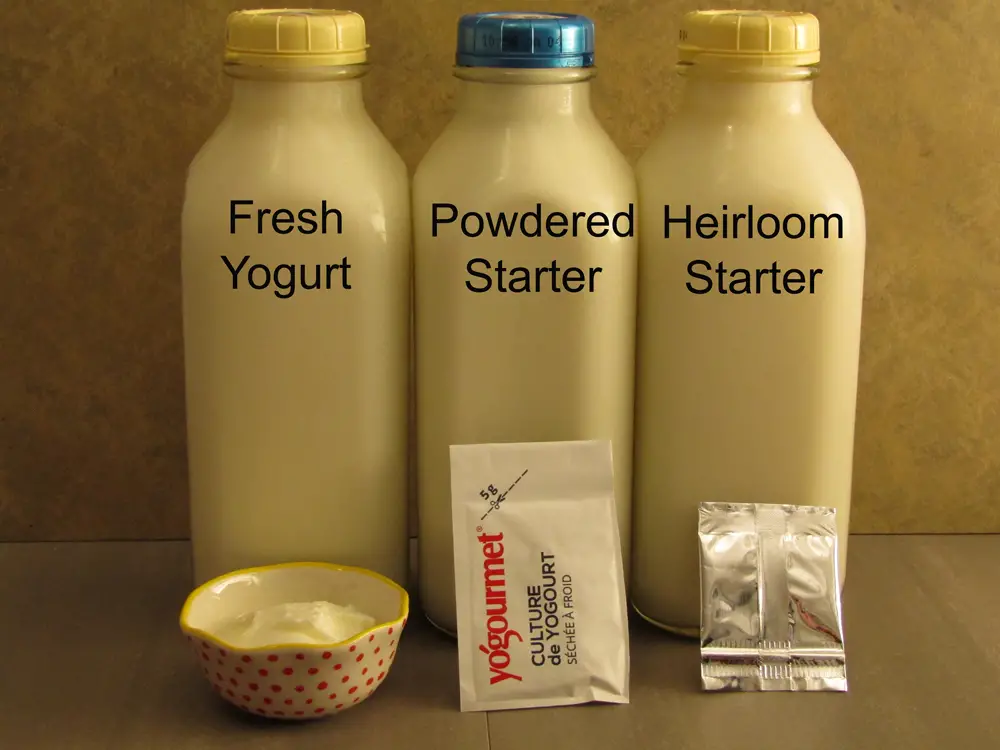
When considering making your own yogurt there are several choices.  You can make it from yogurt from the grocer, from a powdered yogurt starter or you can make it from an heirloom yogurt mother.  Each has their benefits and drawbacks and levels of commitment.

Yogurt from store bought yogurt as a starter

If you are first starting out on your yogurt making adventure then this is the best method for you to learn if you like it.  All it requires is a little bit of store bought yogurt to use as a starter and a warm place to ferment it. 

Benefits of making yogurt from commercial yogurt

Time commitment

This is the easiest method which requires to least amount of time to make.  If you have a half an hour you can prepare the milk for fermentation and then let the lactic acid bacteria to their work and in 12-24 hours you will have fresh homemade yogurt.

Familiar flavor and consistency

Making your yogurt with store bought yogurt as a starter will make a yogurt which is very similar to the yogurt you get from the store.  This is because the bacterial culture which are used to make commercial yogurt is standardized.  Only two species of lactic acid bacteria need to be used for commercial yogurt,  Lactobacillus bulgaricus and Streptococcus thermophilus.  These strains will produce the same flavors and texture in your homemade yogurt as they will in a commercial setting.

No long term commitment

Making yogurt this way has no strings attached.  If you don’t like it you can just go back to the store bought version, if you eat it all and don’t save any for another batch you can get another container of store bought and start again and if it goes off in the fridge you can throw it away. 

Cheaper than store bought

Yogurt made this way will cost you the price of the yogurt and the milk you are making it from.  For the same amount of yogurt you would have to spend at least twice the amount.

Drawbacks of making yogurt from commercial yogurt

Limited lactic acid bacterial strains

As mentioned above there are a limited number of bacterial species found in store bought yogurt.  This limits the health effects the yogurt has. 

Cannot be continuously made

Yogurt made with only two cultivated species of lactic acid bacteria are susceptible to contamination from other unwanted bacteria.  The two species cannot dominate the culture efficiently enough not to leave an opening for some unwanted bacteria to gain a foothold. 

Once one unwanted bacteria begins to grow others follow leading to a weakening of the original species making your yogurt inedible. 

To ensure your homemade yogurt is tasty and healthy for you use fresh store bought yogurt as a starter every few batches.

How to make yogurt with commercial yogurt as a starter

Ingredients:

  • One cup Store bought yogurt
  • One gallon of milk

Equipment:

  • Non-reactive container
  • Large stock pot
  • Wooden spoon
  • Whisk

Instructions:

  1. Wash all equipment with hot soapy water and rinse well.  Let everything air dry.
  2. Gently heat the milk in the stock pot until it starts to simmer.  Pour it into the non-reactive container and let it cool until it is warm to the touch but not hot (about 115˚F/46˚C).
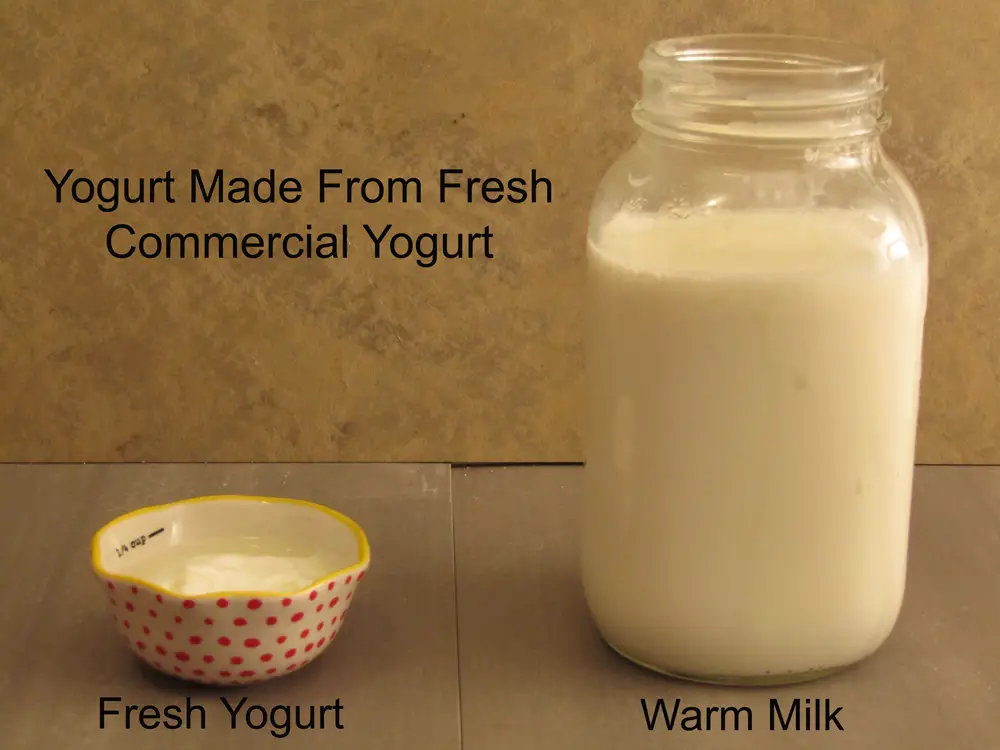
  3. Add the fresh yogurt and whisk it in until the yogurt is well mixed into the milk.
  4. Place the container in a warm location which can maintain a temperature between 110˚F/43˚C-115˚F/46˚C for 12 -24 hours depending on how tangy you like your yogurt or how much lactose you want in the final product.
  5. Once yogurt has set put it into the fridge for a few hours to cool.

Yogurt from direct set yogurt as a starter

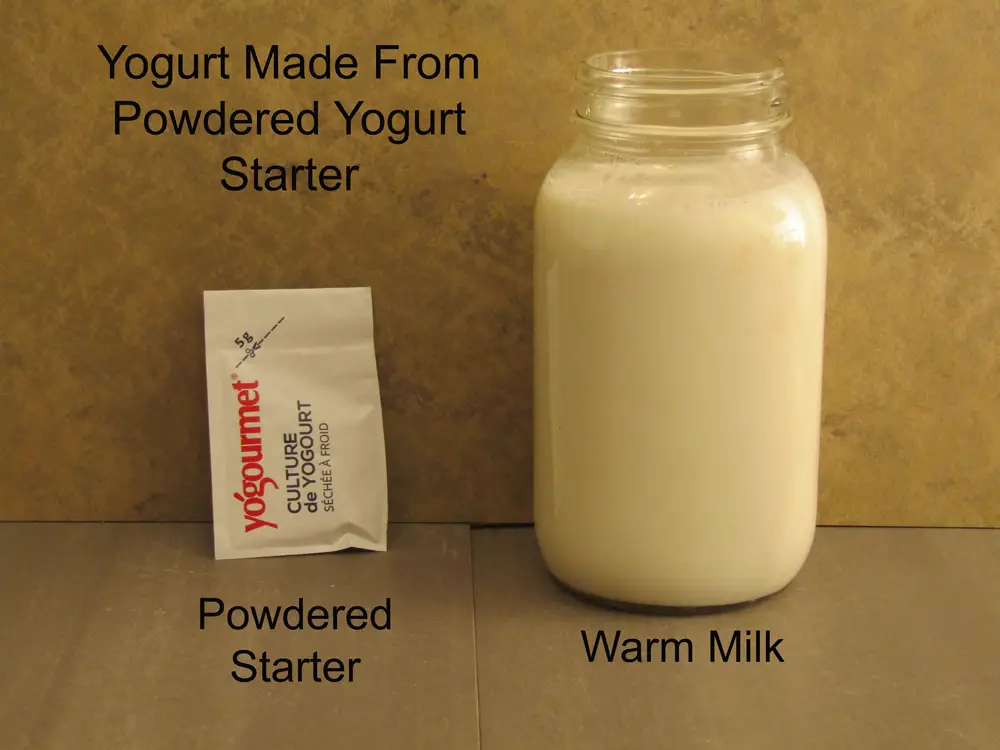
Making yogurt from these packets is a good choice if you only occasionally use yogurt.  They make larger batches of yogurt from each packet of the starter which can be used over a period of a few weeks.  The package of packets usually has 4-6 packets in it. You can purchase a variety of these powdered starters by following this affiliate link to Amazon.

The benefits of direct set yogurt starter

Easy to use

To use these packets all that is required is you to mix the powder into a small amount of milk to ensure they are fully hydrated and then mix them into the heated milk to incubate.

Consistent results

The bacterial species found in these packets are basically the same as those which are used for making commercial yogurt.  This provides consistent results which are close to what you would buy at the store.

Flavor profile can be sweat or tart

You have the option of how long to ferment your yogurt.  If you choose a shorter time frame it will be sweater as the culture will not have enough time to consume all the lactose (the sugar in milk).  With a longer fermentation period the yogurt will be tarter with the addition of more lactic acid and less lactose.

Come in a variety of styles

There are a variety of styles of yogurt starters on the market including, Bulgarian, Greek, traditional, matsoni and mild flavors. 

Each have their own texture and flavor.  Greek and Bulgarian styles produce a thick yogurt, traditional matsoni produce a thinner yogurt more like the yogurt you get at the store. 

There are other types which produce a thin drinkable yogurt.

The drawbacks of direct set yogurt starter

Must make the entire batch

The packets are made to make a batch with a certain size.  If you use the packet for a smaller amount of milk it will work fine but you are not making the most yogurt you can with the packet.  Since the culture will grow to match the amount of milk it may take less time to ferment but the amount will be smaller.

If you use more milk then is recommended for the packet you are risking the batch going off rather than making yogurt. 

Only a few lactic acid bacteria species used

These packets contain only a few bacterial species which are needed to thicken the milk into yogurt but not a full range that a heirloom type has.  This has several implications:

The yogurt has fewer probiotic effects

With fewer species of lactic acid bacteria in the yogurt you will have in the culture the fewer health benefits there will be.  Each type of bacterial strain produces different vitamins, enzymes and makes different minerals available to you.

With a wider variety of species you will get a fuller spectrum of benefits.

The yogurt cannot be used to make continuous yogurt batches

Just like starting yogurt with fresh commercial yogurt the culture is weak.  It does not have enough variability to keep all other bacterial strains out of the culture.  Once one gets in others are sure to follow.

Packets must be stored in the freezer

If you don’t make yogurt often then you have to store these in a cool location otherwise they will not work when you go to use them. 

The freezer is a great place to store food for the long term but they can get overcrowded and things get lost and damaged.

How to make yogurt with packaged yogurt starter

These types of starters are thermophilic meaning they need heat to properly culture the milk so follow the instructions about how to make yogurt with store bought yogurt except instead of fresh store bought yogurt stir in a packet of yogurt starter.

Making heirloom yogurt

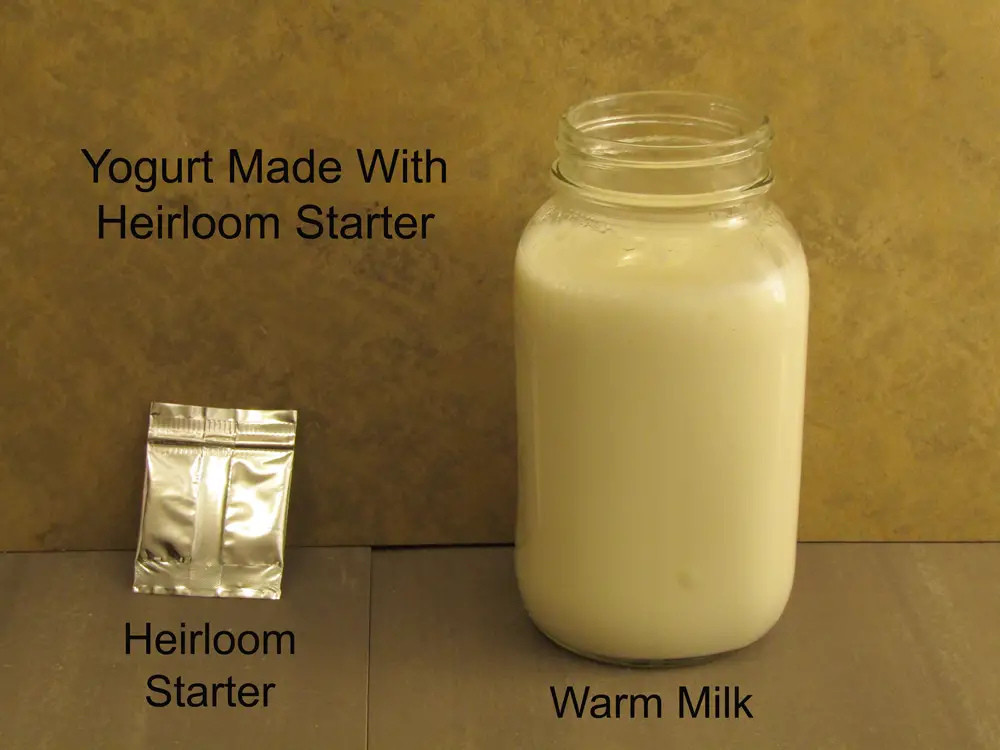
Benefits of using a heirloom starter to make yogurt

More lactic acid bacteria species then other types

For the culture to remain stable over a long period of time it must have a wide variety of lactic acid bacteria present to dominate the milk while it is fermenting. 

Lactic acid bacteria can acidify a batch of milk in a short 6 hour ferment which helps to protect it from mold and unwanted bacteria.  With a wide variety of lactic acid bacteria there is no room for spoilage bacteria to grow in the culture.

Along with the additional bacterial strains comes a healthier yogurt.  More strains of lactic acid bacteria will produce different vitamins, enzymes and make a wider variety of minerals available to your system.  This increases the health effects of eating yogurt.

Can make yogurt indefinitely

The wide variety of lactic acid bacteria makes a very stable community which protects itself from invasion from unwanted microbes found in the environment.  This ensures that the yogurt culture will continue maintain its integrity as long as it has fresh milk to grow in.

Cheaper than store bought

Once you have bought your heirloom starter you can make an unlimited amount of yogurt with it.  Each batch of yogurt will cost you the price of the milk you use to make it, which is much cheaper than buying store bought yogurt.

Can make any sized batch

With this method you can make any amount of yogurt you need.  If you have a large family which consumes a lot of yogurt then increase the size of the container of fresh milk.  If you only use a quart of yogurt a week then you can reduce the amount you make.

Be sure to use a ratio of 2 tablespoons of yogurt for every quart of yogurt you make to ensure the milk is properly inoculated.

Drawbacks of using heirloom starter to make yogurt

High commitment level

This way of making yogurt requires the most commitment of all three methods.  When using this method you have to be ready to make yogurt regularly, at least every two weeks but better every week.  This is because the culture which makes the type of yogurt you are making needs to be fed regularly to maintain its integrity.

By feeding your culture every week it will continue make the same yogurt for you every time but if the culture is ignored for too long it can get out of balance and begin to taste unpleasant. 

Hard to care for more than one type

There are lots of varieties of yogurt, all of which have a different profile and can be used for different purposes.  Once you decide on a type of yogurt you like you are committed to making it.  If you want to add another type you will have to maintain it just like the other one. 

How to make heirloom yogurt

The first thing to do is the get a starter culture or yogurt mother from somewhere.  These can be purchased online or begged from someone who has an active culture.  They come in a wide variety of types which can be fermented at room temperature (Mesophilic) or warmer (Thermophilic).

Each type has a different texture and flavor which is due to the variation in the species in the culture, how it is made and length of time it is fermented.  There is little information about the actual species of lactic acid bacteria found in the different types of yogurt but from the unique flavor and texture of each we know there are varying species in each.

The “mother” of a heirloom culture is just a sample of the culture kept back to ferment the next batch.  This sample contains all the viable bacterial species in the yogurt which then grows quickly in fresh milk.

Different styles of heirloom yogurt

If you are interested in any of the above options follow the affiliate links to Amazon for purchase.

Making yogurt without heat (Mesophilic )

This is the easiest way to make yogurt but it tends to make yogurt which has a thinner consistency than the thermophilic kinds. 

If you are using a purchased starter culture you will need to activate the starter.  To do that you need to stir the powder into a jar of milk cover it and let it sit in a warm location in your kitchen.  It should set in 6-12 hours. 

Once it has set store it in the fridge.  You can eat this yogurt but save some to start another batch.  You will need about 2 tablespoons for a quart sized jar.

Now that you have a starter you can use it to start another batch simply by stirring some of a prior batch into a fresh jar of milk and letting it ferment for 6-24 hours depending on how tart you like it.

Making yogurt with heat (Thermophilic)

These types of heirloom starters need heat to properly ferment the milk.  To activate your starter follow the instructions on how to use the one time yogurt packets.  This will activate your starter which then can be used continuously to make more yogurt.

Use the store bought method where you use some of the last batch to make the new batch. 

Incubation methods

With a yogurt maker

These come in all shapes and sizes.  There are some which have individual cups and some which have a large container but the idea is the same, it has a thematically controlled chamber which maintains the temperature at the ideal temperature for yogurt making.  

If you want to make yogurt regularly, having a yogurt maker is a great idea.  They are convenient and easy to use.  There are many options to choose from:

  • Electric  heaters or insulated systems
  • One large container or several smaller ones
  • Dedicated yogurt makers or multi-purpose
  • High quality or cheap 

Depending on your needs any of these options will work for you.  For a complete guide to purchasing a yogurt maker which is right for you check this article here or if you know what type you want use this Amazon affiliate link here for your convenience.

Simply fill the fermenting container(s) with your new fermenting yogurt place them into the chamber and put the lid on.  It 6-24 hours you will have fresh yogurt.

Place the yogurt in the oven with the pilot light on

This works great if you have an old style oven with an incandescent light in the back of it.  The light should keep your yogurt at the target temperature.  Simply place the container in the oven and turn the light on.  Put a sign on the oven door and temperature control to avoid someone from using the oven while your yogurt is incubating.

The first time you do this use a thermometer to ensure your oven temperature stays within the target temperature.  If it is too cool put some containers with hot water into the oven to raise the temperature.  If it is too hot open the door a crack.

Use a cooler with hot water bottles

Place your container into a cooler and surround it with hot water bottles which are no hotter then 115˚F/46˚C.  Close the lid tightly.

The hot water bottles should keep the yogurt warm enough for 12 hours.  If you are wanting to ferment it longer replace the hot water bottles after 12 hours.

Use a water bath

Place your yogurt container in a water proof cooler and fill it with warm water with a temperature about 115˚F/46˚C.  The water should stay warm enough to incubate the yogurt for a 12 hour period.

Another container filled with hot water and a load of towels

If all else fails find another container or two, fill them with hot water and place them in the middle of a stack of towels with your yogurt container.  Fold up the towels around the whole thing. 

The hot water will keep the yogurt warm enough for a short 6 hour ferment.  If you want to ferment your yogurt longer replace the containers holding the hot water and ferment another 6 hours. 

How to Make Homemade Vinegar Starting with no Alcohol


Although alcohol is a necessary ingredient in making vinegar you don’t have to start with an alcoholic solution to make great vinegar.  Vinegar made by simultaneously producing alcohol and acetic acid have a different flavor than those which start with a 6-10% ABV liquid.  The variety of yeast species is more varied providing greater base of esters and enzymes which help the acetic acid bacteria to grow and add additional flavors to your homemade vinegar.

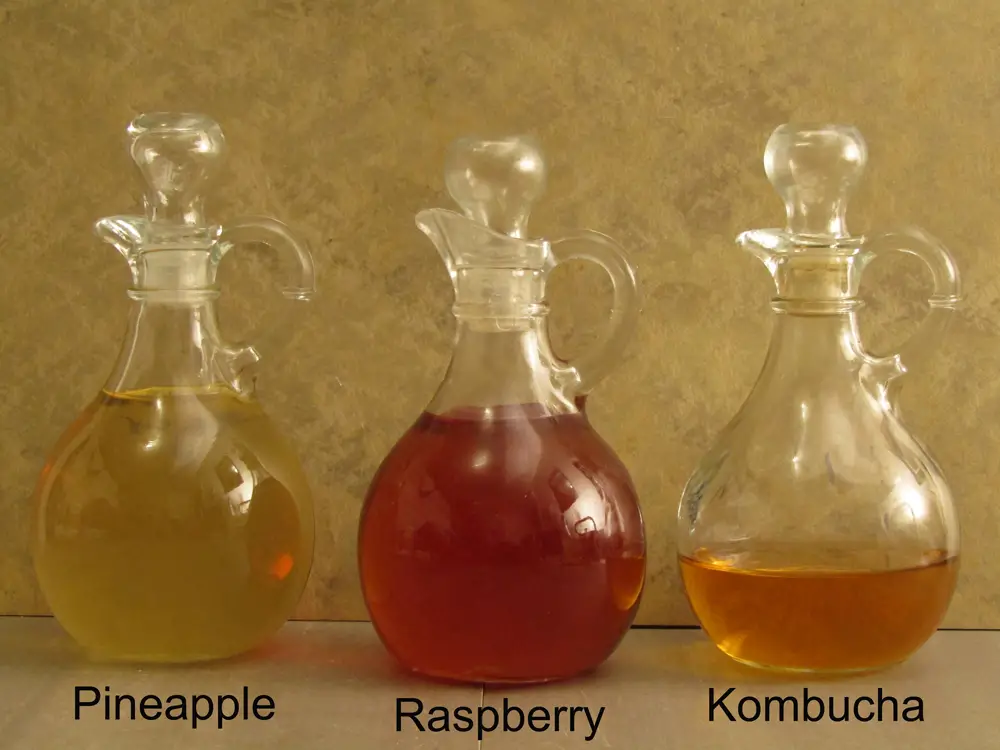
This method of making vinegar will allow you to make vinegar from any fruit or vegetable you have around.  It can be made from scraps or whole, fresh or frozen produce.  You no longer have to be limited by what is available in the store.  You can make apple, pear, pineapple, peach and plum or any other type of vinegar you want. 

You can even make vegetable vinegars like carrot, beat or hot pepper (hot peppers are actually a fruit but usually used as a vegetable).  Only your imagination and bravery will limit the varieties you can make.

To make vinegar you will need the assistance of two microbial families

Yeast

Yeast use sugar for their respiration producing ethanol and CO2.  They are found naturally occurring in our environment and can grow rapidly when placed in the right environment. 

The ethanol is what feeds the acetic acid bacteria helping them to rapidly dominate the vinegar culture but yeast also provides vitamins which were not found in the original food and make minerals more available to you as they break down the food.

Acetic acid bacteria

Acetic acid, the acid which is found in vinegar, is produced by acetic acid bacteria which is a family of bacteria made up of four types, Acetobacter, Gluconacetobacter, Gluconobacter and Komagataeibacter.  They are found everywhere, on our food, surfaces, skin and in the air. 

The method for making vinegar from almost anything

Making vinegar can be done in many ways (link to vinegar making methods post) but here is a method which will produce great vinegar from anything you can imagine without the need for starting with an alcoholic base.

Wash your equipment

You will need:

  • One gallon container (a large pickle jar will work great)
  • Cutting board
  • Kitchen knife
  • Clean porous cotton cloth with an elastic band

Starting with clean equipment is one of the keys to making quality vinegar.  Clean equipment will reduce the chance of contamination and off flavors in your homemade vinegar.  It is not necessary to sanitize your equipment which requires either toxic chemicals or high heat which is difficult to accomplish. 

Run your equipment through the dishwasher with the dry cycle on and clean all surfaces with soap and water.  Rinse everything well with water to remove any soap residue.  Air drying is the best way to prevent unwanted microbes from re-contaminating your equipment.

Once your equipment is clean and dry keep it confined to the space you have cleaned.

Prepare the ingredients

You will need:

  • Four to eight cups of fruits and/or vegetables
  • Filtered water
  • Sugar

You can use any fruit or vegetables to make vinegar with this method but it is important to know that the flavors in the original food will come through in the final vinegar so choose something you like. 

The amount of flavor the vinegar has will be determined by how much of the base ingredient you use at the start.  Some fruits like pineapple and mango have a strong flavor so they can be over-powering if you use too much whereas fruits like peaches, strawberries or raspberries have a more delicate flavor which requires more fruit for the flavor to be noticeable in the finished vinegar.

Carefully inspect your ingredients for mold or rotten bits. 

Either throw rotten berries away or cut out spoiled bits of larger solid fruits and vegetables.  Any mold or rotten bits will taint the flavor of the vinegar so it is important to remove as much of this as possible.

Wash the ingredients in cool filtered water.   

Tap water is treated with chlorine to prevent microorganisms from contaminating the water.  This is great when preventing water borne diseases but will kill wanted microbial species found on your ingredients.  These microbial species are what nature uses to breakdown the ingredients back into soil.  You want them to break down the sugar in the food and make alcohol and acetic acid.

Load the ingredients into your jar and fill ¾ with filtered water. 

There are some fruits which do not need added water like grapes, oranges and other juicy fruit but most fruits are hard to get enough liquid out of them to make vinegar.  If you have a juicer you can make vinegar with only the juice of the fruit but if you don’t have a juicer you can still make vinegar with whatever base you choose.

Adjust the sugar content

To make vinegar which has enough acetic acid to be able to protect itself from unwanted microbial growth you need to add enough sugar.  The sugar is used by the yeast to produce alcohol which in turn is used by the acetic acid bacteria to produce acetic acid.

Without enough sugar the yeasts will not produce enough alcohol fast enough for the acetic acid bacteria.  You want a potential ABV of at least 5%.  If you were fermenting the sugar with high producing yeast species like Saccharomyces cerevisiae you can use less sugar to produce alcohol but when you are simultaneously producing alcohol and acetic acid the alcohol level never gets very high. 

Most naturally occurring yeast species only have an alcohol tolerance of 3-4%ABV but since the acetic acid bacteria are using the alcohol in the liquid while the yeast is making it the alcohol level does not rise above this level.   A low alcohol level allows yeasts with a low tolerance to alcohol to continue to live.    These yeasts are not as efficient at producing alcohol so you will need more sugar for the same amount of alcohol you need for the target acetic acid.

If you have a hydrometer you can use it to test the amount of sugar you have in the liquid.  You want a reading of 1.052 or higher. 

Without a hydrometer you can just use a ratio of 3 ¼ cups of sugar per gallon of pure water.  This will produce a higher reading on a hydrometer but will work for all food bases you are using no matter what its sugar content it has.

Secure the cloth over the lid with the elastic band to prevent contamination.

Agitate the mixture

Stir every 12 hours for the first week.  Before you go to bed and when you get up.  Once you see active bubbles coming from the mixture you can reduce the stirring to once a day.

There are several reasons why you will want to stir the mixture regularly

  • Add oxygen for the natural yeast and acetic acid bacteria to grow rapidly
  • Prevents mold growth on the surface of the liquid
  • Helps the flavors of the fruit or vegetable to enter the liquid
  • Mixes any solids which have settled on the bottom of the jar keeping them in play for the main ferment

This is an important step.  You want the acetic acid bacteria and yeast to dominate the culture quickly.  Some methods of vinegar making use a vinegar mother and some finished vinegar to pre-acidify the liquid before fermentation.  This helps to prevent mold growth.

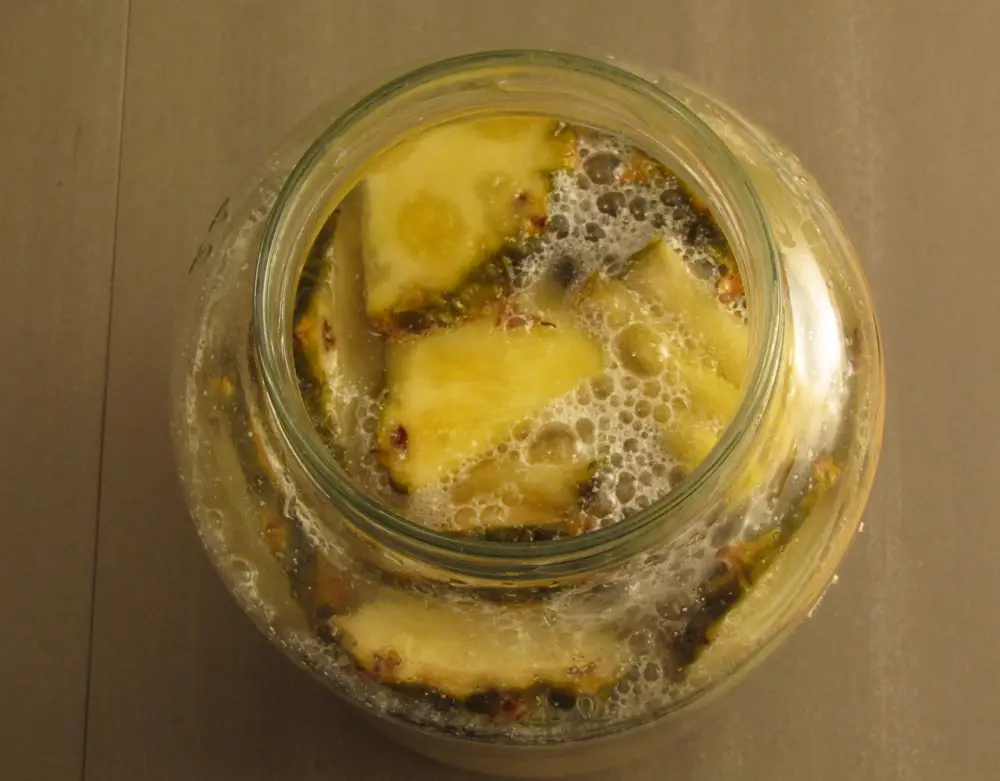
Yeast just starting to ferment the sugar in this pineapple vinegar

This method only uses the naturally occurring yeast and bacteria to make your vinegar giving in a pure fresh flavor but requires more work but it does require care and attention.

Strain the solids

After about ten days taste a piece of the solids in the mix.  If it still has flavor leave it for another day or two and test again.  Once it does not have much flavor left it is time to strain out the solids.

Pour the mixture through a clean cloth into another container and squeeze out as much juice as you can.  Wash the original container and pour the liquid back into it.

Secure the cloth with the elastic band and place in a warm location to ferment.

Ferment the liquid

This step requires patience!  You will have to let it ferment for at least a month and up to six months.  During this step the yeast will reduce the amount of sugar in the liquid substantially and the acetic acid bacteria will convert the available alcohol into acetic acid. 

A vinegar mother will most likely form on the top of the liquid forming a cellulose mat which protects the liquid from contamination.  This mat will continue to grow the longer it is left alone.

On the bottom dead yeast cells will form a layer of sludge on the bottom along with any solids which passed through the straining process.  This layer is called lees and can be used for a variety of things.  After a month if you are impatient you can start checking the clarity of the vinegar.

Once it is clear it is time to filter out the lees.

Filter the vinegar

Filtering your vinegar helps to prevent your vinegar from becoming yeasty or musty.  The lees are dead yeast bodies which break down over time.  This adds flavors to your vinegar which are unpleasant giving it an off flavor. 

To prevent this you need to remove the lees from the container once the main amount of the yeast cells and solids have settled to the bottom of your container.  The best way to do this is to syphon the clear vinegar into another container.   If you don’t have a syphon just carefully remove the mother and pour the liquid into another clean container slowly to not disturb the lees in the bottom. 

At this point you can use your vinegar.  It will have a sharp vinegar flavor which can be a little harsh.  It is great for salads and sauces which need a little bite. 

As it ages it will lose some of the harshness and will improve with age.  Try some now and put the rest away to age.

Age the vinegar

Vinegar with an acetic acid content above 5% will last indefinitely.  The acidity protects it from contamination and the low food availability slows microbial action.  You can use it at any time but keep some in reserve to age over a period of years to compare the flavor as it matures.

Aging vinegar can be done in a number of ways.  Some vinegar is aged in wooden barrels giving it a rich smooth flavor and some is aged in ceramic pots or glass jars. 

Whatever your budget will support will work.  Put your vinegar somewhere out of the way but will get some air circulation as the acetic acid bacteria still need some air to live.  As the vinegar ages it will lose its sharp flavors and mellow out as the volatile chemicals react with the air and other ingredients in the liquid.

Some vinegar like balsamic vinegar is aged for very long times so don’t worry that it will go off or begin to taste bad.  Balsamic vinegar cannot be sold as balsamic vinegar unless it has aged five years.  Some balsamic vinegar is aged over 25 years or more in wooden casks made from various types of wood.

You will probably not get to this level but try to keep some back to sample later as it ages.

Store it correctly

Once it has reached a flavor profile you like you can slow the changes down by storing it in a cool place.  Keep it at a steady temperature will help it to age gracefully and continue to improve.  The ideal temperature to store vinegar is between 10-15˚C.

Some people advocate pasteurizing vinegar before bottling but if you age your vinegar it will not need this step.  After a year of aging there will be very little fermentable sugar or alcohol left in the vinegar and is perfectly safe to bottle without pasteurization.

Consume it

This is the best part!  Vinegar adds tang to any recipe and with additional flavors you can mix up your recipes from red wine vinegar and apple cider vinegar. 

Vinegar is a great addition to salads, soups, sauces and marinades. Can be made into a shrub (a mixture of vinegar, fruit and sugar) for a refreshing afternoon drink. 

Make vinegar from starchy foods

Fruit of vegetable vinegars are easy to make because of the available sugar found in the fruit of vegetable are easily fermentable by the yeast found naturally in the environment but starchy foods like rice or grains cannot be broken down by the yeast.

If you want to make vinegar from starchy foods you have to add a step to the process.

Saccharification

This is the process of break the bonds which hold the strings of sugars together in a carbohydrate.  This is done using different methods depending on the type of starch which is being used.

Rice

The most common way saccharification is used on rice is by using a mold called Aspergillus oryzae or koji mold.  The rice is inoculated with Aspergillus oryzae and kept in a warm humid room for two to three days where it uses the rice starch for food while breaking the bonds which hold the starches together and making the sugar available to yeast action.

Barley

Barley is one of the main ingredients in beer and has a saccharification method of its own.

The Barely is soaked until it sprouts at which point it is dried and toasted.  Once toasted it is boiled in hot water until all the starch in the barley is converted to sugar.  It is then filtered and used to make b

Once the starches have been broken down into sugar it can be used to make vinegar.  The yeast will convert the sugar into alcohol and the acetic acid bacteria will use the alcohol to make vinegar. 

Is Fermentation a Natural Process?


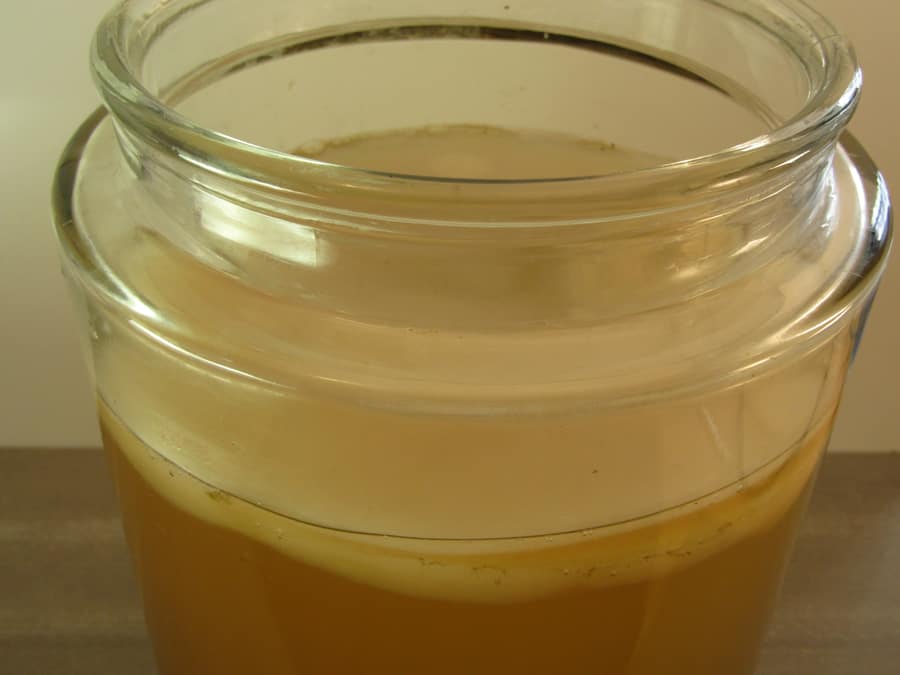
Mason jar with fermenting kombucha

Before we get into the answer for this question we first have to define what is meant by fermentation.

Fermentation has two generally accepted definitions

The biochemistry definition

The metabolic process of extracting energy from carbohydrates in an anaerobic environment. 

The food science definition

 The process of using microorganisms to preserve and transform foods.

From a biochemistry position fermentation is a natural process occurring wherever sugar and fermenting microbes meet.  From a food science position fermentation is a controlled process which needs specific conditions to be successful including temperature, salt concentration and oxygen exposure.

If you leave some food out on the counter it will indeed ferment.  The carbohydrates in it will be acted on by the yeast and bacterial species found in the environment but the result of the fermentation will not be something you will want to put into your mouth. 

To transform the food into something delicious you will have to control the environment which the food is kept.  This is not a natural process.  No matter what method you choose, relying on naturally occurring microbes or cultivated ones, fermentation from a food science position needs careful attention to the process.

Five types of food science fermentation

There are many ways to transform fresh food into preserved staples and flavor sensations.  An apple can be made into cider, chutney or apple cider vinegar.  What it becomes depends on the environment it is placed in during fermentation. 

Yeast fermentation

This is what most people think about when they hear the word fermentation but it is only one aspect of it.  Yeast ferments are those which convert sugary substances into alcoholic food and drinks. 

The environment needed to produce a yeast fermentation:

High sugar content

Species of yeast have the ability to consume short chain carbohydrates (sugar) and produce alcohol and CO2.  This is where the term fermentation originated which means to boil.  It was the action of the yeast on a sugary liquid which produced large amounts of CO2 making the liquid appear to boil.

Without a high sugar content a yeast fermentation will not be able to increase the alcohol content high enough to protect it from spoilage.  With an alcohol percentage of only 2% can inhibit the growth of mold.

Limited access to oxygen

yeast can survive in an aerobic and anaerobic environment.  Some yeast species have a preference like ­–­____ prefers an anaerobic environment and others prefer it aerobic.  Is makes yeast very hardy in the environment able to withstand a wide variety of conditions.

When you are trying to produce alcohol there are different stages which should be followed depending on the method of alcoholic fermentation you are using.

Natural fermentation

Natural fermentation is a term used in wine making to indicate that only naturally occurring yeast species were used to produce the alcohol in the wine (along with many other conditions). 

When using this method the wine must (crushed grapes) is exposed to oxygen for a short period of time before it is pressed and fermented in an anaerobic environment.  This two-step process helps the yeast to grow more efficiently at the beginning of the fermentation period which prevents spoilage bacteria from dominating the fermentation.

Commercial yeast fermentation

This method uses dried yeast which has been grown especially for alcohol fermentation.  Most fermentations using commercial yeast do not require oxygen.  Once the yeast has been activated it is pitched into the juice and air locked.

Backslopping

Backslopping is a technique where some of an active fermentation is used to start another.  It is usually performed in an anaerobic environment but can be used to start country wines with solid fruit in an aerobic environment.

Wild fermentation

Wild fermentation is a term used for only using the naturally occurring yeast species found in the environment.  It is used to make beer, wine or ciders.  It starts with an aerobic fermentation which requires stirring to prevent mold growth.  Once the yeast population starts to explode the stirring rate can slow down.

After a period of about ten days or so the primary fermentation is pressed and placed into an air locked container for anaerobic fermentation.

Temperature controlled

The temperature range for yeast growth is varied.  Ranging from just above zero to 40˚C but to help yeast species dominate a culture maintain temperature between 25-30˚C.  The rate yeast cells double in population increases as the temperature goes up until it gets above 30˚C where it slows and stops. 

Lacto fermentation

Lacto fermentation is what is used most often to preserve vegetables and sometimes fruits.  It is the process of making cabbage into sauerkraut and cucumbers into pickles.  It is also used to transform milk into yogurt.

The environment needed to produce a lacto fermentation is different from that of a yeast fermentation. 

An anaerobic environment

Lactic acid bacteria do not need oxygen to live but mold and acetic acid bacteria do.  By putting your fermentation into a closed jar or some other container which prevents oxygen from entering you prevent the growth of mold and acetic acid bacteria. 

Acetic acid is the acid responsible for making vinegar tangy which is great for tangy ferments but in a lacto-fermentation you want lactic acid which is less tangy and more flavorful.  By putting your lacto-ferment in an anaerobic environment you limit the acetic acid growth.

High salt concentration

Lactic acid bacteria are salt tolerant or halotolerant, whereas yeasts and mold are not.  Lactic acid bacteria have a high degree of tolerance to acid and salt because they can withstand ionic stress

By adding salt to your ferment you are inhibiting the growth of most common yeast and mold species which cause spoilage.  It is recommended that a 2.5-3% salt concentration be used for best results. 

Cool environment

A cool temperature slows the growth of yeast and mold as well as helps to keep the food crisp.  This gives the lactic acid bacteria an edge over the yeast and mold helping them to dominate the culture. 

Higher temperatures also helps the bonds which make the food stiff break down causing it to become soft and mushy (not something most people want).

Acetic acid fermentation

Although in some situations like wine or beer making acetic acid bacteria are spoilage bacteria they can produce some of the best foods like vinegar and soy sauce. 

Acetic acid fermentation is used to make vinegar out of any sugary liquid.  It will convert wine into vinegar or apples into apple cider vinegar.  Acetic acid bacteria are found in every environment on Earth so they can be wild fermented as well as introduced into an alcoholic solution to produce vinegar.

Environmental conditions for an acetic acid fermentation

Aerobic environment

Acetic acid bacteria require oxygen to survive, which is why wine and beer are fermented in an anaerobic environment.  When trying to make vinegar you will want to expose your solution to oxygen to encourage the growth of acetic acid bacteria. 

This is done in a number of ways:

  • Use a wide mouthed vessel with a porous cover
  • Agitate the liquid by stirring or transferring between containers
  • Aerating the liquid by forcing air into the bottom of the container

Presents of alcohol

Acetic acid can live on sugar but grow much faster when they have access to alcohol.  They convert the alcohol into acetic acid and CO2 which quickly acidifies a solution. 

This type of fermentation is truly a mixed fermentation as it requires the action of yeast to convert the sugar into alcohol before the acetic acid bacteria converts the alcohol into acetic acid.  When making vinegar it is best to start with a solution which either has an alcohol content of at least 6% or has a high sugar content. 

The presents of alcohol prevents the growth of mold while promoting the growth of the acetic acid bacteria.  Once the solution is acidified it is further protected from mold growth.

Warm environment

Acetic acid bacteria have an optimum temperature range of 18-25˚C.  Providing a warm location for your vinegar fermentation to live will decrease the time it takes for acidifying the liquid. 

It also helps the yeast to produce more alcohol as their temperature range is higher than that of the other microbes which are used in fermentation.

Mold fermentation

It may seem strange to you that all of the above methods of fermentation want to prevent the growth of mold but in this section you are going to encourage its growth.  Mold is a microorganism which can break down complex carbohydrates into simple sugars.  This differs from all the other microorganisms used in fermentation.

Mold has been used to transform and preserve food for as long as lactic acid bacteria has been used to preserve cabbage.  Mold is used to make tempeh, kogi and cheese.  Penicillium camemberti is used to make camembert and blue cheese is made with Penicillium roqueforti and Penicillium glaucum.  These molds are used because of their ability to add flavor to the cheese.

Specific mold cultures are to be used not wild mold which can be dangerous so when fermenting with mold get a source of mold spores from a reliable source and follow the directions on the package exactly for best results.

Environmental conditions needed for using mold to preserve and transform food

High humidity

Mold spores need moisture to begin to grow (which is why you keep things dry when not in use).  The humidity provides the mold with enough liquid on the surface of a substrate to grow.  For the growth of Aspergillus oryzae (koji mold) a relative humidity of 90% is preferable which enables the mold access to the surface of all the substrate. 

Temperature controlled

Depending on the type of mold you are wanting to encourage the temperature needs to be warm or cool.  By keeping the temperature at a steady temperature the mold growth is encouraged while spoilage bacteria growth is inhibited.

When making koji the temperature is kept at a warm 36˚C whereas cheese mold is kept cool at 12-15˚C. 

Aerobic atmosphere

Mold requires oxygen so it is important to provide adequate ventilation when making a mold based fermentation.  Special rooms are built for the fermentation of koji.  Cheese aging rooms are built to encourage access to oxygen.  Some cheese is even hung to allow airflow all around the cheese.

This access to oxygen will encourage the growth of the mold.  As mold grows it produces chemicals which are toxic to other organisms which discourage predators from eating them.  An example of this is penicillin which is a toxin which kills bacterial species.  

Mixed fermentation

These are fermentations which combine several types of fermenting organisms to produce unique food products.  These include kefir, kombucha and sake.  Some of these types of fermentations require the introduction of starters such as water and milk kefir whereas some like kombucha can be made through wild fermentation methods and still others like sake need a series of steps to be successful.

Environmental conditions needed to mixed fermentations

Adequate food reserves

A mixed culture like kefir needs enough food reserves so that the various microbial species found in the culture can find a niche to survive.  In the case of kefir the milk needs enough lactose and proteins to feed the yeast, lactic acid bacteria.  The yeast produces alcohol which provides a ready source of energy for the acetic acid bacteria.

If the culture is not fed adequate food it may become off balance with a higher population of one of the species found in the culture.

Sake needs enough kogi mold to break down the carbohydrates in the rice which provides energy for the yeast and lactic acid bacteria.  Without enough starch the alcohol production is reduced.

Each type of mixed fermentation requires specific food sources.  As an example of this kombucha which has been fed black tea has a different makeup then kombucha fed with green tea. 

Consistent environmental conditions

A consistent temperature, humidity and access to oxygen is important for mixed fermentations to provide the desired species a chance to dominate their specific niches. 

This is why moving a kefir grains from the fridge to the cupboard regularly is hard on the grains and produces kefir which has off flavors.  To get consistent flavors maintain the environment which your ferment the culture for a long period of time.

Once the culture has balanced out (the population of the various microbial species have found their place) you can alter the environment to change the flavor in some way.

An example of this is making kombucha in a hot environment increases the alcohol in it once the yeast species establish their dominance.  If you want lower alcohol kombucha lower the temperature (for more ways to lower its alcohol content read “How much Alcohol is in Homemade Kombucha?”)

Microorganism culturing

Some mixed fermentations require culturing a microbial species before adding the other species to the mix.  This is done when making Sake where the mold Aspergillus oryzae is fed to steamed rice and cultured for a period of 2-3 days until it has fully penetrated the rice grains.  This process provides large amounts of simple sugar which is then fed to the yeast to make alcohol. 

Other examples of this are cheese making where the mold is introduced after the milk has formed whey and the making of soy sauce where rice and soybeans are fermented together with Aspergillus oryzae and then salted and aerated to help the acetic acid bacteria acidify and liquefy the bean mash.

The process of fermentation

As you can see the process of fermentation depends on the type of fermentation you are doing.  Each type requires a different process with specific temperatures, acidity levels and food sources.

Alcoholic fermentation

For an alcoholic fermentation you want to encourage the yeast to multiply.  This is done by providing a high sugar liquid with a warm temperature out of oxygen exposure. 

Once the yeast has consumed the sugar it can be bottled or put in a cask for a long time.

Lacto-fermentation

Lacto-fermentation needs a cool environment without access to oxygen with a high salt concentration.  This provides the lactic acid bacteria the best chance of dominating the container and acidifying it.

This preservation method can preserve food for months to years depending on the food source and its method of storage.

Vinegar fermentation

To make a good vinegar you will need an alcoholic fermentation which is then exposed to oxygen for a period of time. 

With a high enough alcohol content (5-10%ABV) the acetic acid will adequately acidify the liquid to enable an unlimited storage time.  Some vinegars have been aged up to fifty years and are some of the most prized and expensive condiments you can find.

Three Easy Ways to Make Your Own Kombucha SCOBY


Although you do not need a SCOBY to start making kombucha, many kombucha brewers feel the need to include one in every one of their brews.  A kombucha SCOBY is the cellulose mat which floats on the surface of the kombucha fermentation, it is officially called a pellicle.  Pellicles are not unique to kombucha making but are also found in vinegar making (called the mother) and often limbic beer.

If you feel you need to have a SCOBY floating on the surface of your kombucha and you currently don’t have one, here are three ways to make your own SCOBY.

Grow a SCOBY by inoculating sweetened tea with raw kombucha 

Inoculating sweetened tea with some raw commercial kombucha is called backslopping in fermentation circles.  Backslopping is a method of transferring a fermentation culture from a finished batch to a new batch.  It has been used in beer making, vinegar, yogurt and kefir (both water and milk).  

Raw kombucha will have active culture in it which has the bacteria species which will produce the SCOBY within a week or two, depending on how active the culture is.  It is not understood how or why the bacteria produce the SCOBY but by using a culture which has grown a SCOBY in the past will essentially guarantee a new one will grow on your first batch of Kombucha.

 Once you have grown a SCOBY you can continue to use this method and you will find you are making a new SCOBY every time you ferment a new batch.

To grow your first SCOBY with this method you will need:

  • A bottle of raw kombucha
  • A large mason jar or similar glass container
  • A cloth with an elastic band
  • 3 bags of tea
  • ¼ cup of sugar

The method is simple:

  1. Wash the jar with soap and water and rinse it well
  2. Pour the raw kombucha into the jar until it is a quarter full
  3. Make the tea and add the sugar
  4. Remove the bags and cool to room temperature
  5. Pour the tea into the container leaving an inch headroom
  6. Place the cloth over the lip and secure with an elastic band
  7. Place the jar in a warm location out of sunlight for two weeks
  8. Begin checking on the kombucha it should have a SCOBY growing on the surface

Why this works

A kombucha SCOBY is essentially a pellicle which is formed by two geniuses of acetic acid bacteria.  These AAB produce a biofilm which collects on the surface of the tea.  As the biofilm thickens other microorganisms get included in the biofilm making it a firm pliable mat which covers the surface of the liquid.  If it is left undisturbed it will continue to thicken as the AAB add additional biofilm to the pellicle.

Biofilm growth after five days
SCOBY after two weeks

When you added the raw kombucha into the sweet tea you introduced the culture which was used to ferment the kombucha in the bottle into the new batch.  The live microbial species which produced the commercial kombucha has the AAB species which form the biofilm needed for SCOBY production, in fact there is probably a small SCOBY forming in the bottle prior to you adding it to your new batch. 

The kombucha culture will consume the sugar in the tea and produce a small batch with a SCOBY floating on the surface. 

Use a vinegar mother to make a kombucha SCOBY

This method takes a pellicle from another fermentation altogether and converts it into a kombucha SCOBY.  Our pellicle of choice is a vinegar mother. A vinegar mother is a pellicle produced mostly by AAB of the genus Komagataeibacter which is found in both kombucha and vinegar fermentations. 

The difference between a kombucha SCOBY and a vinegar mother is the population of the various acetic and lactic acid bacterial species.  The population of the various species of bacteria found in vinegar and kombucha varies as well as the sub-species of each.  

The interesting thing about making kombucha (or any fermentation) is that the culture changes and matures depending on the conditions it finds itself in.   A kombucha culture is different from a vinegar culture due mainly from the substrate which the bacteria find themselves in but every kombucha culture is different depending on its location, time of year and heritage.  

This means that a vinegar mother used in a kombucha fermentation will change to better ferment the sweetened tea the culture finds itself in, in short it will change from a vinegar culture to a kombucha culture within a few batches.

When you add a vinegar mother to a new batch of sweet tea the culture found in and on the mother will begin to use the sugar to produce alcohol and acetic acid. 

To convert a vinegar mother to a kombucha SCOBY you will need:

  • A vinegar mother
  • Finished vinegar
  • A large mason jar or similar glass container
  • A cloth with an elastic band
  • 3 bags of tea
  • ¼ cup of sugar

The Process

  1. Make the sweet tea
  2. Cool the tea to room temperature
  3. Fill the jar 1/8 full with your finished vinegar
  4. Fill the jar with the sweet tea leaving an inch of headroom
  5. Add the vinegar mother
  6. Cover with the cloth and secure with the elastic band
  7. Place in a warm location out of direct light for two weeks

Why this works

Vinegar and kombucha are both AAB fermentations.  Many of the species which are found in vinegar fermentations are also found in kombucha and visa-versa.  This is because vinegar and kombucha are exposed to the same environments with the same opportunity for the various microbial species to inhabit the liquid be it sweet tea or fruit juice.

When a vinegar culture is used to ferment sweet tea the population of the various cultures found in the mother and finished vinegar will shift.  This is because the sugars, vitamins and minerals found in the fruit juice or other substrate used to make vinegar are different from those found in kombucha.  As the species which can easily use the food energy in the sweet tea grow in population while other species decline.

Additionally AAB and LAB will enter the kombucha fermentation through the environment.  No matter how careful you are to clean your equipment your fermentation will be exposed to bacteria and yeast found in the environment.  They are found in the air, in the jar and any utensil you use to make the tea.  These additional bacterial species may find a space for themselves if there is a food source for them and the environment is conducive to their growth. 

This is not a bad thing!  When kombucha SCOBYs were examined from various locations in the world they all had a different microbial makeup.  This means that each SCOBY takes on some of the characteristics of its location.  This makes each one unique.  As it matures it will alter its microbial population to best suit its environment.

After a few batches the culture will have balanced out and will make fairly consistent kombucha. 

How to make a SCOBY using wild fermentation

Of all the three methods this is the most time intensive and requires patience.  This method uses the fact that a kombucha fermentation is basically a set of microbial species which have similar needs for environmental conditions, food sources and have overlapping acidity tolerances. 

To start a kombucha SCOBY from scratch using wild fermentation your job is to furnish the correct environment to encourage the growth of the microorganisms you want and discourage those you don’t want.  To do this you will have to be much more involved in the process than the other two methods above.

Using wild fermentation to start a kombucha SCOBY will produce a unique kombucha culture which will be populated by only yeast, acetic acid and lactic acid bacteria which are present in your environment.  Since most kombucha cultures are made from existing cultures there can be many bacterial species in the culture which are not found in your environment.

You will need:

  • A mason jar or similar container
  • A cloth and an elastic band
  • Three tea bags
  • 1/3 cup of sugar

The method:

The first stage:

Grow the yeast population

Yeast fermenting the sugar in the sweet tea

In the first stage you will want to promote the growth of the yeast species found in your environment.  It is the yeast species which produce the alcohol used by the AAB in a kombucha fermentation and the wider variety of yeast species the better.

Each wild yeast species produce different vitamins, enzymes and esters which feed a wider variety of bacterial species and will add flavor to your kombucha.

To promote the growth of wild yeast you must provide a warm oxygen rich environment for the yeast.  Once the yeast population starts to multiply it quickly dominates the tea and produces enough alcohol for the AAB to begin to grow.

Grow the acetic acid bacteria

The AAB that you want to promote consume alcohol to produce acetic acid and CO2.  Therefor to promote their growth they will need a base alcohol level of about 2-4%.  This is less than that used to make vinegar but it is about the alcohol level found in a kombucha fermentation in the early stages.

Once the yeast has started to produce alcohol oxygenate the tea to encourage the growth of the AAB which are aerobic microorganisms.

Follow these steps to complete the first stage of new SCOBY growth:

  1. Make the sweet tea
  2. Remove the tea bags when tea has finished steeping
  3. Cover with the cloth and elastic band
  4. Place the jar in a warm location out of direct sunlight (25-30˚C)
  5. Stir your sweet tea twice daily until you see some bubbles forming on the sides of the jar
  6. Once you see bubbles stir your tea only once a day for a total of ten days

After the first ten days the yeast will have dominated the tea and increased the alcohol level above 2% and resident AAB will have started to convert the alcohol into acetic acid.  This makes for an environment which will inhibit the growth of mold and other non-acidic tolerant bacterial cultures. 

The second stage:

SCOBY After Three Weeks

It is now safe to leave it alone while the AAB form the SCOBY on the surface of the jar.  Place the jar in a warm location out of direct sunlight and leave it alone for two weeks.  At the end of the two weeks inspect the kombucha.  It should have a thin film on the surface of the tea and the tea should smell acidic.  This is an indication that the AAB are acidifying the tea and starting to produce the needed biofilm which will eventually form your SCOBY.

At this point you can begin tasting the tea which should have an acidic sharp flavor.  Once it is suitably tangy remove half of the kombucha from the jar and refill it with more sweet tea with the same concentration of sugar from the first step.

Let it ferment another two weeks.  At this point your new SCOBY should have formed on the surface of the jar.  You can now use the SCOBY and the contents of the jar to inoculate a larger batch of kombucha or drink the kombucha and use the SCOBY to make another batch the same size.

Why it works

There are three families of microorganisms which dominate a kombucha culture, yeast, acetic acid bacteria and lactic acid bacteria.  All three of these types of microbes are found in every environment in the world.  They are prevalent in our air, on kitchen surfaces and utensils. 

They travel as spores, on the legs of bugs and as aerosols in the air.  When you stir your kombucha you are doing three things:

Add additional yeast and bacterial species into your sweet tea

Each time you stir the tea you are mixing in yeast and bacteria which are found in your environment.  It is these microbes which will convert the sugar into the various alcohols and acids which make kombucha such a unique drink.  The yeast responds quickly to sugary warm environment and multiply quickly. 

Oxygenating the tea

Most yeast species are more efficient when they have access to oxygen so when you stir the tea you are helping them to multiply quickly.  Once the population of the yeast has passed the lag period you no longer have to stir twice a day.  Now you want the yeast to be less efficient which will force it to produce more alcohol.  This alcohol will be used by the AAB to acidify the tea.

Stirring it once a day helps the AAB to grow quickly once the yeast has begun producing alcohol.  AAB are aerobic bacteria and stirring helps to encourage fast growth.  As the AAB population increases the acidity of the tea drops.

Inhibit mold growth

The yeast reduces the sugar content in the tea quickly and produces alcohol.  As the sugar content in the tea declines mold is less likely to grow on the edges of the container.  The alcohol also inhibits the growth of mold. 

Each time you stir the tea you disturb the surface which further inhibits the growth of mold while the yeast population is low.  This is why you want to stir it twice a day until it starts to bubble.  Once it is bubbling the yeast is active enough to inhibit the mold on its own.

Once the AAB have had a chance to acidify the tea you want to leave it alone to begin to form a new SCOBY.  The biofilm which is the main component of a SCOBY forms on the undisturbed surface of the tea.  Leaving the tea alone allows the SCOBY to form.

The three types of microbial make up kombucha

There are three types of microbial organisms found in kombucha, yeast, LAB and AAB.  These three cultures work together to convert the sugar and tannins provided by the tea into tangy kombucha. 

Yeast growth in kombucha

In the first step of growing your own SCOBY the sweet tea has few microbial species in it due to the boiling water used to steep the tea but once it cools and you begin to stir it each of these three microbial families start to grow in population. 

The yeasts are the first to dominate the culture as they find it easy to metabolize the sugar and convert it into alcohol.  At this point the culture has no balance as the yeast species are low in population and are not competing for food with any other yeast or bacteria.

Lactic acid Bacteria growth in kombucha

The LAB also consume the sugar in the tea and begin to increase in population and contribute to the flavor and acidity of the tea early on.  As the sugar is consumed they begin to compete with the yeast for food and space in the fermentation.

Acetic acid bacteria growth in kombucha

Once the yeast and LAB begin to produce alcohol and lactic acid the AAB begin to grow.  AAB can use both the alcohol and lactic acid for food energy and produce acetic acid.  This protects the culture from mold growth as most mold species prefer a basic environment.

How the yeast, LAB and AAB work together in a symbiotic relationship

As the culture matures the population of the microorganism species changes.  Yeast species which are better suited to the type of sugar or type of tea you are using will grow faster than those which prefer other types of sugar and tea.  The same will happen with all the species. 

It has been discovered that kombucha made with different tea bases have different dominate species of yeast, AAB and LAB.  This indicates that the substrate (type of liquid) that a culture grows in influences the population of the various species found in it. 

When a new AAB, LAB or yeast species is introduced into the culture it must be able to carve out a niche for itself by competing with the other species already growing in the culture.  This makes it difficult but not impossible for other species to be introduced into an established kombucha culture. 

Any newly introduced microbial species must find a niche to fill which:

Has enough food energy for it to survive

All microorganisms need food energy so if a newly introduced species cannot find enough food to grow it will not survive.  Each species has different needs and tolerances which provides a natural balance in a Kombucha consortium. 

Does not directly compete with another established species

A newly introduced species must have few or no competitors in its niche.  Otherwise the already established species will over compete and limit or eliminate the growth of the new species.