Urban Fermentation

Recent Posts

Six Steps To Start Fermenting and Four Easy Methods For Beginners


Four types of Fermentation

Fermentation is a fun and creative hobby that produces new flavors which can add interest to any meal.  I started to make my own ferments by making kombucha after drinking the store bought version for a year or two.  Once I started making kombucha it was easy to branch out to other fermentations.

Today I have a cupboard full of new and strange experiments from normal fermentations like kefir, sauerkraut and kombucha to more difficult and long term fermentations like miso, soya sauce and vinegars of all types. The preservation of food through the use of fermentation is an ancient practice which adds new foods to your diet while taking part in history but before you begin on any new fermentation project here are a few things to do to ensure success.

Start with familiar types of fermentation

If you grew up on a meat and potatoes diet then don’t start your fermentation journey with Natto or miso making.  These fermented foods, although very good, may be too much of a departure from your normal diet that you may not want to continue.  Instead make pickles, sauerkraut or yogurt.

Once you get the hang of making some of the fermented foods you would normally eat you will be much more inclined to like the more funky fermentations like kombucha or tempeh.  These and other fermentations have some characteristics which can be hard to get past (slimy growths growing on the surface and mold spores growing on the beans) but once you start to enjoy the flavors which can be achieved from various fermentations you will begin to look forward to new ones. 

Try the commercial version first

There is nothing worse than spending time and energy learning how to make a new fermentation, waiting the required amount of time to taste it only to find you don’t like it.  Avoid this by trying the commercial version, if it is available, before you try the homemade version.

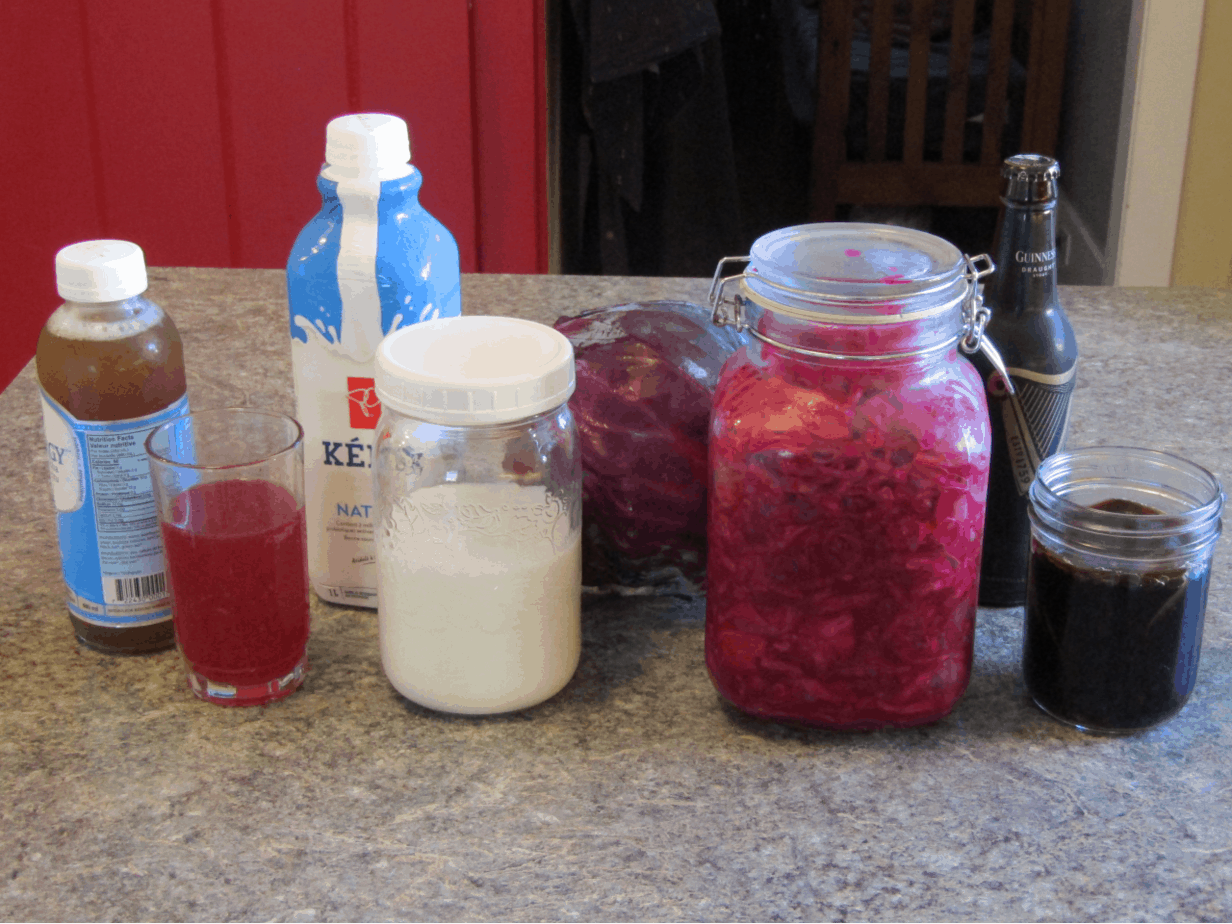
Fermented food like yogurt, kefir and sauerkraut are good starting foods because of their availability.  Make sure you try the cleanest and freshest versions which are actually fermented.  When buying yogurt or kefir look for plain types with as few ingredients as possible.  Most commercial brands include thickeners, added sugar and other ingredients to maintain quality during transportation and handling. 

If you want to start with sauerkraut try some which has actually been fermented.  There are several brands of sauerkraut which are made with vinegar and canned rather than fermented naturally.  Make sure you try fermented sauerkraut before you make some yourself as it has a different flavor then the canned type.

Some fermentations are not readily available at grocer like tempeh and natto but they can be found at health food stores or asian grocers.  These fermentations are a little more involved to make, so be sure you like them (or you think you can learn to like them). Here are ten reasons why you should learn to like natto.

Decide on ONE type of fermentation and expand from there

There are as many types of fermented foods as there are cultures and subcultures in the world.  Way too many to learn all at once even if you had the space or time to do it all.  Just as fermentation is a slow food your growth in fermentation should also be slow.  You may find you like only a few projects bubbling away in an unused section of the kitchen or you may end up with a fermentation room chalk full of new and interesting things.

Just don’t go crazy and try to ferment everything in sight!  Try one thing, after a few successful batches try another and soon you will have several projects which can keep you busy.  Just keep in mind that they all need attention.  

Learn some history about the fermented food you want to make

History is a great teacher, this is where the saying hindsight is 20-20 comes from.  You can learn a lot about how and why a fermentation was made the way it was from the history of the food.  For example, did you know that sauerkraut, the famous German staple, was not first made in Germany.  Instead it is believed to have come from China and made its way to Germany through trade routes.

Kombucha, one of the most popular homemade ferments also first appeared in China but quickly made its way to Japan where it was refined and used as a healing tonic for thousands of years before it was commercialized and sold worldwide.

Kefir was first made in the caucasus mountains and was a closely guarded secret even among the klans.  It was thought that they would lose their healing power if the grains were given away.  This obviously slowed their spread throughout the world but now kefir can be found in most grocery stores.

The history of a fermented food will also give you an idea of how it can be made.  As an example sauerkraut was traditionally made in the fall when the cabbages were being harvested.  The ambient temperature was cool and got cooler as the season went on.  Nowadays fresh cabbage can be found year round so you can ferment them in the heat of the summer but if you do you will have to either find a cool location or endup with mushy sauerkraut.  

Make short duration ferments

Fermentation is a slow food.  There are no microwave fermentation recipes, they all take time for them to mature.  Vinegar can take up to six months before it is ready to taste, sauerkraut takes at least two weeks but is better after three or four.  Miso, soya sauce, and most alcoholic beverages all take six months to a year before they are tasteable and are better with age.

Unless you are the most patient person in the world you may want to start with a shorter term fermentation like yogurt, kefir or sourdough bread.  These fermentations can be made in 24 hours or less and will provide quicker results.  

Once you have made a few batches of these short term fermentations expand to some which take a little longer such as kombucha, sauerkraut or fermented hot sauce.  These take two to three weeks before they are ready to consume so they are good midrange fermentations to try.  They can be started and left alone for a while giving you time to learn about other longer term fermentations.

Long term fermentations like miso and vinegar are time intensive to make at the beginning but once they are in the aging stage can be left for months.  The challenge with the first few batches is leaving them alone.   They need six months to a year before they are really mature enough to begin using them.

Find a reliable source of information

There are several benefits of making and eating fermented food.  They are flavorful, store for a long time, provide cultural experiences and are also healthy and can provide great sources of vitamins and minerals.

Again it is impossible to be an expert in all these areas of fermentation and you may not be interested in all of them.  You may be only interested in how things taste and what you can create in the kitchen with these new flavors or you may be interested in the health benefits which can be derived from fermented foods.

Find a source you can trust.  When someone suggests making sauerkraut ice cream maybe they are not a good source for tasty recipes.  If someone states you have a high probability of dying from acidosis if you drink kombucha three days in a row or cite old FDA warnings about kombucha to warn you off making it then it is time to find another source.

On the other hand sources which take a flippant attitude to food safety, relying on the bacteria to protect the food from spoiling or harmful bacteria should also be avoided.  Sources which overemphasize the health benefits over their known health effects should also be taken with a grain of salt. Yes, fermented foods, as a whole, are good for you, they provide valuable vitamins and minerals, improve digestion and can help some medical conditions but they are not a cure all.    

How to Start Fermenting Yogurt and Kefir

These are the shortest fermentations around,  they can take less than 6-24 hours to complete and will produce a product which is familiar to the versions you can buy at the store.

There are three ways yogurt and kefir can be made.  You can learn all three by reading “Three Simple Ways to Make Yogurt” and “Three Ways to Make Kefir an Illustrated Step By Step Guide” but here is the easiest method for both to get you started.

How to make yogurt for the absolute beginner

You will need:

  1. One glass jar with a lid
  2. A pot with a lid
  3. A food thermometer 
  4. A whisk 
  5. Fresh milk
  6. Some store bought yogurt with the least additional ingredients
  7. An oven with a light or cooler and hot water bottles

Instructions: 

  1. Fill the jar with milk leaving an inch and a half of head room
  2. Pour the milk in the jar into the pot and slowly heat to 180℉ or 82℃
  3. Maintain temperature for 20-30 minutes
  4. Pour the milk back into the jar
  5. Wait until milk is below 115℉ or 46℃
  6. Stir in enough store bought yogurt until it comes to ½ an inch from the top
  7. Place the lid on the jar and put into the oven with the light on or into the cooler with the hot water bottles
  8. Wait 6-12 hours until it has thickened
  9. Refrigerate the yogurt for at least two hours before trying it.

How to make kefir for total beginners

Kefir is absolutely the easiest fermentation there is.  There is no heating of the milk, incubating at specific temperatures and a wide variety of milk or milk substitutes can be used.

You will need:

  1. A glass jar with a lid
  2. An elastic band
  3. One piece of cotton cloth
  4. A whisk
  5. Store bought kefir
  6. Any milk of your choice

Instructions:

  1. Fill the jar with fresh milk leaving 2 inches of head room
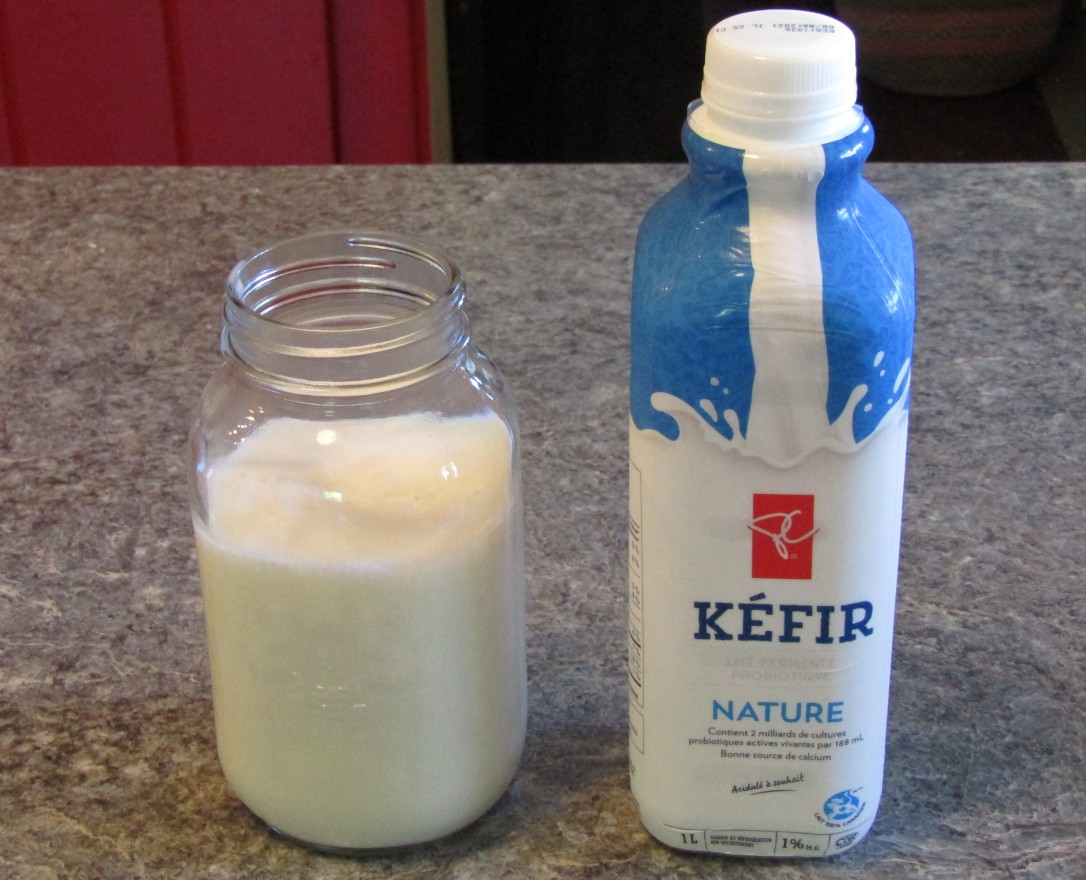
  1. Place ¼ cup or so of store bought kefir into the jar
  1. Whisk the milk and kefir together
  2. Place the cloth over the top of the jar and secur it with the elastic band
  1. Place it in an out of the way location for 12-24 hours
  2. Once the kefir has thickened replace the cloth with a lid and store in the fridge

How to Start making Lacto Fermented Vegetables

Lacto Fermentations are still very easy to make although they require some calculation to ensure a quality product.  Lacto fermentations use lactic acid bacteria (LAB) which flourish in anaerobic (no oxygen) environments and are very salt tolerant.

Knowing this makes it easy to understand why fermentations like sauerkraut can be made with the assurance that they will be healthy and taste great.  All you need to do is control these two conditions.

The anaerobic environment is easy, put the vegetables in a lidded jar with enough liquid to submerge them. Make sure you relieve any pressure which builds up inside the container by either using an air lock system of some type or burping the jar regularly. .  

The Salt should make up at least 2.5% of the fermentation by weight to ensure mold and unwanted bacteria do not grow.  Salt also helps to keep vegetables crisp and adds flavor.

You can do this in two ways:

  1. Use the weight of water which would fill the container
  2. Weigh the container after it has all ingredients besides the salt and calculate the required salt.

How to Make SauerKraut For Total Beginners

Sauerkraut is the simplest lacto fermented vegetable fermentation there is.  There are two ingredients in basic sauerkraut, cabbage and salt.  Additional spices can be added like caraway seeds, garlic or dill but they are unnecessary for fermentation to occur.  There are thousands of recipes online for this lacto fermented classic but start by making this simple recipe.  Once you have been successful then try some new flavors.

You will need:

  1. A nonreactive container such as a flip top jar, fermentation crock or mason jar
  2. A kitchen knife
  3. Kitchen scale
  4. Cutting board
  5. One head of cabbage
  6. Salt 

Instructions:

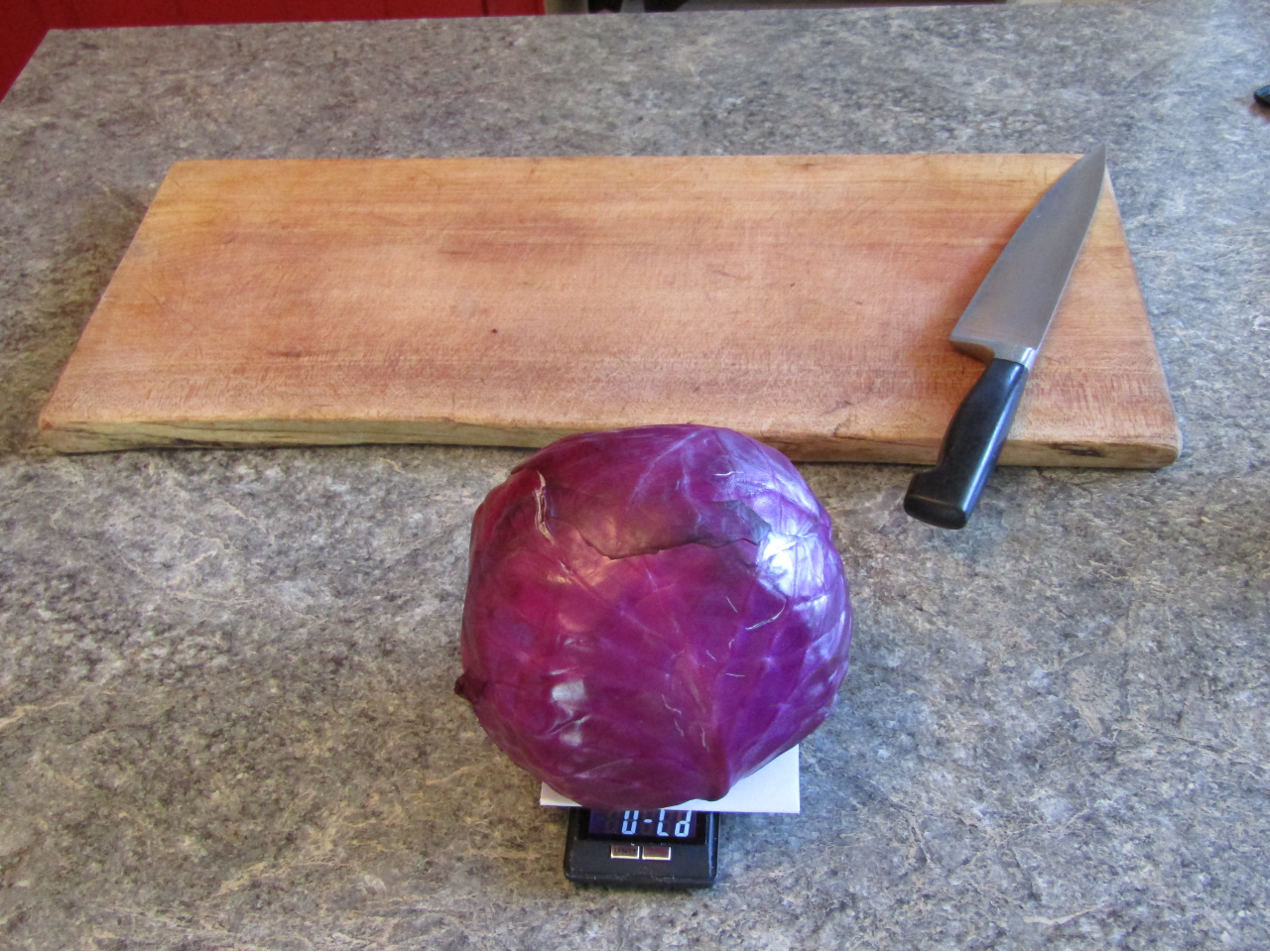
  1. Trim the end of the cabbage and remove any outside leaves
  2. Weigh the cabbage on a kitchen scale
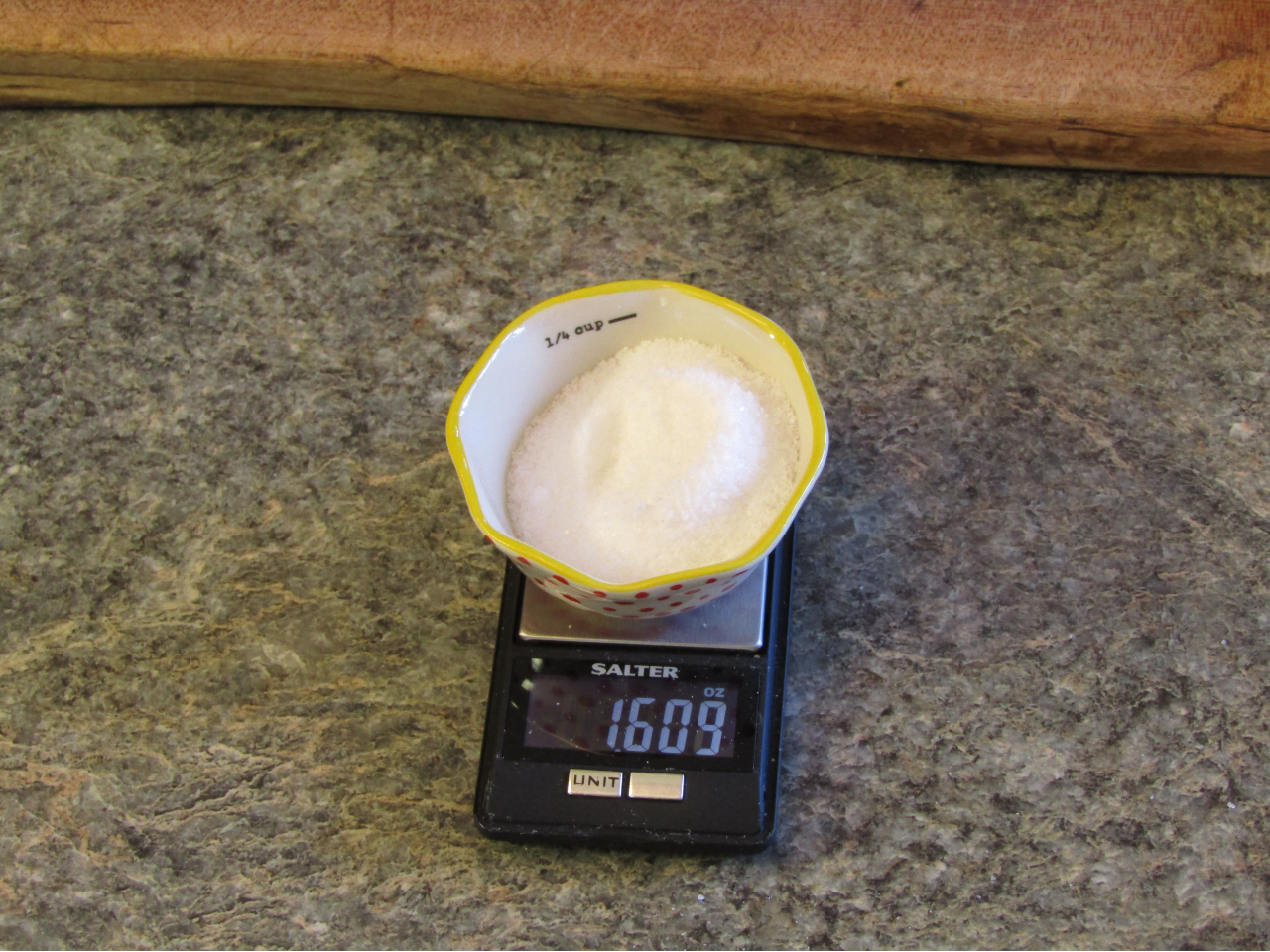
  3. Measure out the salt (weight of cabbage X 0.025 = amount of salt needed)
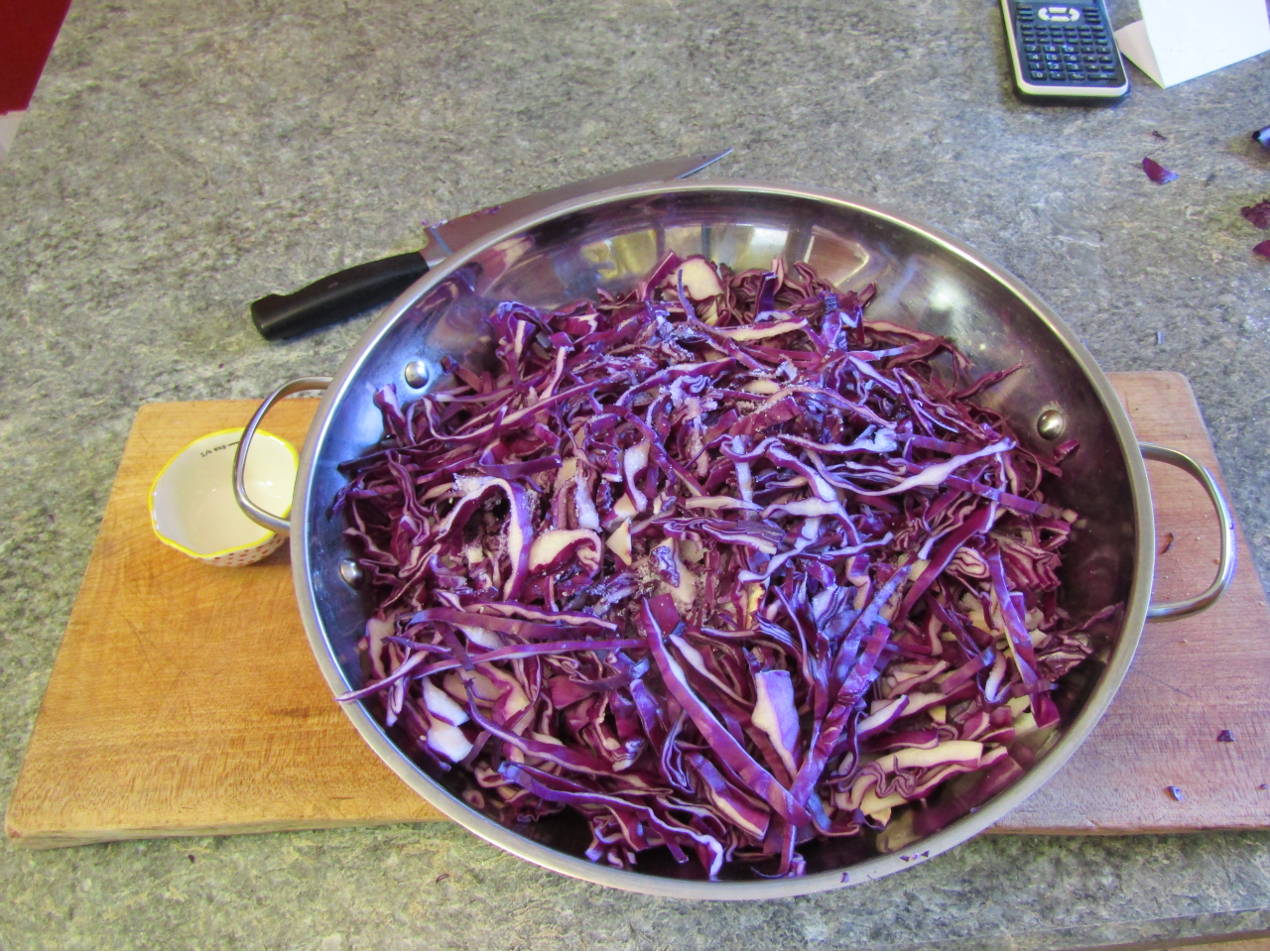
  4. Slice the cabbage into roughly even slices
  5. In a large bowl mix the salt and cabbage together and knead until combined
  6. Let sit for 15 minutes to allow the salt to begin to drawout the liquid in the cabbage
  7. Pack the cabbage into your fermentation container submerging the cabbage below the liquid
  8. Seal the container and place it in a cool dark location
  9. If using a mason jar or other container which does not release pressure burp the container every day or two
  10. After two weeks try some to see how it is coming
  11. Move to the fridge once it reaches the level of fermentation you like

Note:

If you are using a mason jar you will have to seal it in some way which allows carbon dioxide to escape to avoid potential explosions and injury. 

How to Make Pickles For Total Beginners

Pickles have their own set of challenges.  They should be crunchy, tangy and brightly colored but cucumbers which contain large amounts of water and very little hard cellulose material which maintains their structure.

There are more recipes on line for crisp pickles than anyone could ever read.  The ingredients include “secret” ways to keep pickles crispy, maintain their color and make the most tangy and delicious pickles ever.

All these recipes have a few things in common:

  1. High salt concentrations of Brine

Pickles are traditionally made using a brine solution which is between 3.5-5% salt by weight.  This brine does not take into account the weight of the pickles.  It is only the weight of the water so the higher concentration of salt in the water makes up for the additional water from the pickles which dilutes the brine as the pickles ferment. The higher the salt concentration the more water will be drawn out of the cucumbers during the first stages of fermentation making the pickles crispier.

To easily calculate the amount of salt needed for a batch of pickles simply determine the weight of the water it would take to fill the jar. This is a fairly consistant weight (it does vary a little with temperature and altitude) but for your purposes it will work fine.

Water weighs 8.33lbs per gallon so if your container holds a quart of liquid then divide 8.33 by four to get 2.08lbs. calculate a 2.5% brine to get 0.6656 ounces (after converting lbs to ounces). Since cucumbers are less dense then water you will have ample salt by weight to keep the mold growth under control.

  1. Additions of some type of tannin

These include bay, grape, black tea or oak leaves.  Tannins help to keep the cucumbers crunchy by preventing the breakdown of the cell walls in the cucumber.  

  1. Cool temperature fermentation

This slows the fermentation process down, giving the salt in the brine time to remove some of the water from the cucumber and preventing unwanted mold and bacterial growth.  

It is mold which can degrade the cellulose in vegetables.  Mold is able to break down the  complex carbohydrates which make up the structure of the vegetable.  By preventing mold growth at the first stages of fermentation the pickles remain firm. 

  1. Longer fermentation time with a cool temperature

A cool fermentation temperature prevents mold from growing in the fermentation and allows the salt in the brine to draw out the most amount of water.

Since the cooler temperature slows the growth rate of the LAB the fermentation time needs to increase.  Once they have consumed the bulk of the sugar in the cucumber the fermentation will slow but the pickles will remain firm.  

  1. The addition of some sugar

Refined sugar to LAB is like nitrogen fertilizer to plants.  It makes them grow fast.  Giving the LAB a little sugar in the brine increases the potential acid production and reduces the amount of time it takes them to dominate the culture.  This makes for more tangy pickles with less chance of off flavors appearing.

  1. Cut the blossom end of the cucumber off

The blossom end of the cucumber is rich in yeast species due to the pollinating insects which visited the flower. By removing this section of the cucumber the yeast population will be lower and less varied leading to crisper pickles.

  1. Stab the cucumbers several times or cut them into pieces

This enables the salt in the brine to draw out more of the water in the cucumbers prior to fermentation.  This leads to firmer pickles with less yeasty flavors.

You will need:
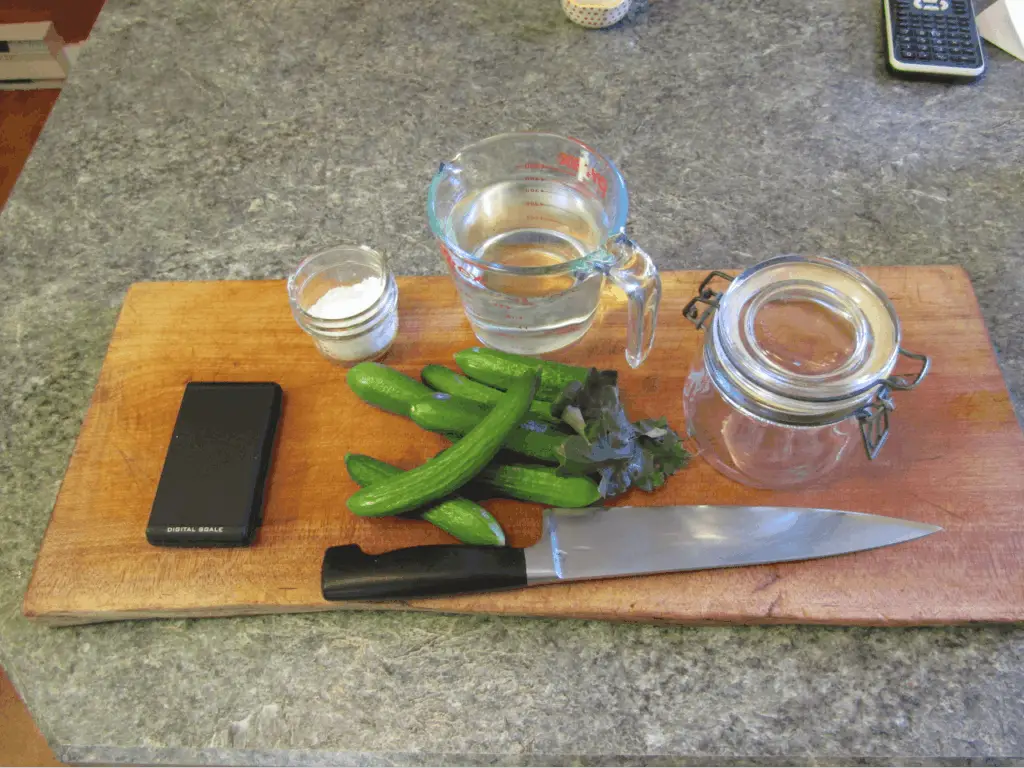
ingredients and equipment needed to make pickles
  1. A jar with a lid
  2. A cutting board
  3. A knife
  4. Kitchen scale
  5. Enough cucumbers to fill the jar leaving an inch of headroom
  6. Some type of leaves to add some tannin
  7. Water
  8. Salt 

Instructions:

  1. Wash the cucumbers in water
  2. Cut the ends off each of the cucumbers
  3. Slice the cucumbers in half lengthwise
  4. Load the cucumbers into the jar and fill with water leaving an inch of headroom
  5. Calculate 2.5-3.0 salt concentration by weight of the water
  6. Add the salt and place the lid
  7. Add the leaves for tannins
  8. Shake the jar until the salt dissolves
  9. Open the jar and ensure all cucumbers are under the liquid
  10. Place the jar in a cool location out of the sun
  11. Burp the jar daily while the fermentation is active
  12. After two weeks try your pickles and refrigerate when they reach the flavor and texture you like

How to Make Pickled Carrots For Total Beginners

Carrots are full of sugar which makes them ideal candidates for fermentation.  The LAB will consume the sugar in the carrots and produce ample amounts of lactic acid.  Since carrots are hard root vegetables they hold their crispy texture longer and under less ideal situations.

This makes them great for a beginner fermentation project.

You will need:

  1. A knife
  2. A cutting board
  3. A non-reactive container
  4. A kitchen scale
  5. Enough Carrots to fill the container with an inch or so of headroom
  6. Water
  7. Salt

Instructions:

  1. Cut the carrots up so they will fill the jar leaving an inch of headroom
  2. calculate the amount of salt needed for a 2.5% water solution
  3. add enough water to cover the carrots
  4. add the salt
  5. shake the jar untel the salt is disolved
  6. place in a cool dark location
  7. if the jar is not pressure safe burp the jar daily to prevent carbon
  8. Follow the instructions of how to make pickles above starting at step three

How to Make Kombucha For Absolute Beginners

As I mentioned in the introduction, kombucha was my first fermentation and I still make a large batch of my regular kombucha every two weeks or so.  I am also experimenting with new and different flavors, methods and infusions.

Kombucha is not hard to make once you understand the processes which are taking place and how to work with the culture.  Kombucha is unique in its culture makeup as it contains all three of the main fermentation microbial species: 

  1. Yeasts
  2. Acetic acid bacteria
  3. Lactic acid bacteria

It is an aerobic fermentation which means it needs oxygen and uses the backslopping method to instigate fermentation.

You will need:
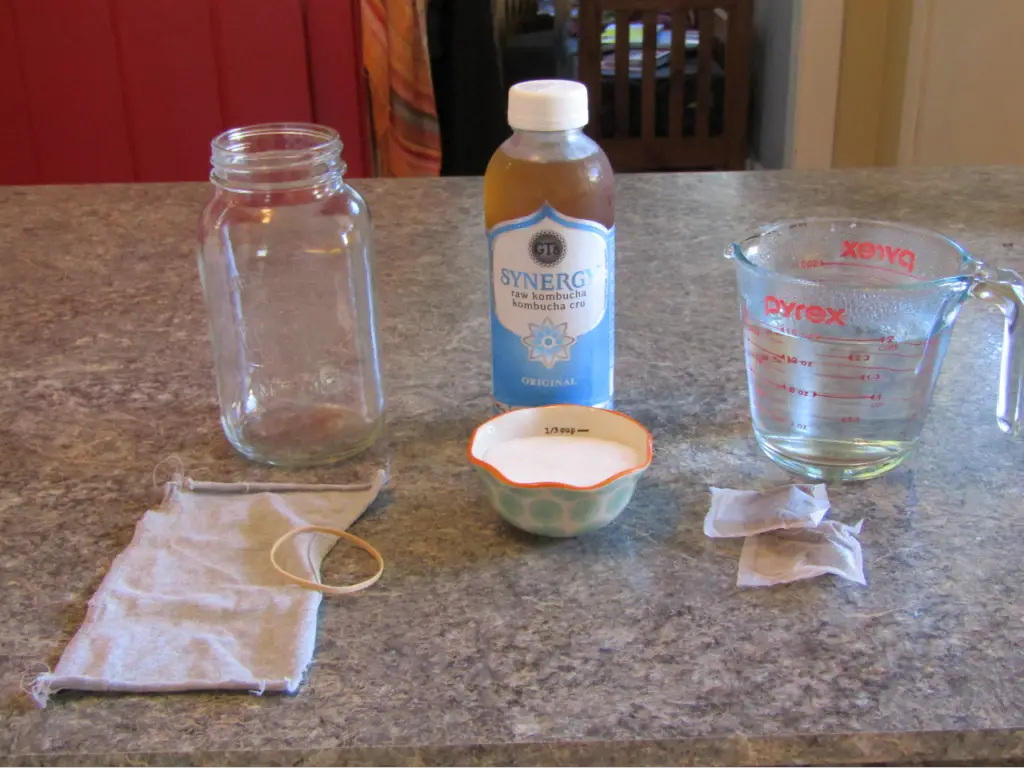
Ingredients for making kommbucha from scratch
  1. A one quart sized clean glass jar
  2. A clean cloth with an elastic band
  3. A bottle of raw plain commercial kombucha
  4. |One Tablespoon of tea loose leaf or two or three tea bags of your choice (start with black or green tea)
  5. 1/3 cup of sugar
  6. Water

Instructions:

  1. Make enough tea to fill the jar ¾ full
  2. Remove the leaves or bags after 5 minutes
  3. Add the sugar 
  4. Let cool to room temperature
  5. Add the commercial kombucha to fill the jar
  6. If you find a SCOBY in the jar add it as well
  7. Place the cloth on the top of the jar
  8. Wait two weeks for the kombucha to acidify

Once the kombucha has acidified you can drink it plain or make it into kombucha soda.  Be sure to save the SCOBY and some starter liquid for the next batch. 

How to Make Vinegar For Absolute Beginners

Vinegar is actually a double fermentation product.  It requires the fermentation of alcohol from sugar performed mostly by yeasts and then the conversion of the alcohol into acetic acid by acetic acid bacteria.

Sometimes this happens simultaneously and sometimes it is done in two steps.  For this tutorial I will use the second method of starting with some already finished alcohol.

You will need:

  1. A wide mouthed jar
  2. A cloth with an elastic band
  3. A bottle of alcohol with a ABV between 5-12%
  4. An appropriate type of vinegar

Instructions:

  1. Fill the jar ¾ full with the alcohol
  2. Fill the remaining space with the appropriate vinegar
  3. Place the cloth over the top of the jar and secure with the elastic band
  4. Place in a location out of the sun
  5. Wait

This method of vinegar making is slow and can take up to to six months before the vinegar is ready.  In that time a vinegar mother may form on the surface of the liquid.  This cellulose formation protects the vinegar from contamination as well as helps with oxygen exchange.
Is Food Fermented With Yeast and Bacterial Cultures Safe


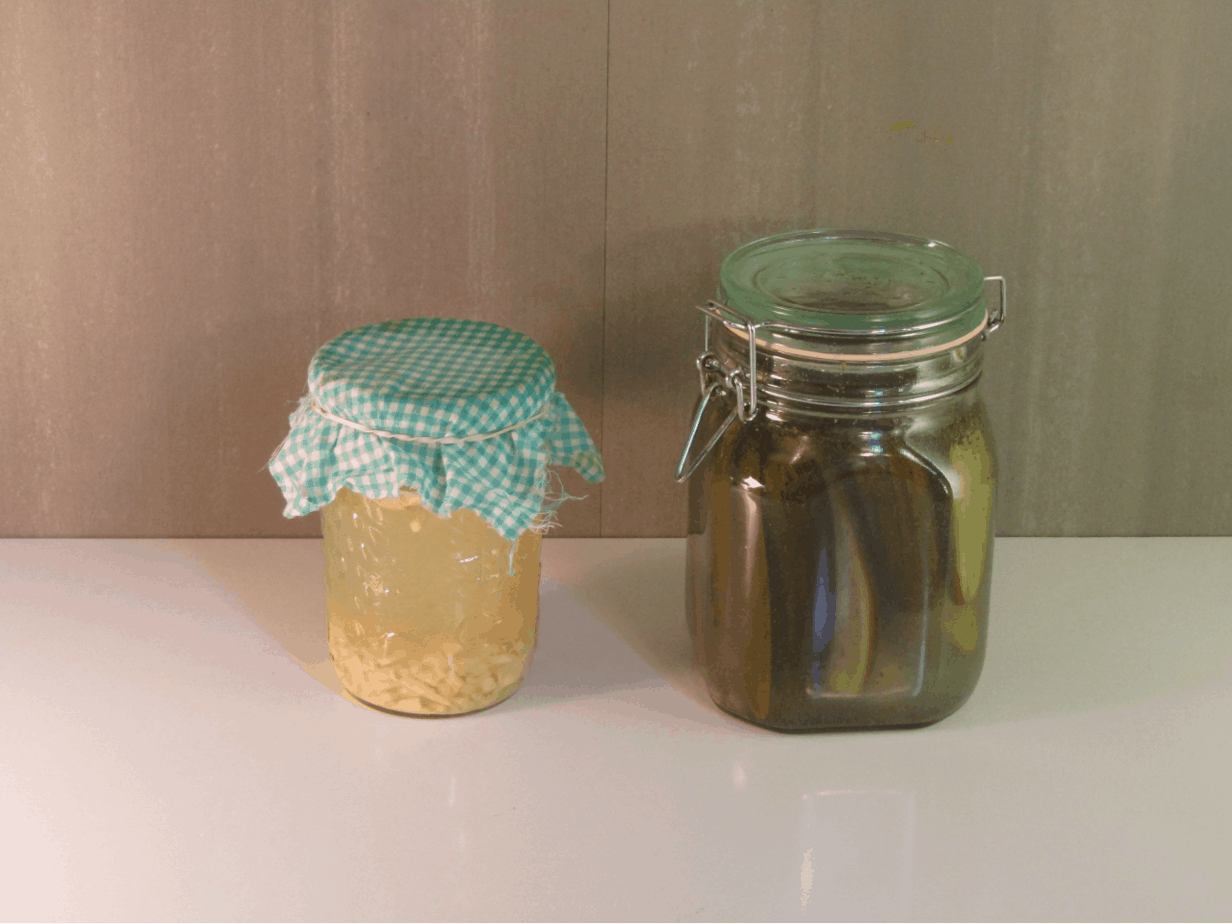
Jar filled with ginger bug and a jar filled with homemade pickles

I know it seems contrary to the current food safety regulations to leave perfectly good food out of the fridge to allow bacteria found naturally in the air to decompose it.  When I first started getting interested in fermentation I had to really begin to understand how such practices can be safe and why the current food safety regulations were adopted.

Strictly controlled environment and preservation techniques used to make fermented food prevents the growth of pathogenic and spoilage bacteria, making them safe.  Use of salt, pH alteration and controlled access to oxygen ensures unwanted microorganisms are eliminated or minimized.

This is still a foregn concept for many health authorities which think that the elimination of all microorganisms in our environment is the way to healthy food, despite the research indicating that to have healthy food, we need the presence of microorganisms.

There are three main microorganism families which are responsible for producing the fermented foods we now consume on a daily basis.  Yeast, lactic acid bacteria (LAB) and acetic acid bacteria (AAB).  Each of these families have numerous species within the family which have different properties making them useful or detrimental to specific fermentations.

Environmental Conditions For Safe Fermented Food

MicroorganismTemperature rangeRespirationNatural fermentationInoculationSalt contentCleanlinessEthanol tolerance
Yeast20-22 °C. or 7-13 °C.aerobic and anaerobicyesyesnoyes4-20% ABV
Acetic acid bacteria20 to 37 °CaerobicyesyesnoyesUp to 12% ABV
Lactic acid bacteria18 to 22ºC or 20 to 46ºCanaerobicyesNot usuallyyesyesUp to 10% ABV

How Yeast Cultures Improve Food Safety

Yeasts have several protective mechanisms which help them to survive.  These methods include competition for food sources, high tolerance to ethanol, production of organic acids and production of mycocins (toxins which destroy other microorganisms).  

Competition for food sources

Yeast species multiply at a rapid rate when they are placed in a warm environment with plenty of simple sugars.  It is this rapid growth rate which crowds out competitors which may be found in a substrate and therefore reducing the populations of other microorganisms.

All organisms need minerals and yeast and bacteria are no exception.  One of the studied minerals which is necessary for many pathogenic bacterial growth is iron.  Yeast is particularly good at absorbing iron from a substrate making it unavailable to these pathogenic bacteria.

High Ethanol Tolerance

One of the byproducts of yeast respiration is various types of alcohol, the main one being ethanol.  Several yeast species which are prevalent in fermentation are Saccharomyces cerevisiae which have a particularly high tolerance to ethanol.

Ethanol inhibits microbial growth due to its ability to cause leakage of the membrane which surrounds a bacterial cell.  As the cell loses its ability to control its environment its growth rate decreases. 

When yeasts are competing in nature without human intervention they naturally fill a niche which helps to break down organic material.  Once their main source of food (simple sugars) has been consumed their population declines and other microorganisms take over such as mold and AAB.

Production of organic acids

Organic acids reduce the pH of a substrate which inhibits the growth of pathogenic and spoilage microorganisms.  The WHO recommends a pH below 4.0 to ensure food safety.  Although yeast is not known for its production of acidic substrates like LAB or AAB, it still lowers it enough to inhibit the growth of some unwanted microbes.

Production of mycocins 

Mycocins produced by yeast species are designed to prevent the growth of other microorganisms in the yeast’s environment.  This is one of the ways it protects itself from being overwhelmed by other microbes.

Environmental Conditions Yeast Need To Safely Ferment Food

By controlling the environment which the yeast species are present in they can effectively preserve a food product past its effective shelf life.  There are basically three environmental conditions which are needed when using yeast to preserve food. 

  1. Anaerobic fermentation

Anaerobic fermentation is done by placing the food into a container which controls the access to oxygen.  By placing an air trap on the opening of the container which allows the one way travel of air from inside the container to the atmosphere.  This prevents oxygen from entering into the fermentation.

Molds are aerobic organisms (they need oxygen) so by preventing oxygen from entering into the fermentation they cannot grow so just this method reduces the risk of growth of pathogenic and spoilage bacteria.  Another side benefit of anaerobic fermentation is the limited growth of AAB which turns the alcohol into vinegar, which is undesirable for alcoholic fermentations. 

  1. Temperature control

All life has a temperature range which it grows the best.  Beneficial yeast have a range of 20-22 °C. or 7-13 °C.  If the fermentation is kept within these bounds other microbes who’s ideal temperature range is outside of the fermentation temperature find it difficult to multiply.  

  1. Cleanliness

Starting with a clean environment will give the desired culture a boost.  Yeast will be able to overwhelm most other microbes in a substrate with adequate food when placed in an anaerobic environment  and kept at its optimal temperature but if it has to compete with a large population of other microbes the resulting fermentation may still be not suitable for consumption.

Molds are prevalent in the environment and can grow on a variety of surfaces just as long as they have enough water and heat.  They break down starches into short chain sugars which disintegrates the structure of the surface they are growing on.  As they do this they produce harmful mycotoxins which can cause sickness or even death.  By starting with a clean environment the risk of this is mitigated.  

How Lactic Acid Bacteria Improve Food Safety

Lactic acid bacteria are responsible for the tangy flavor found in sauerkraut, fermented pickles or other vegetables.  They are the most prevalent bacteria found in yogurt and kefir lowering the pH of the milk which causes it to thicken. They also have bio-protective effects which provides this type of fermented food from spoilage.

  1. Anaerobic fermentation

Unlike yeast, LAB are strictly anaerobic bacteria and can survive in a sealed container.  This gives them a distinct advantage when placed into a sealed container without access to oxygen.  

To accomplish this there are two methods fermentors use: 

  • Use a sealable container with one way air travel like a water sealed crock or an air locked container.
  • Ensure all food is submerged below the liquid during fermentation
  1. Addition of salt 

LAB are very salt tolerant.  They can survive in salt concentrations up to 10% salt by weight in water.  Other microbes are not as adapted to this including yeast, mold and AAB.  By using a high salt concentration when making lacto fermented vegetables you are inhibiting the growth of these other microorganisms and allowing the LAB free reign.   

  1. Use of inoculation

Some fermented foods do not benefit from the addition of salt, products like yogurt, kefir and  cheeses of various types.  For these type of products the fermentation is inoculated with an active culture which can quickly adapt to its environment and dominate the substrate.  

When inoculating a fermentation the purpose is to give a chosen culture a head start from all the other microorganisms in the environment.  Once they outnumber the other microbes it leaves little room for others to grow. 

  1. Temperature control

Depending on the method and the food you are fermenting changes the fermentation temperature.  

  • Vegetable fermentations are best when fermented at 65°F (18°C) but can tolerate 72°F (22°C).
  • Milk fermentations are performed in the range of 68°F (20°C) to 115°F (46°C) depending on the product you are making 

How Acetic Acid Bacteria Improve Food Safety

AAB are the bacteria which produce vinegar which is not only used directly on and in food but are also used to preserve food products for long term storage.

There are two types of pickles, lacto fermented pickles which we talked about in the previous section and acidified pickles which are made using canning techniques and vinegar.  

  1. Aerobic fermentation

AAB are aerobic bacteria, they need oxygen to reproduce so when using AAB the container used has a wide mouth to allow for oxygen exchange.  The mouth of the container is covered with something which is porous to keep dust and debris out of the fermentation while still allowing oxygen in and carbon dioxide out.

  1. Presence of alcohol

AAB’s energy source comes mainly from ethanol.  Ethanol is consumed and converted into acetic acid (vinegar).  This is why the wine and beer industries go to great lengths to prevent oxygen and AAB into their batches.  

The presence of ethanol in the liquid provides adequate food resources for the AAB but limits the growth of mold and spoilage yeast.  Most yeast species are not highly tolerant of alcohol and die off once the ABV reaches 4%, whereas AAB grow well in a soulution which contains up to 10% ABV.

  1. Acidic starting solution

AAB are also highly acid tolerant.  They can live in solutions with a pH of 2.5 where most unwanted microorganisms cannot survive once the pH gets below 4.0.  By lowering the pH of the solution you are fermenting with AAB you effectively prevent the growth these unwanted microbes.

  1. Temperature control

AAB have a specific temperature range which they grow well in.  By controlling the temperature within this range they have the best chance of dominating the culture while others outside of that range are inhibited.  The Temperature range for AAB is between 68°F (20°C) to 98°F (37°C).

Are fermented foods safer than fresh

Okay so fermented foods are safe but they are also safer than fresh.  How can a piece of fruit or a chopped up vegetable left to decompose in a jar with some salt and water be safer than the fresh version?  

The action of the fermenting microorganisms destroys pathogenic bacteria making them safer than their fresh versions.  Pathogens like Listeria monocytogenes, Salmonella and E. coli have been found on fresh lettuce in the past year.  Not only does fermentation of fresh vegetables destroy pathogens but it also breaks down the harmful toxins which are produced by these unhealthy microbes.  

Fermentation also helps to break down pesticides and other toxic chemicals which are used on most industrial food.  It is common knowledge the damage which can be caused by consuming pesticide laden factory produced food whether it be fruit and vegetables or meat and since the industrial food model hides how their food is produced fermentation is a great option to reduce the exposure to these harmful chemicals. 

Can fermented food be eaten every day

Most likely you are already eating fermented food every day.  You probably eat bread and cheese, drink coffee or eat chocolate, put vinegar on your salad and eat yogurt or kefir in the morning.

Fermented foods are generally regarded as safe according to the FDA and can be consumed on a daily basis.  Some individuals may experience uncomfortable side effects from eating a new fermented food therefore it is best to introduce new foods slowly into the diet to determine its effects.

It is important to know that eating live fermented food can have drastic and uncomfortable repercussions.  Live fermented foods like sauerkraut, kefir and kimchi can cause bloating and discomfort at first while your system gets used to them.  Start with small amounts of them and increase your consumption slowly to avoid being uncomfortable.

If you are sensitive to a particular food then avoid fermented foods made with that ingredient.  Fermentation does not eliminate allergens from food although they do add 

Who should not eat fermented food

Nobody!  Fermented foods are prevalent in every culture and part of the world. 

Some people may not be able to eat specific types of fermented foods but to eliminate all fermented foods from a diet would unrealistically restrict the food choices available.  Individuals who are sensitive to specific food types such as milk or cabbage should avoid fermentation which uses these as their base but depending on why the individual is sensitive, fermentation can improve the tolerance for such foods.

Why Kombucha Tastes Like Vinegar


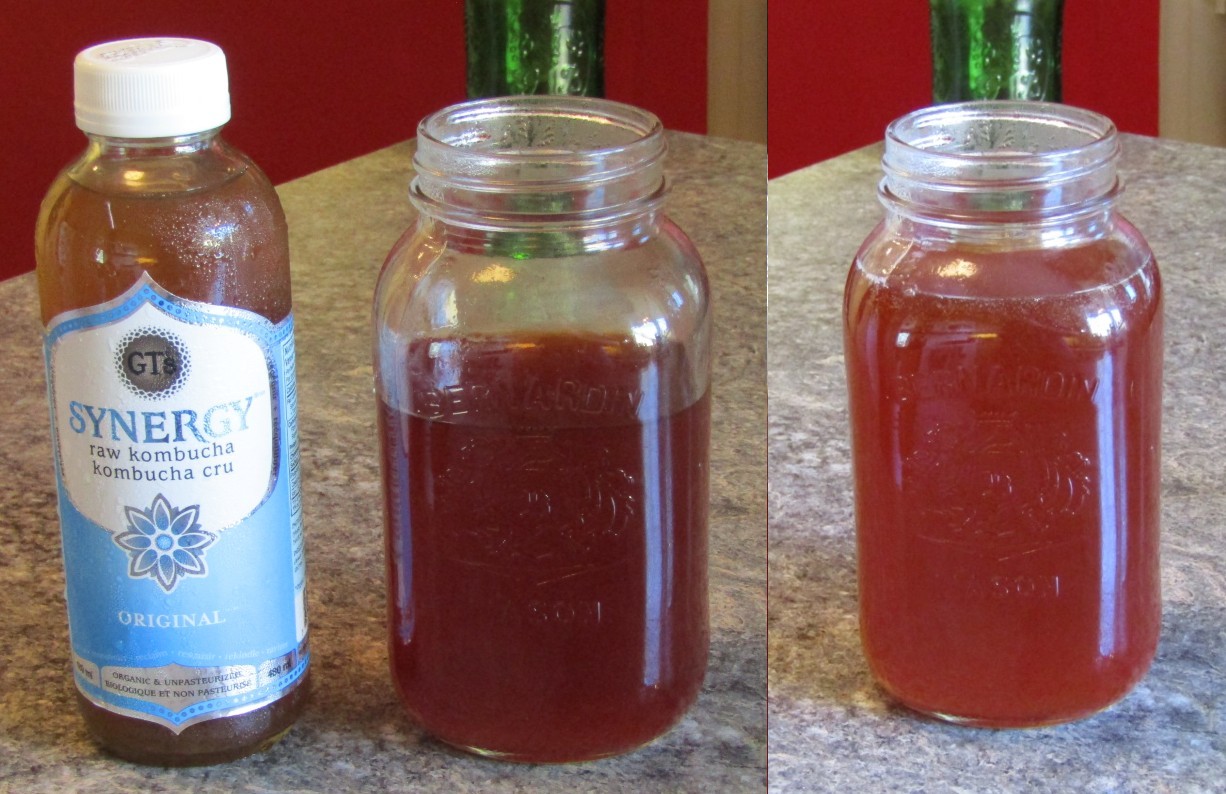
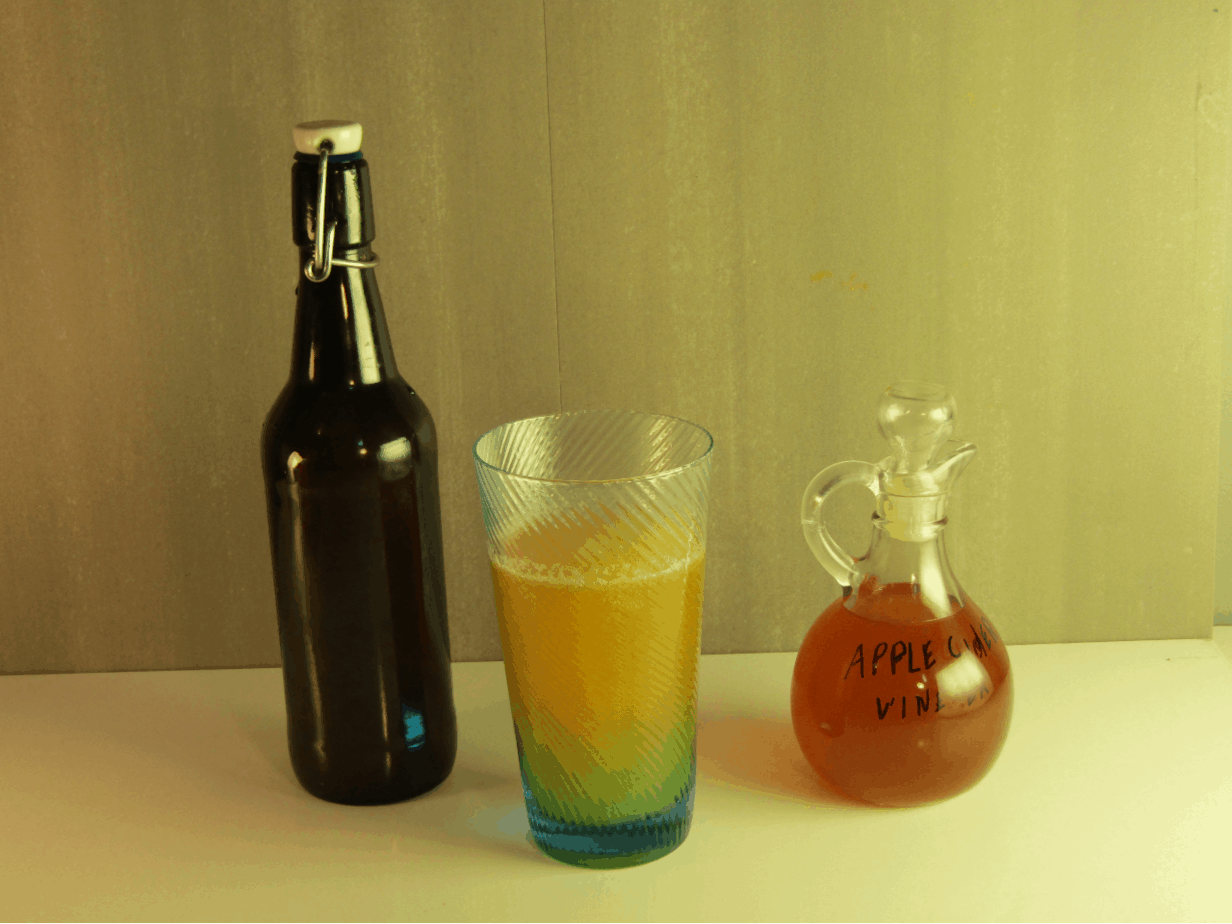
A bottle of kombucha, glass of kombucha and a contaner of apple cider vinegar

When I started making my own kombucha I got a little carried away.  I found an old slow cooker which held a gallon and a half of kombucha, add to that the gallon of kombucha I was making every two weeks.  Soon my stockpile of kombucha started to grow and I found I couldn’t consume all the kombucha I was making.  This led to drinking some kombucha which had overly fermented and had become vinegary. 

Kombucha contains an average of 1% acetic acid which makes it taste like vinegar.  This acetic acid is produced by acetic acid bacteria which use alcohol produced by yeast to make acetic acid (vinegar).  As kombucha ages the acid level continues to rise and can reach up to 3%.

Depending on how much sugar was added homemade kombucha can have more or less acid content. Other factors which affect the acid level of kombucha include temperature and time.

What makes kombucha taste like vinegar

As the sweet tea is fermented, yeast and acetic acid work in tandem to convert the sugar into acetic acid.  The sugar is first consumed by the yeast species which produce alcohol.  The amount of alcohol which is produced depends on how much sugar was added, the temperature and the length of time the kombucha is fermented.

Once the yeast produces alcohol the AAB uses it as an energy source and in the process produces acetic acid.  This is what gives the kombucha the vinegar flavor and why kombucha which has been left to ferment for a longer period of time can get very vinegary.  

A warmer temperature helps the culture to grow quickly.  The faster it grows the quicker the kombucha turns to vinegar.  Although it does not increase the potential amount of vinegar in the kombucha it speeds it up which reduces the amount of sugar in the kombucha making it more tart.

Kombucha is usually fermented for a period between 7-14 days but the culture continues to grow after 60 days of fermentation.  This means that the yeast species in the culture continue to consume sugar in the tea even after 60 days of fermentation.  The alcohol which is produced is used by the AAB until it has exhausted all available alcohol.  

Kombucha which has fermented past the standard 7-14 days can have a vinegar content that will rise past the typical 1% and the sugar content will continue to drop.  The combination of a low sugar content and a higher acetic acid concentration produces the vinegar flavor.

Is vinegary kombucha safe to drink

Vinegary kombucha is not spoiled or unsafe for consumption.  It is just unpleasant to drink if you don’t like tart drinks.  The acidic nature of kombucha protects it from spoilage bacteria and mold which make foods inedible.  The vinegar level of overly fermented kombucha may seem like an indication of spoilage but it actually improves its longevity.  

By using the standard ratio of 1 cup of sugar to a gallon of kombucha the yeast at its best efficiency can produce an ABV of 3.1%.  This will produce a weak vinegar which does not have a low enough pH to cause serious damage to the mouth or throat. The taste of overly fermented vinegar may be too tart to drink but it does not cause any harm.   

What to do when kombucha tastes too vinegary 

Start experimental batches of kombucha

Kombucha can be made with a wide variety of teas. Check out this article about the best tea to make kombucha.  Once you start making kombucha you will find yourself making it with the same type of tea as a habit and don’t want to risk making a batch which you don’t like or you fear will go bad.  

Having a batch of overly fermented kombucha is a great opportunity to start some experimental batches.  You only need enough kombucha starter to lower the pH to 4.0 for each batch and overly fermented kombucha can be used for this purpose. 

Make small batches of kombucha made with green tea, white tea or for a strong smooth flavor pu-erh tea.  You can start a batch in a mason jar which takes up less room but will produce enough kombucha to taste it to see if you would want to make more.  You never know you may discover your new favorite flavor.

Use Overly Acidic Kombucha to make Vinegar

Kombucha and the slow method of making vinegar are made in the same way, using the same families of bacteria and yeast.  Although the species found in kombucha and vinegar vary, the metabolic processes are the same.

The difference between vinegar making and kombucha is the amount of potential acetic acid which is produced.  Kombucha, when made with a sugar ratio of 1 cup of sugar to one gallon of tea, can produce an acetic acid concentration of 3% if the yeast in the culture are very efficient.

This is not reality.  The yeast in a kombucha culture varies but is not typically high in high alcohol producing yeasts such as Saccharomyces cerevisiae or Saccharomyces bayanus.  These yeasts are highly tolerant to alcohol and dominate beer and wine fermentations but kombucha is a symbiotic culture which maintains a low alcohol level.  This enables yeasts with a low sugar to alcohol rate and have a low tolerance to alcohol to grow.

The result of this is a lower amount of potential alcohol and therefore a lower acetic acid concentration.  To make overly fermented kombucha into kombucha vinegar you will need to add additional sugar to the kombucha and ferment it for another month or two.  For a full explanation of how to make kombucha vinegar read Seven Simple Steps To Make Your Own Kombucha Vinegar.

Use Overly Acidic Kombucha For Salad Dressings, Dips and Sauces

Although overly fermented kombucha may not have the acetic acid content needed to be considered vinegar, it still can be used as a salad dressing or in dips and sauces.  

Kombucha adds interesting flavors to salad dressings.  Use it for a simple vinegar and oil combination or make a creamy honey mustard dressing.

Dilly dips are great for vegetables, chips or in wraps.  Use overly fermented kombucha to add tang to the dip.  Simply add kombucha to yogurt and add dill, salt and any additional spices you may like.

Sauces are also a great way to use overly acidic kombucha.  The acid helps to bring out the flavors and adds tang to the sauce.  Any sauce which is used for a savory dish can be augmented with vinegary kombucha.

Use for quick bread baking

Quick bread uses a chemical reaction to produce the carbon dioxide.  The carbon dioxide gets trapped in the batter which causes them to rise.  When you add acidic kombucha to the batter it reacts with the powder giving it more rising power.  

Use Acidic Kombucha to Make a Tonic

Most recipes for vinegar tonic use apple cider vinegar diluted with water but you can also use kombucha which you feel is too vinegary.  Simply use kombucha to replace the liquid in the tonic.  Add some maple syrup, honey or sugar, a lemon wedge.  Pour it over some ice cubes for a cool summer drink.

Is Apple Cider Vinegar Fermented?


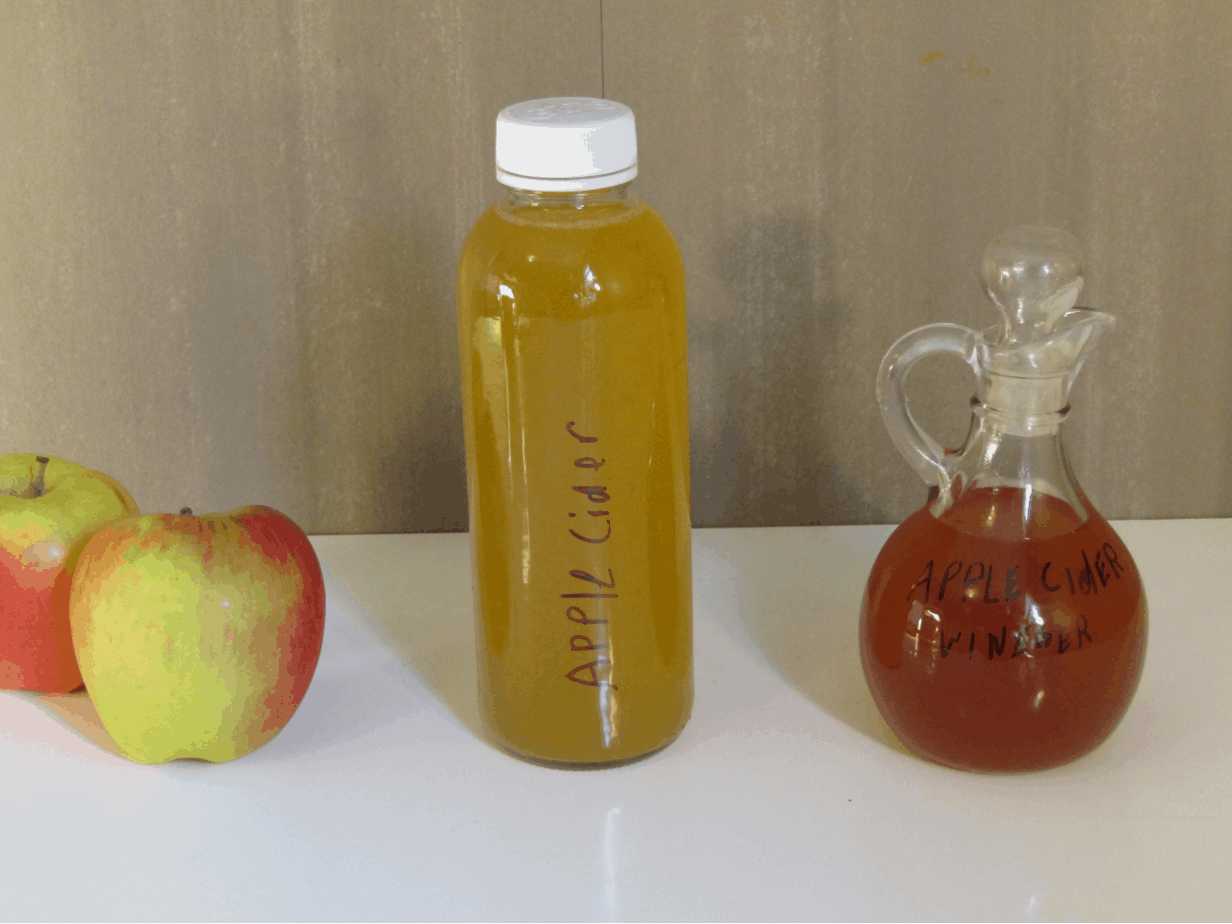
Two apples a bottle of apple cider and a bottle of apple cider vinegar

Apple cider vinegar is a standard vinegar which is found in most kitchens.  It is relied on to add tang to dressings, rizing power to quick breads and helps to eliminate pathogens from salad greens.  

Apple cider vinegar is fermented in two stages.  Apples are pressed and fermented with naturally occurring yeast found on the apples.  Once the first fermentation is complete the resulting cider is exposed to oxygen where acetic acid converts the alcohol into acetic acid (vinegar). 

Without fermentation there would be no vinegar.  It is an integral part of how all vinegars are made.    

How apple cider is fermented

The fermentation process of apple cider vinegar starts with removing the juice from the apple fiber.  This is done in production by pressing macerated apples with a hydraulic press but for small home batches a high efficiency juicer will work fine.

Apple juice is fermented with naturally occurring yeast.  The yeast comes from the apples themselves, on the skin and within the flesh.  Saccharomyces cerevisiae is found in large numbers on apples, this yeast has a high tolerance to alcohol and pleasant flavor profile producing cider. 

This stage is done in anaerobic conditions to ensure the yeast has full access to as much of the sugar as possible.  This limits the acetic acid bacteria growth which lowers the alcohol level and consumes small amounts of sugar. 

How Apple Cider is Converted to Vinegar

Apple cider is made into vinegar by exposing it to oxygen.  This is done by pouring the cider into a wide mouthed container and allowing oxygen exchange with the surface of the cider which the acetic acid bacteria use to produce acetic acid.

The cider is acidified with some already fermented apple cider vinegar to protect it from spoilage bacteria.  The WHO states that a pH of 4.6 or lower will protect against most spoilage and pathogenic bacteria so the addition of some acidic vinegar prevents any unwanted growth.

The cider is then left alone for a month or so until the acetic acid bacteria have converted the alcohol into vinegar.  During this time a vinegar mother will form on the surface of the container.  It is produced by the acetic acid bacteria in the culture and helps to protect the vinegar from contamination.  Once the alcohol in the vinegar is negligible and the acid level has risen to 5% or higher it is bottled.

Is apple cider vinegar a probiotic?

Contrary to what most people think, apple cider vinegar is not a probiotic.  Probiotic foods are foods which supply active microbes to the digestive system in high numbers where they provide positive benefits to the host.  

Once fermentation is complete few acetic acid bacteria remain in the vinegar, most have died off due to the limited food availability.  This leaves too few to have any substantial effect on the gut microbiome and therefore not probiotic.

Even apple cider vinegar which has the mother does not have enough probiotic bacteria in it to make it a probiotic.  The mother is made up of cellulose which is produced by the acetic acid bacteria.  This cellulose is not living, it does have some live bacteria in it but the population is not high enough or of the right types to qualify as a probiotic.  

The prebiotic Value of Apple Cider Vinegar

Although apple cider vinegar is not probiotic it does have prebiotic compounds in it which help to feed healthy microorganisms in the digestive system.  The prebiotics are produced by the yeasts used to ferment the apple juice to cider.  The main one being Saccharomyces cerevisiae but others are also present.

Saccharomyces cerevisiae is an important yeast in the production of commercial prebiotic formulations designed to deliver high amounts of prebiotic material to the gut microbiome. 

Other prebiotics are produced by the acetic acid bacteria which also provide a wide array of organic acids which are valuable for adding health benefits as well as flavor to the vinegar.

Does apple cider vinegar have alcohol?

Just like any other fermented food, apple cider vinegar has trace amounts of alcohol.  It is produced by the yeasts which convert the sugar into alcohol.  The presence of the alcohol provides energy for small amounts of the acetic acid bacteria to survive. 

Without some residual alcohol the live acetic acid bacteria do not have anything to live on.  When this happens the acetic acid culture converts to using the acetic acid as a food source.  When this happens the vinegar’s pH will begin to rise as the acetic acid is used and replaced with carbon dioxide and water. 

It is important to maintain some alcohol in the vinegar to prevent the acetic acid bacteria  from fully converting to the strain which consumes the acetic acid and raises the pH of the vinegar.  

Can apple cider vinegar be consumed everyday?

Just like anything this depends on the volume you are consuming. There are some benefits to consuming apple cider vinegar on a regular basis but too much of a good thing can lead to bad results.

Apple cider vinegar is generally considered safe for most people and can be consumed daily when consumed within normal limits.  Two tablespoons a day is the recommended amount. Dilute it with water or fruit juice as it has a high acid content which could affect teeth and irritate the throat.

A better way to consume apple cider vinegar is to use it as an ingredient in meals such as salad dressing, savory sauces or dips.  Just like any food its benefits are enhanced when it is taken in a natural way.  Drinking a sour liquid by the spoonful is not natural!  

8 Ways to 2 Tablespoons of Apple Cider Vinegar a Day

  1. Add it to your morning smoothie
  2. Add it to pancakes or other quickbread baking for extra rising power
  3. Use it to make homemade ketchup
  4. Make tangy dilly dip for vegetables
  5. Dress a salad with apple cider vinegar and oil
  6. Use it to add tang to a sauce 
  7. Add it to gazpacho soup
  8. Make a hot apple tonic

The Best Kind Of Tea For Kombucha


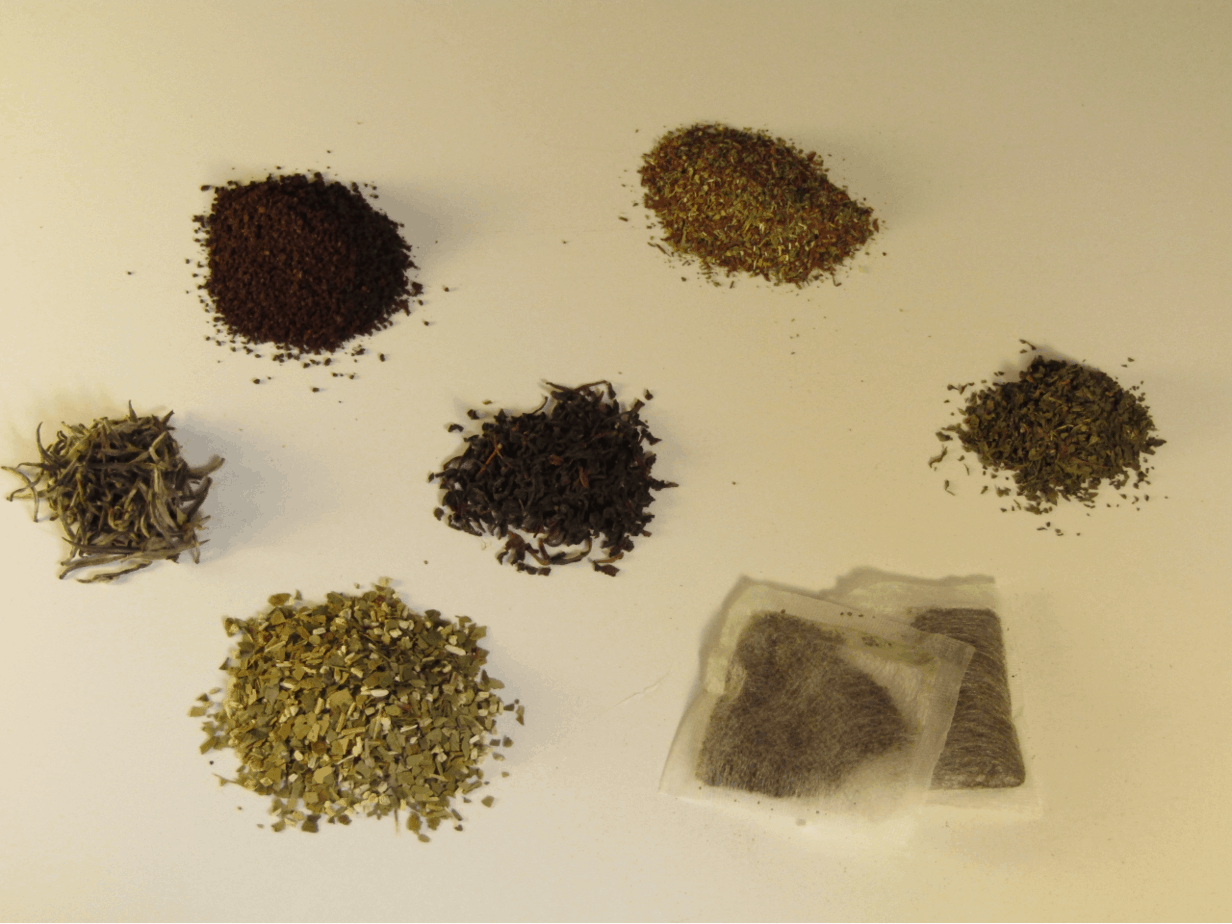
Seven different types of tea which can be used to make kombucha

I learned how to make kombucha at a fermentation class at a community center.  The first batch of kombucha I made used the cheapest bagged tea available.  Being a beginner I went out and purchased the same brand of tea.  Once it was gone I started experimenting with other types of tea and I learned the type of tea you start with greatly influences the resulting kombucha.

Black tea is the standard type of tea used for kombucha, it works well for producing a pleasant flavor.  Green tea is also a good choice for a milder kombucha flavor.  Other tea types can be used as well, providing different flavors, health benefits and culture makeup.

The tea is the basis for great kombucha.  A high quality tea will produce superior kombucha to the cheap tea dust which can be purchased for bargain barrel prices at local grocer.

Tea types which can be used to make kombucha

Camellia sinensis tea

Tea in its strictest terms is a hot water infusion of the leaves of the Camellia sinensis plant.  This includes black, green, oolong, pu-erh and white tea.  How the leaves are processed produces the wide variety of tea types we have today.  All of these teas are great options for making kombucha and will produce unique but familiar kombucha.

Black tea

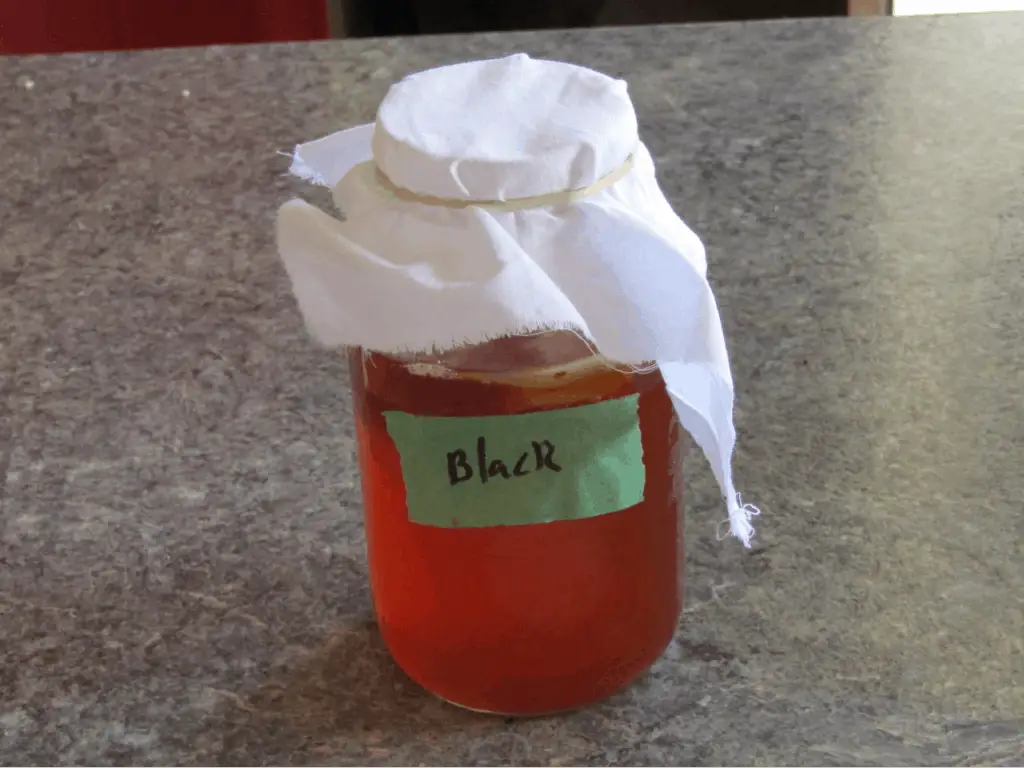
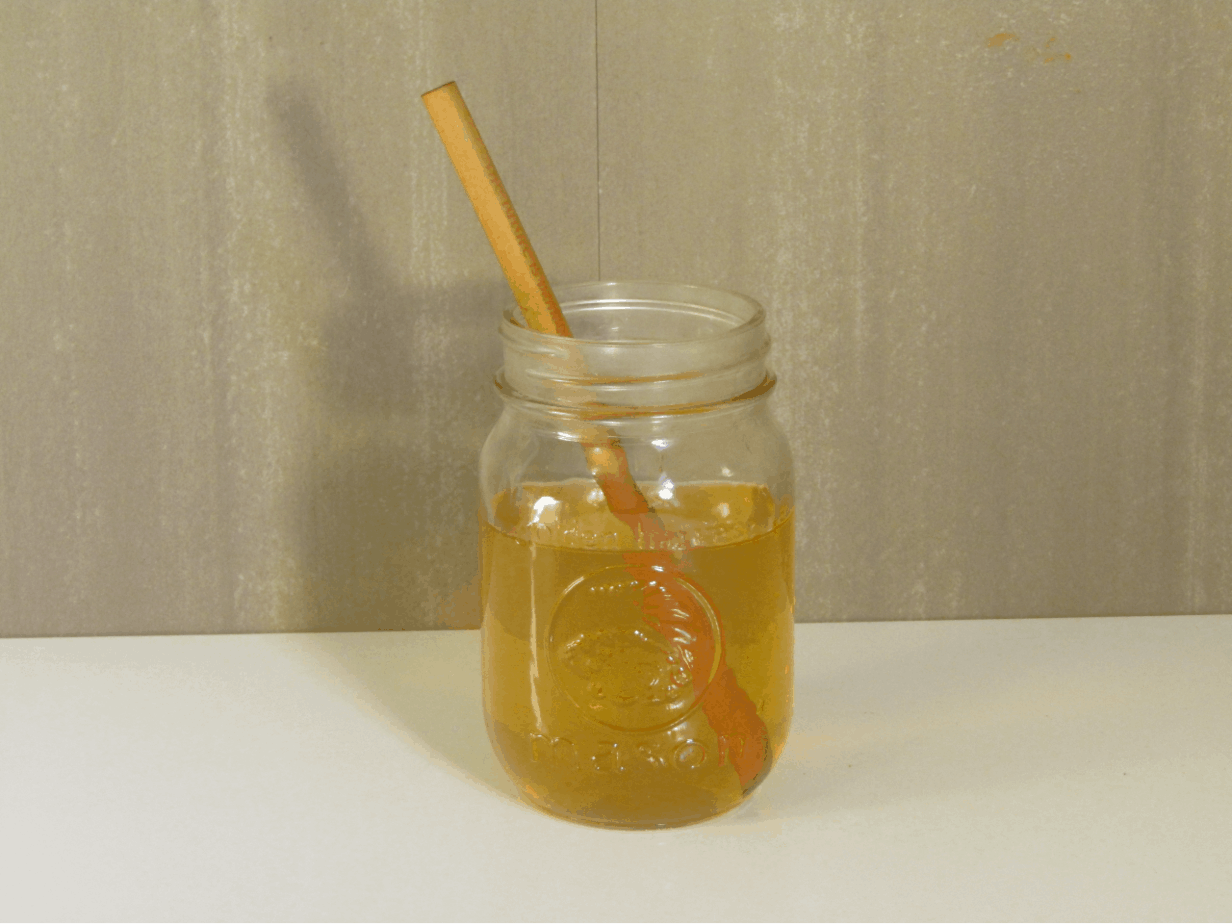
Mason jar of kombucha made with black tea

Black tea is the most popular tea to make kombucha with and if you are new to kombucha making it is a good place to start.  Kombucha made with black tea has the familiar color and tangy flavor.  It makes good kombucha soda as the kombucha flavor still comes through in even the most overwhelming flavors used such as ginger or grape juice.

Green tea

The second most popular tea used to make kombucha, green tea produces a milder flavored kombucha with a paler color.  Still a good candidate for making flavored soda although the tea’s flavor does not come through as much as black tea.  

Green tea is the basis for Jun, which is a kombucha fermentation which is made with green tea and honey.  It is fermented in the same manner as kombucha.  Jun tea is not usually second fermented but rather consumed after the first ferment.

White tea

White tea is generally considered to be the least processed type of tea.  It is harvested when the leaves are young and can sometimes include the bud.  Quality white tea is then dried in the sun and packaged without further processing.  

Kombucha made from white tea is very mild in flavor.  It has a similar color to green tea kombucha but can be a little lighter depending on how much oxidation the tea sustained while air drying.  If used to make kombucha soda the flavor of the tea will be hard to detect in stronger flavors.  Use it for milder flavors like rose petal or chamomile flavored kombucha.

Pu-erh tea

Pu-erh tea is a very strong flavored tea which is made from extremely mature tea plants.  The tea is highly oxidized and traditionally aged 10-15 years.  Making kombucha with pu-erh tea will result in kombucha which has a strong smooth flavor if the tea was made correctly prior to fermentation and does not need additional flavorings.  

It can be carbonated using small amounts of sugar to prime the bottle or by adding flavors as you would for black or green tea kombucha soda.

Oolong

Oolong tea has an oxidation level between green and black tea.  This makes it a stronger flavored tea with a darker color than green tea.  It is a good choice for kombucha soda, drinking plain or for using to make kombucha vinegar as the slightly milder flavor in the oolong tea reduces the bitterness of the finished vinegar.

Is bagged tea or loose leaf tea better for making kombucha?

The quality of the tea is the important thing here.  Some people do not consider the tea they start with as important but as you improve your ability to sense the flavors produced in good kombucha this becomes more and more important.

Both bagged and loose leaf tea can be used to make kombucha and both have their pros and cons.  Bagged tea can be more convenient to use but may not produce the best tasting tea.  Loose leaf tea can produce high quality tea but be more difficult to remove prior to fermentation.  

Tea not from the Camellia sinensis plant

Sacrilege! How can kombucha be made without the camellia plant?  

The kombucha culture, which is made up of a consortium of bacteria and yeast species, can and does ferment all sorts of substrates.  

This culture is a dynamic culture which changes over time.  The population of the strains of bacteria and yeast species will grow and decline depending on the substrate used, time of year, ambient temperature, maturity of the culture and a whole host of other things.

When tea made from something other than the camellia sinensis plant is used the population of the culture changes to suit the available nutrients.  This produces new flavors and colors which cannot be found in the traditional teas.

Rooibos tea

Rooibos or redbush tea has its own flavor and has no caffeine. It is a good choice for those who can’t or don’t want to have caffeinated drinks.  It is oxidized like black tea so it has a darker color than some of the caffeinated teas.  Before making kombucha with rooibos tea, try making some to drink normally.  If you don’t like it as tea you won’t like it as kombucha.

Yerba mate

Yerba mate is made from the Ilex paraguariensis plant.  After harvest it is dried by heating over an open fire.  It contains caffeine as well as its own unique flavor.  

When making kombucha with yerba mate do not use boiling water for steeping and steep for less than 5 minutes to avoid high caffeine levels in the kombucha.  Yerba mate does not taste at all like traditional tea so make sure you like the flavor before you make kombucha with it.

Herbal tea

Okay if you have been making kombucha for a while you probably have heard that herbal teas do not make very good kombucha.  This could be stemming from the people who make kombucha regularly have developed a flavor profile they consider to be the kombucha flavor and anything which departs from that just isn’t kombucha.

Some make statements like the SCOBY can be damaged if you make kombucha with herbal teas and you are risking your culture and may kill it by using such strange herbal infusions like peppermint or chamomile. The key to making kombucha with herbal tea is to ensure the starter is properly acidified prior to fermentation. Mold and other spoilage microorganisms do not like low pH levels so ensure you add enough of finished kombucha to lower the pH to 4.0.

Herbal teas of all sorts can be made into kombucha.  The SCOBY is produced by a collection of acetic acid bacteria which are not susceptible to damage from herbal tea infusions.  They use the sugar and some of the minerals in the substrate (the tea infusion) to produce the cellulose which makes up the kombucha SCOBY (which is called a pellicle in microbiology).  

The population of the culture will change when it is used to make kombucha with a different substrate because the nutrients and available minerals will be different.  This gives it new flavors and health properties.  

Here are a few options for you to try.  Remember to make small batches of these first to see if you will like them.  Once you determine if you like them you can make larger batches to suit your demand.

Peppermint

Peppermint kombucha can be made using fresh or dried leaves.  The kombucha will have a milder flavor with a strong undertone of peppermint which will vary depending on the strength of the tea infusion you used.

Kombucha made with peppermint is calming, low in sugar and has several organic acids which promote health.  Make this kombucha to drink in the evening as it is great for a before bed tonic.

Chamomile 

Another great choice if you want to have kombucha in the evening without the stimulation effects.  Kombucha made this way is better not second fermented but rather consumed non-carbonated as a tonic.  The flavor is light and delicate which can be lost when it is carbonated.

Hibiscus

Kombucha made with hibiscus has a strong tangy flavor with a deep red color which goes well with other flavorings.  It is astringent when made strong and has a sharp distinctive flavor.  It can be second fermented without loss of the underlying hibiscus flavor and tang.

Turmeric

With its deep yellow color and spicy flavor turmeric is another substrate which can make a unique kombucha.  A relative of ginger turmeric has been used to flavor a wide variety of foods from curry to soda.  Kombucha made with turmeric is a refreshing summer drink.  When making turmeric kombucha don’t forget the black pepper as it helps the absorption of curcumin which is one of the proven health elements of turmeric.

Kombucha tea types which are right out of the wheelhouse

These ideas can in no sense of the word be considered tea!  They are not something anyone would think of when considering making kombucha but they can still make good substrates for the kombucha culture to grow in.

Oak leaf 

Oak leaves are full of tannins which make them useful for making various lacto fermented foods.  The tannins in the leaves help to keep the food crisp and they are also good for feeding the acetic acid bacteria.  The flavor is very woody with a smoky undertone depending on how the leaves were dried.  It can be very astringent depending on how many leaves you use.  Flavor it with rich flavors if you are going to second ferment it.  Blackberry juice or elderberry juice are good options.

Coffee

When coffee is used to make kombucha it produces a deep colored kombucha with the distinct flavor of coffee.  It is a flavor which takes a bit to get used to as it is a combination of cold coffee with a sharp tangy flavor and bitter aftertaste if not made correctly.  The coffee needs to be of high quality as it is the main player in the flavor profile even after fermentation of 14-21 days.

Best Tea for kombucha depends on your criteria

There are several criteria which can be used to determine what is “best”.  These are only three of many criteria which have appeared regularly in searches.  Not included are the health effects of various tea types for making kombucha.  

Personal Taste

As mentioned above, the most common types of tea used to make kombucha are black  and green tea varieties.  Most people agree that teas without additional flavors are best because flavorings have an unpredictable effect on the flavor but any type of tea which you enjoy could be a good candidate for kombucha.

SCOBY Growth

If you judge your tea choice on the growth of the SCOBY then your best choices are high tannin leaves which include traditional tea, oak leaf, grape leaf, bay tree leaf and coffee.  The tannins in the leaves help the acetic acid bacteria to produce abundant amounts of cellulose which forms the SCOBY.  This study done to determine the conditions for fast SCOBY growth for medical applications indicated that higher concentrations of black tea were better for SCOBY growth than lower ones.  

The above study was focused on how to grow cellulose fast for use in medical applications such as temporary skin, structure for blood vessels and cartilage.  

Culture Makeup

The culture makeup is not something which is readily apparent.  It changes constantly with a variety of variables such as the temperature, water quality, type of substrate, type of sugar and fermentation time.  Each SCOBY is made up of different microorganisms with no two SCOBYs being the same.

For someone to say which tea is best from this criteria they first need to have an ideal in mind and a very well equipped biology lab.  Stop thinking about the makeup of your culture and start focusing on what you like and how you feel after you drink it. 

Can Kombucha be Consumed After the First Ferment


Mason jar filled with kombucha after the first ferment

Before there were reliable ways to seal fermented beverages kombucha was consumed once it had acidified and used most of the easily fermented sugar in the liquid.  It was not flavored with fruit juices or other various types of flavorings we use today.  Rather it was a slightly fizzy fermented tea drink.  It is thought to have originated in China and is now prepared at home and commercially worldwide.  

There is nothing in the ingredients or the process of making kombucha which preclude it from being consumed at any time in the fermentation process.  As it ages the sugar content drops and the acetic acid increases.  The alcohol level increases peaks and then declines as the sugars are depleted.

The second fermentation process is completely optional.  This is where the active yeast in the kombucha is fed a little extra sugar and sealed into a bottle of some sort.  The yeast produces carbon-dioxide and pressurizes the bottle.

Benefits of consuming kombucha after the first ferment

Lower alcohol level

Kombucha is a symbiotic culture, meaning that the various species of bacteria and yeast found in the culture work together to create a strong and stable population.  When you bottle kombucha with added sugar you are effectively removing the influence of one of the species in the culture, the acetic acid.

Yeasts produce more alcohol when placed into an anaerobic environment, like in a sealed bottle, than when they have free access to oxygen but acetic acid bacteria is aerobic.  Without oxygen it cannot convert the alcohol the yeast produces into acetic acid and the alcohol level rises.  

Lower sugar content

When kombucha is bottled additional sugar is added to the bottle to facilitate the production of carbon dioxide which makes it fizzy.  This sugar can be in the form of fruit juice, white sugar, tree syrup or any other sources of high concentrated sugars.  During second fermentation not all of this sugar is used by the yeast to make carbon dioxide and the total sugar content can be higher.

Flavor flexibility

Kombucha can be flavored with a variety of flavoring agents.  Fruit juice, herbs, flavor extracts or any other flavoring you can imagine but when it is second fermented this flavoring needs to be done days before it is consumed.  

To flavor first fermented kombucha all you need to do is add the desired flavor when you go to drink it.  Mix it with some fruit juice in the morning, or make it into a tangy lemon drink by adding freshly squeezed lemon juice in the afternoon.  You will not be limited in any way even if you like your kombucha carbonated you can add soda water and flavoring to make it fizzy.

Will not over carbonate

If you have been making kombucha for a while you will have had the experience of opening a bottle of kombucha and being greeted with a fountain of kombucha all over the place.  Homemade kombucha is tricky.  The temperature, remaining sugar and source of flavoring affects the amount of carbon dioxide which is formed in the second fermentation stage.

Sometimes this leads to a highly carbonated batch of kombucha which literally explodes out of the bottle when opened.  This is not a problem with first fermented kombucha as the carbon dioxide does not build up in the container but escapes into the atmosphere.

Over carbonation can cause other problems besides loss of kombucha and a big mess to clean up.  It can actually burst the bottles and send glass in all directions which is very dangerous.  If you are second fermenting your kombucha be sure to use bottles which are meant for holding pressure and keep them in a closed cupboard out of direct sunlight. 

Kombucha first ferment timeline

There are several stages of kombucha fermentation which occur in order as the batch matures.  As each stage happens your kombucha changes to become the slightly tangy, sweet and effervescent beverage which has become so popular.

Kombucha inoculation (one hour)

The inoculation stage happens once you have prepared the sweet tea and it has cooled to room temperature.  Then the starting kombucha is added and the SCOBY is placed into the container.

The sweet tea needs to be inoculated with enough reserved kombucha to do two things:

  1. Lower the pH of the tea to below 4.5

This will protect the tea from unwanted microbial growth as most spoilage bacteria prefer a basic environment.

  1. Provide the tea with live microbial culture 

The live culture found in the starter liquid is inhabited by the yeast, lactic acid bacteria and the acetic acid bacteria which convert the sweet tea into kombucha.  

Rapid Yeast growth 

The yeast will have a day or two of lag time where it is acclimatizing itself to the new environment.  This can take one or two days before the yeast really begins to multiply.  The length of time the yeast population grows depends on the amount of sugar used in the tea, the temperature of the fermentation and its access to oxygen.

Most yeast species like a temperature range of 20-35℃ so a warmer ambient temperature will speed up this stage whereas a high sugar concentration will prolong it as there is more fuel for the yeast to consume.  Yeast can grow in an aerobic or anaerobic environment but their metabolism is more efficient in the presence of oxygen therefore if the yeast has easy access to oxygen it will grow faster and shorten this stage of the process.

With a ratio of one cup of sugar per gallon of tea, an ambient temperature of 20℃ and a wide mouthed container this stage will take two to four days.

The various yeast species which line in a kombucha culture perform an important role in the production of kombucha.  There function is three fold:

  1. Produce alcohol which the acetic acid bacteria use to make acetic acid.

Kombucha is a weak vinegar like solution which is consumed before the fermentation process is complete.  It has a small amount of alcohol left in it depending on when it is consumed and how much sugar was used in the solution.  

With more sugar there will ultimately be more acetic acid produced.

  1. Produce various vitamins 

Yeast species are known for their production of B vitamins which are used by the body to maintain energy levels throughout the day, support mucous membranes and help the brain.

Kombucha culture has a wide variety of yeast species living in it which produce many other vitamins and convert inorganic minerals into organic minerals and therefore available to the body.

  1. Compete for fuel with lactic acid bacteria and unwanted spoilage bacteria

Lactic acid bacteria are a part of the kombucha culture and perform a useful function but too much lactic acid in kombucha makes for a very sour drink.

Since both the yeast strains and the lactic acid bacteria strains consume the same fuel they keep one another in check.  This limits the amount of alcohol produced as well as lowering the lactic acid concentration. 

Rapid Lactic acid growth 

Although lactic acid bacteria are not in high populations in most kombucha cultures they are present and perform a valuable service in kombucha fermentation.  They have a longer lag time than the yeast species as they grow best in anaerobic conditions.   

When the tea is first made it is very well aerated giving it a higher amount of oxygen dissolved into the liquid, as it ferments the yeast uses much of this oxygen in its respiration and the solution becomes oxygen poor. Once the oxygen level of the tea drops the yeast species need some time to acclimate to anaerobic respiration.  This is when the lactic acid bacteria begin to grow rapidly.  

Rapid growth happens three to four days after the inoculation of the tea and continues until the yeast species begin to compete in the anaerobic environment.  

Lactic acid bacteria are also producers of a wide range of vitamins especially those of the B vitamin family including B12 which is produced by Lactobacillus rossiae   which is often found in the kombucha culture.

Rapid Acetic acid growth 

The acetic acid bacteria is present in all kombucha cultures and begins to grow rapidly once the yeast begins to produce alcohol.  This can take anywhere from three to four days.  When the alcohol level begins to rise the acetic acid bacteria have the fuel to grow rapidly which continues until the alcohol concentration levels off and declines.  

The time this takes is again dependent on the amount of sugar, temperature and access to oxygen the fermentation has.  Rapid growth of acetic acid bacteria will last anywhere from four to ten days.

Acetic acid bacteria are aerobic bacteria meaning they need oxygen to grow.  This is why they grow mostly on the top of the kombucha fermentation where the SCOBY forms.  

Once the acetic acid bacteria begin to grow rapidly a new SCOBY will form on the surface of the tea.  It is produced mostly by a subspecies of acetic acid bacteria gluconobacter and acts as a barrier between the culture and unwanted bacteria.  As the kombucha matures the SCOBY thickens and yeast strings form on the bottom as the sugar content is reduced.

Yeast die off

Yeast die off will start between 10-12 days again depending on temperature and available sugar.  In alcoholic fermentations another limiting factor is the alcohol concentration but in kombucha the alcohol is being consumed by the acetic acid bacteria so it does not limit the yeast growth. 

Once the yeast has consumed most of the easily fermentable sugar its population will plateau and begin to fall off.  This will start anywhere from 6 days onward, as the sugar content drops so will the yeast population.This is when you will begin to see new sediment on the bottom of the container and yeast strings form on the bottom of the SCOBY.  These yeast bodies are full of vitamins and minerals so consume them with the finished kombucha or use them in baking.

Bacteria die off

The bacteria species will die off at a different rate due to the source of energy they use.  Lactic acid bacteria will die off in tandem with the yeast species as they use the same fuel.  The acetic acid bacteria will slow their growth once the alcohol level in the kombucha begins to fall.  

Kombucha maturation

Kombucha can be consumed throughout the fermentation process.  Each stage has a different ratio of vitamins, minerals and beneficial probiotics.  New kombucha is relatively high in active probiotic cultures whereas as it ages the population of the culture falls but the vitamin and available mineral content increases.

Depending on how you like your kombucha and what you are drinking it for will determine when you should consume it.