Urban Fermentation

Recent Posts

What it Means When Food is Fermented


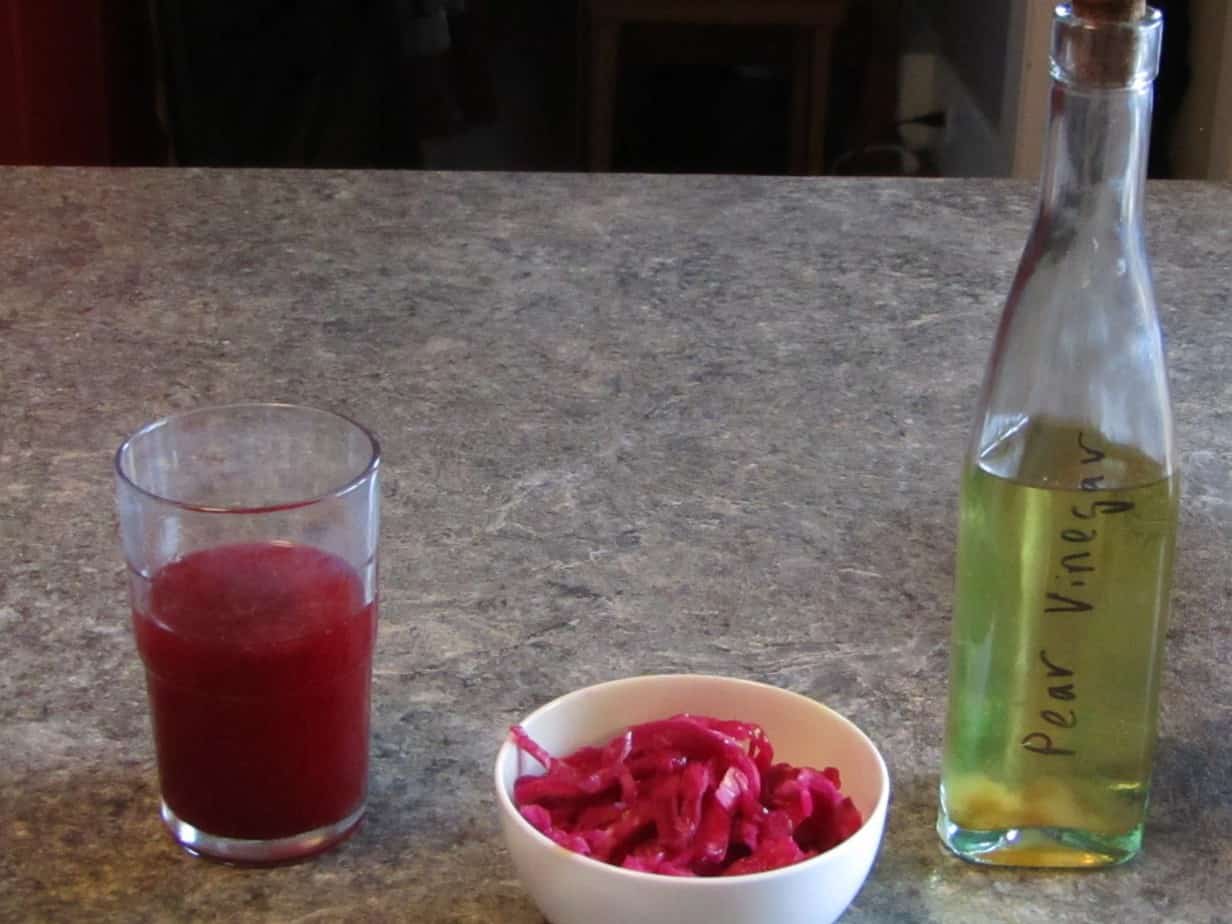
Glass of Blueberry kombucha, bowl of sauerkraut and a bottle of pear vinegar

We hear fermented foods being promoted everywhere, even the medical establishment has conceded that eating a diet with some fermented foods is good for your health.  With the popularity of food and drinks like kombucha and kimchi it has risen in cultural consciousness.  Many companies are getting on the bandwagon but not all of these companies are actually fermenting their products.  So what does it mean when a food is fermented?

A food is fermented when it is placed in a controlled environment to promote specific microbial growth.  This consumes sugars found in the food and produces organic acids, alcohols and carbon dioxide.  It can be started by naturally occurring microorganisms or be inoculated with specific cultures.  

There are many types of fermented foods from sauerkraut to balsamic vinegar and each one is fermented differently, using a different type of culture which can be pure strains of specific bacteria or a consortium of bacteria, yeasts and molds which produce unique flavors and storage characteristics. 

There are three main microorganism families which are used to ferment food:

  1. Yeast and other fungi 
  2. Acetic acid bacteria
  3. Lactic acid bacteria

Each of these three need different environmental conditions for encouraging growth and it is by controlling these conditions which produce the wide variety of fermented foods.

Environmental conditions needed for yeast growth

Yeast is an integral part of many fermented food products including wine, sourdough bread, kefir, vinegar and kombucha.  Yeast species can survive in a wide variety of environments which makes them valuable and problematic at the same time.

Yeasts can grow with or without oxygen, need simple sugar for energy, can grow in a temperature range of 0℃- 47℃ and tolerate a pH of 4.0.  While most yeast species cannot survive ABV greater than 4% some yeasts such as saccharomyces cerevisiae are tolerant to 18% – 20% ABV.

These environmental conditions help fermenters to produce a wide variety of yeasted foods such as alcohol, vinegar, bread and kombucha.  Each of these require a different set of conditions to produce the expected product.

Yeasts are a subspecies of the fungus family.  Other fungi are also used in fermentation which provide other functions.  Two examples of this are the mold Aspergillus oryzae and Rhizopus oligosporus.

Aspergillus oryzae is used in the production of many Japanese fermentations such as sake, miso and soy sauce.  This mold has the ability to convert complex carbohydrates (starch) into simple sugars which other microorganisms can use.  It breaks down the rice starch used to make sake, starch found in the soybeans in the production of soy sauce and the starch found in the barley and soybean mix used to make miso. 

Rhizopus oligosporus is used in the production of tempeh.  It also uses the complex starches found in the beans and/or seeds used to make the tempeh.  Under specific environmental conditions it can grow quickly and form a white mycelia around the beans/seeds.  

Environmental conditions needed for acetic acid bacteria

AAB are an interesting bacterium which can use sugar, alcohol and acetic acid for energy and in most samples all three of these types of AAB are present.  They are used to produce vinegar, kombucha and are present in all yeasted products including wine, beer and bread.

Acetic acid bacteria need oxygen for respiration, have an effective temperature range of 25-30 and tolerate a pH of 2.0.  They have tolerance to alcohol up to 16% ABV but grow much better within the range of 5% – 12% ABV.  

By controlling the environment you can encourage or discourage the growth of acetic acid bacteria.  Wine and beer makers place their alcoholic fermentations in anaerobic environments to limit the growth of acetic acid bacteria while vinegar makers promote the exposure to oxygen.  

Mixed fermentation types like kombucha and water kefir rely on the growth of yeasts and acetic acid bacteria simultaneously which helps to balance the culture as well as keep the alcohol level low.  

Environmental conditions needed for lactic acid bacteria

LAB uses sugar to produce lactic acid.  Their use in the production of sauerkraut, pickles and other fermented vegetables makes a tangy and well preserved product which can last a long time in proper storage conditions.  

Lactic acid bacteria are anaerobic in nature, have a wide temperature range of 20-45 and tolerate a pH of 2.0.  They have tolerance to alcohol up to 15% ABV.  Some species of lactic acid bacteria are inhibited at 6% ABV whereas some are tolerant up to 15% ABV.  

Fermenting vegetables with lactic acid is very safe and is quite forgiving when mistakes are made.  The safety of this type of fermentation is a result of active lactic acid bacteria which are present (some of which are probiotic)  on fruits and vegetables.  By encouraging their growth they quickly dominate a fermentation, producing a valuable finished product.

Why fermented foods are safe to eat

When you first start fermenting food it seems counterintuitive to how food should be treated. How can stuffing a vegetable into a jar with some salt and water and then leaving it on the counter in ambient temperatures lead to food which is not only safe but delicious?

The usual answer to this is because the naturally occurring bacteria found on the food acidifies the environment which prevents the growth of unwanted spoilage and pathogenic bacteria.  But there is much more to it than that.  

Fermented foods are safe because the environment is strictly controlled to encourage wanted microorganisms and discourage unwanted ones.  Some fermentations use naturally occurring microbes whereas others need to be inoculated with specific cultures for specific results.

If food is left out on the counter or uncovered in the fridge it will not turn into delicious fermented food.  Although it will ferment to some degree other microorganisms will also grow in and on the food to produce a slimy smelly mess.  Molds and spoilage bacteria are everywhere and can easily grow wherever there is food.  

Most molds produce toxins which are inedible for people.  It is the toxins mold produces which give the food a bad flavor.  Spoilage bacteria also produce bad odors and pour texture which makes them unappetizing.

By controlling the environment certain bacteria and yeast can be encouraged to grow while inhibiting the growth of others.  Since this all happens in a competitive environment the bacteria and yeast best suited to the various conditions will dominate.     

Foods Which Are Considered Fermented
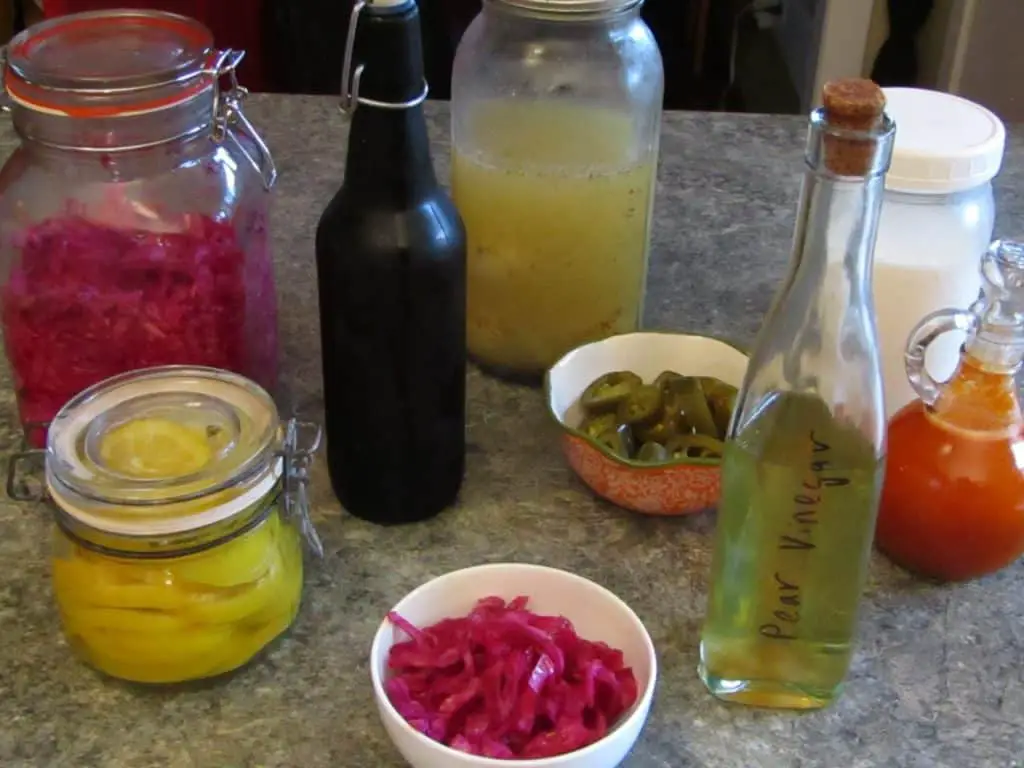
Many types of fermented foods including sauerkraut, vinegar, kombucha, lemons, and onions

The definition of fermentation is different depending on the paradigm you are looking at.  The biochemical definition of fermentation is:  “The use of carbohydrates for the production of energy by microorganisms in an anaerobic environment.”

By this definition foods like alcohol, sauerkraut and sourdough bread would be included in fermented foods but food science defines it in a broader term: “The controlled process of converting food into various products through the use of specific microorganisms for storage, flavor alterations and structure changes”.

The list of fermented foods is extensive.  Every culture has some type of fermented food which they are known for.  Below is a non-exhaustive list of foods considered to be fermented along with the microorganism family(s) of fermentation which are used to make it.

FermentationYeastLABAABMold
Sauerkraut
Kimchi 
Wine 
Beer 
Pickles 
Kefir 
Yogurt 
Water kefir 
Natto 
Tempha 
Dosa
Cheese
Soya sauce
Miso 
Vinegar
Bread
Olives
Coffee
Chocolate
Kombucha

Does fermentation make peppers hotter? The truth about capsaicin


I love hot food.  Hot sauce, spicy mustard and cayenne pepper are a standard in my kitchen.  The flavors of the various peppers are very individual along with the intensity of the spice.  One of my favorite hot sauces is tabasco.  It is a fermented hot sauce which has been fermented and aged in wooden barrels.  

Fermentation reduces the amount of capsaicin in the pepper which lowers the heat of the pepper.  While the fermentation is active the microorganisms break down some of the capsaicin, once the fermentation slows the heat of the pepper stabilizes.

Capsaicin is the compound which makes peppers hot by attaching itself to the pain sensors in your mouth which makes the pepper seem hot.  The intensity of the heat of a pepper depends on the amount of capsicum found in the pepper.

What does fermentation do to Peppers?

What happens to peppers when they are fermented depends on the method which the peppers were fermented with.  Peppers are a fruit, the seeds for the plant are contained within the fruit of the plant.  Even though we treat peppers as a vegetable in the kitchen when fermenting them they must be treated like the fruit they are.

Fermentation consumes the sugar found in the peppers for fuel and breaks down some of the components of the pepper, including  capsaicin, which makeup the pepper’s structure.  This makes them less hot, less sweet and increases their acidity.

Peppers can be used to make pickles such as these lacto fermented jalapeno pickles, made into hot sauce or even vinegar.  Each of these fermentation methods use a different set of microorganisms which affect the peppers differently.  

Lacto Fermented hot peppers

Lacto fermented pickles are made with the use of a salt brine which helps to keep the peppers crisp, reduces the heat of the pepper a little and increases the storage time.  Any pepper can be used or you can mix them together for a different flavor.  

Fermented hot sauce

When peppers are made into hot sauce the peppers are usually fermented in a salt brine and aged a longer period of time.  This helps the flavors of the peppers to blend with the flavors produced during fermentation.  If the peppers are stored in a wooden barrel they take on some of the flavors from the wood as well.  Often once fermentation is complete the peppers are blended and mixed with vinegar or other flavor components.

Acetic Acid Bacteria Fermentation (making spicy vinegar)

Making hot pepper vinegar can be done by  soaking peppers in already finished vinegar.  This adds some of the flavors of the pepper into the vinegar including capsaicin which makes the vinegar hot.  This isn’t really fermentation as the microbial activity in the vinegar is limited and as a result the heat of the peppers is preserved.  This is because of the minimal fermentation which occurs, instead the capsaicin from the peppers leaches out into the vinegar making the vinegar hot.

Peppers which are fermented with acetic acid bacteria make for a very special vinegar. The flavor of the peppers really comes through rather than just the spicy heat effect.  All peppers have a unique flavor which is sometimes hard to discern when the peppers have a high spice level.  Making them into vinegar allows the flavor of the peppers to come through. Here is a recipe for this type of vinegar.

Ways to control the spice level of fermented peppers

Remove the white pith from inside the peppers

In most pepper species capsaicin is found in the white pith which surrounds the seeds.  By removing the pith most of the capsaicin is removed from the pepper and the spice level of the pepper is drastically reduced.  

This is why recipes remove the seeds from the pepper to reduce the spiciness of a dish.  It isn’t the seeds which hold the heat but by removing the seeds the pith comes along with it.

Increase fermentation time

The amount of time the peppers are actively fermenting will determine how much the heat of the peppers will be reduced.  The bacteria in the culture breaks down the capsaicin during active fermentation.  Once the fermentation slows and essentially stops the amount of capsaicin stabilizes.

You can control how long and how intense the fermentation will last by controlling the amount of sugar you add.  The more sugar the longer the fermentation (up to a point).  Adding sugar to a fermentation will increase the available food energy for the bacteria and yeast but it will also alter the flavor and texture of the fermentation due to a longer active fermentation.

Use a mix of peppers

Just as all peppers have a unique flavor they also have a unique capsaicin content.  By mixing cooler peppers with hot ones you can control the ultimate temperature of the fermented peppers.

Does fermentation break down capsaicin?

If you were to leave hot peppers in the garden year round the peppers would decompose and release their seeds for the next year’s growth.  The bacteria and yeast found in the soil breaks down the capsaicin allowing the seeds to be released from the pith of the pepper.  The same thing happens when you ferment peppers using the natural bacteria found on the peppers.

Fermentation breaks down some of the capsaicin found in the peppers through metabolic processes of the fermenting bacteria such as Lactobacillus sakei.  The amount of breakdown is limited by the amount of sugar available and slows once the fermentation is complete.

How long should you ferment peppers for hot sauce?

There are many ways to make fermented hot sauce and the fermentation time changes with each method.  Tabasco sauce is made by mixing the peppers with salt and fermenting in oak barrels for two to three years, sometimes longer, fermented jalapeno pepper pickles can be made in two to three weeks and cayenne peppers fermented in hot locations can be turned into sauce within a few days to a week depending on ambient temperatures.

If you want to reduce the heat of the peppers, ferment them for at least five days as it takes at least five days for the lactic acid bacteria population to be large enough to make a difference in the amount of capsaicin found in the peppers.  

The active fermentation time of peppers will depend on the amount of sugar found in the fermentation.  The more sugar in the peppers the longer and more intense the fermentation will last.  Once the sugars have been depleted fermentation will slow and the sauce will begin to age rather than ferment.  

Once the active fermentation has stopped the amount of capsaicin in the peppers will level out and the heat of the sauce will remain steady from then on.  It is only during active fermentation that the capsaicin levels are affected.

7 Easy Ways to Prevent Mushy Fermented Pickles


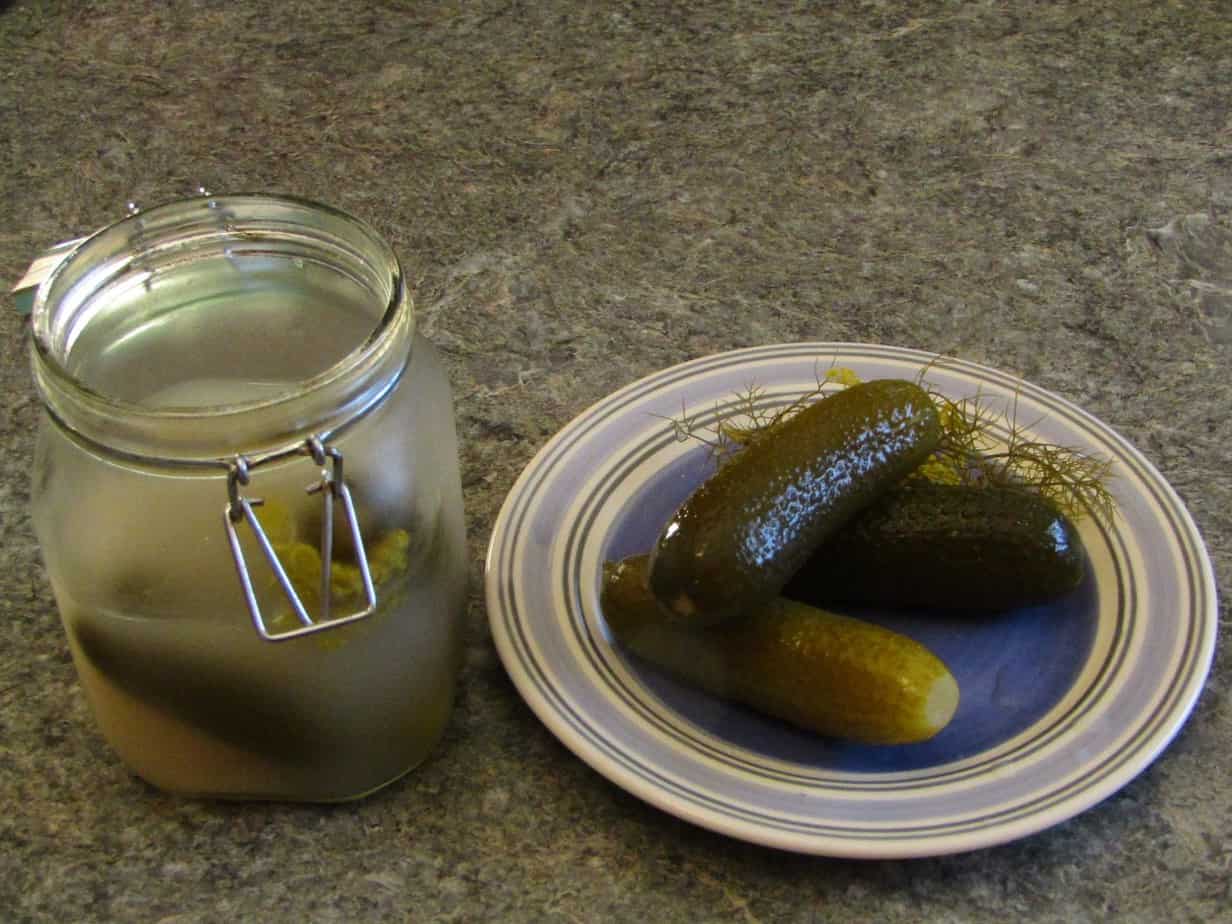
Jar of pickles with some on a plate

There is nothing like biting into a nice cool crunchy fermented pickle.  The flavor just explodes in the mouth as the lactic acid, salt and umami spreads throughout the mouth.  Pickles are known for their firm texture and sharp taste so why do so many pickle makers have trouble making them?

Pickles become mushy when the microbiota in the culture is allowed to occur unchecked within the cucumber. To prevent this, ferment in anaerobic conditions, use a 5-10% salt brine, keep the temperature cool, add some tannin, prick the skin, use firm cucumbers and remove the blossom end.  

Understanding is the key to making firm crispy pickles.  There are several factors which need to be considered in order to make good quality pickles.  When all these factors are stacked in your favor you will end up with a great pickle every time.

Ferment in anaerobic conditions

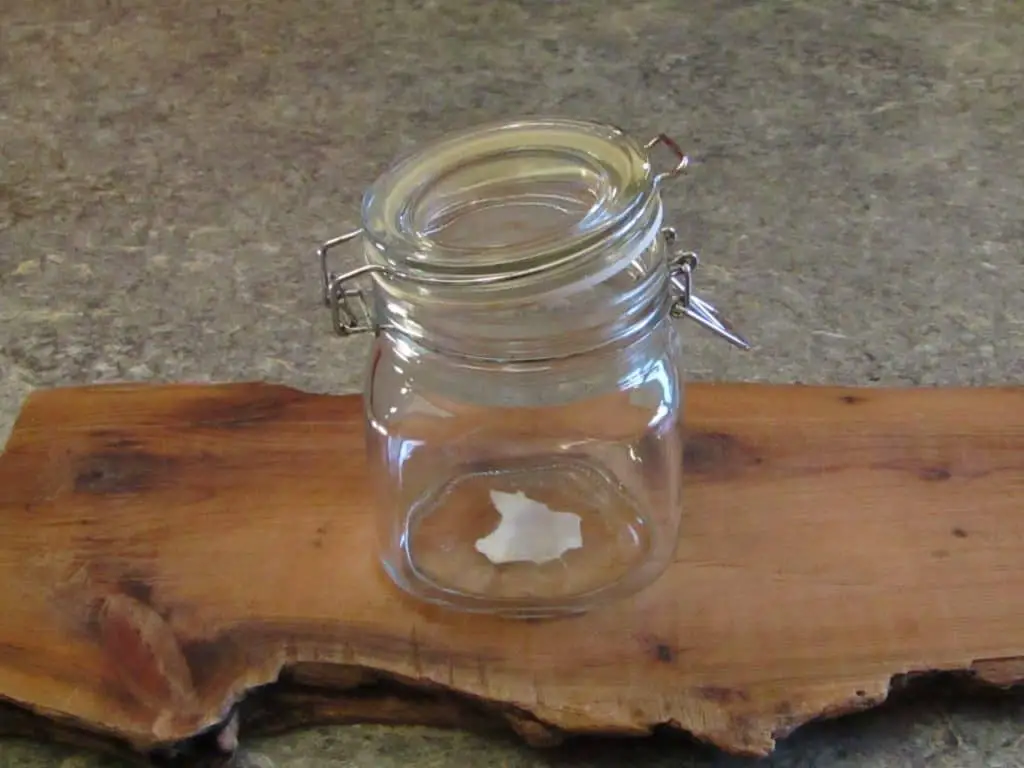
A sealable swing topped jar

Molds love oxygen rich environments with lots of digestable carbohydrates. They break down these long-chain carbohydrates which make up the structure of the pickle.  As the mold starts to grow on the surface of the cucumber it produces enzymes which digest the starch in the pickle which the lactic acid bacteria cannot break down.  

Once the starch has been broken down the bacteria and yeast can digest the resulting sugar which produces higher microbiotic action further softening the cucumber.

In an aerobic environment acetic acid bacteria also grow well.  Acetic acid uses alcohol as fuel which the yeast found on the cucumber produces.  This symbiotic relationship works well when producing vinegar or kombucha but in pickle production it is detrimental.  

The action of the lactic acid consumes the alcohol produced by the yeasts encouraging the yeasts to continue to grow.  The longer this cycle goes on the softer the pickle. 

Use a 5-10% salt brine

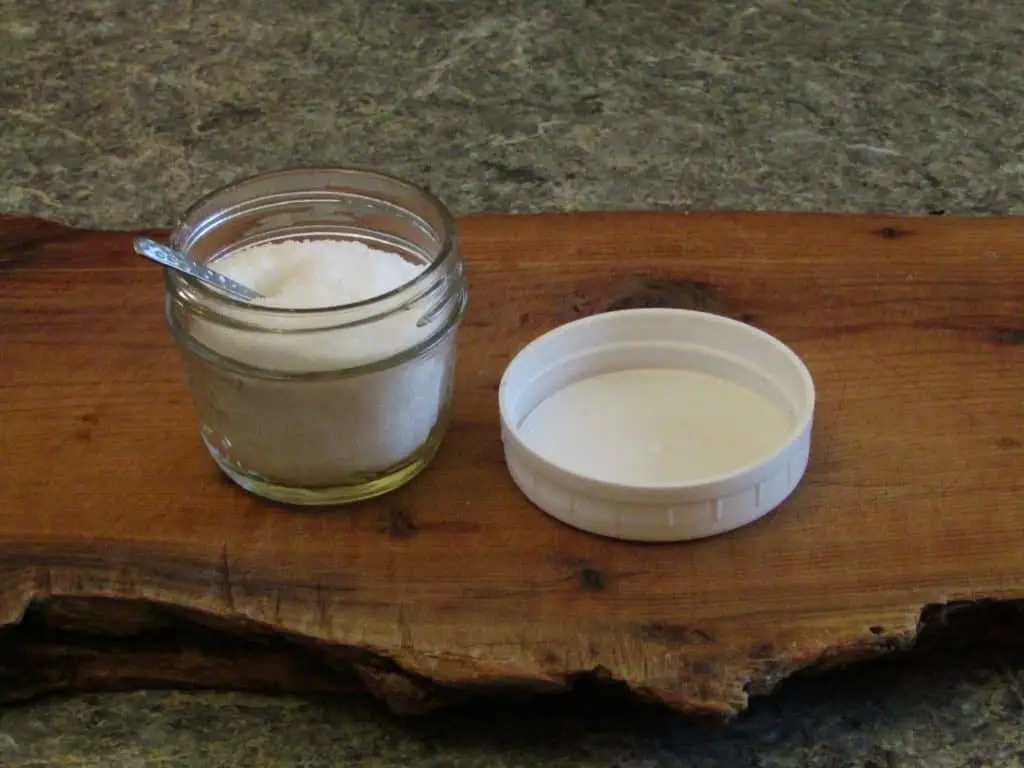
Jar of Salt

Commercial pickles are fermented in a high salt brine between 10-18%.  As the salt draws out the water from the cucumbers this salt concentration drops but it is important for commercial operations to try to maintain a salt brine of 12% to prevent spoilage bacteria from growing in the large vats.  

There are two reasons why you want to use a high salt concentration

Salt draws out water from the cucumber

The high concentration of salt acts as a liquid dehydrator.  The water in the cucumber which is low in sodium is pulled into the brine to equalize the pressure.  This has two effects:

  1. It makes the cucumber firmer due to less water concentration
  2. With the water some of the fermentable sugar comes along with the water

With less sugar in the cucumber there is less microbial activity within the cucumber itself.  Microbial activity has a softening effect on the pickle because it produces high amounts of CO2 gas (the source of carbonation in kombucha soda, or sparkling wine).  

The problem with CO2 within the cucumber is the damage it causes the structure of the pickle. As the CO2 is produced it expands within the pickle and damages the supporting structure of the cucumber.

Salt prevents softening bacterial growth

Salt inhibits the growth of yeast and mold which are the main softening and spoilage microorganisms found in a pickle fermentation.  By inhibiting their growth the lactic acid bacteria has a chance to dominate the culture and properly acidify the pickles. 

There are two types of lactic acid bacteria:

Homo-fermentative – lactic acid bacteria which does not produce any CO2

Hetro-fermentative –  lactic acid bacteria which produces CO2

Since all yeast species produce damaging CO2 you want to reduce their population as much as possible and promote lactic acid bacteria which produces less CO2.

Control the fermentation temperature

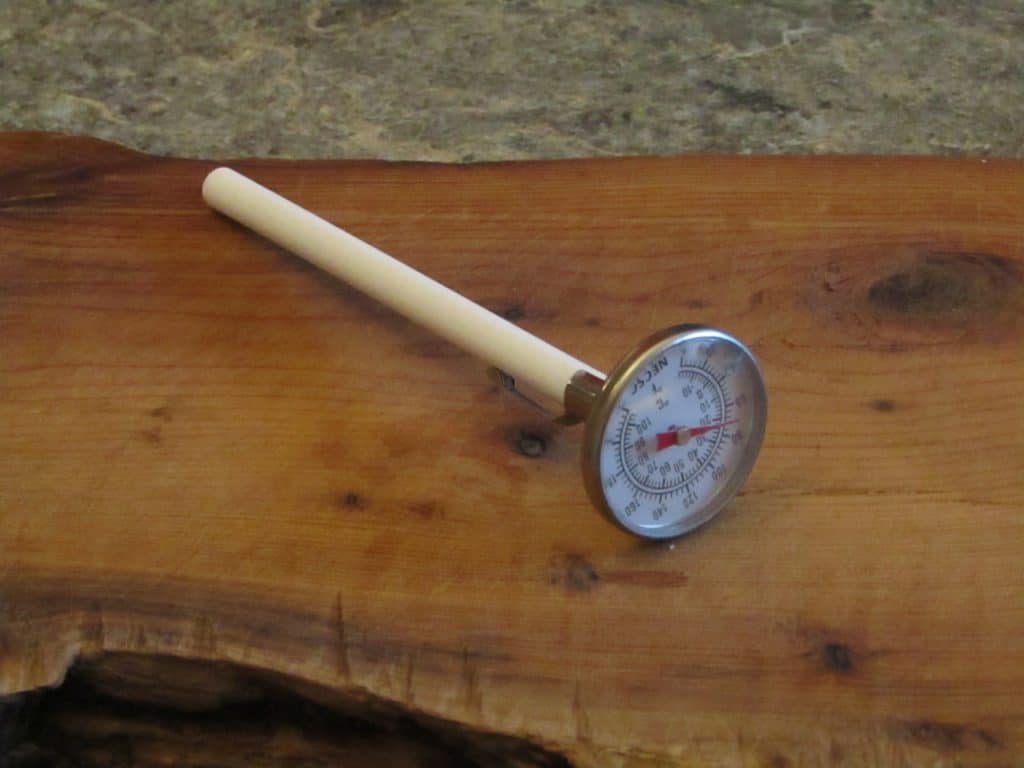
A thermometer

Just like fermenting cabbage in warm temperatures produces soft mushy sauerkraut fermenting cucumbers in warm temperatures produces mushy pickles.  Warm temperatures encourage the growth of microorganisms.

  1. The rate of CO2 production goes up

As the rate of CO2 production goes up the damage it produces within the cucumber increases.  A slow fermentation allows the gas to escape the cucumber without doing too much damage to the pickles structure.

  1. It gives the solution time to equalize 

Time is necessary for the sugar to be removed by osmosis as the salt draws out some of the water from the cucumber.

  1. Unwanted microbial growth 

Yeast and mold grow well in higher temperatures giving them the upper hand at the beginning stages of fermentation.  Once they have a foothold they will continue to dominate the culture breaking down the structure of the cucumber and producing off flavors.

Use some type of tannin

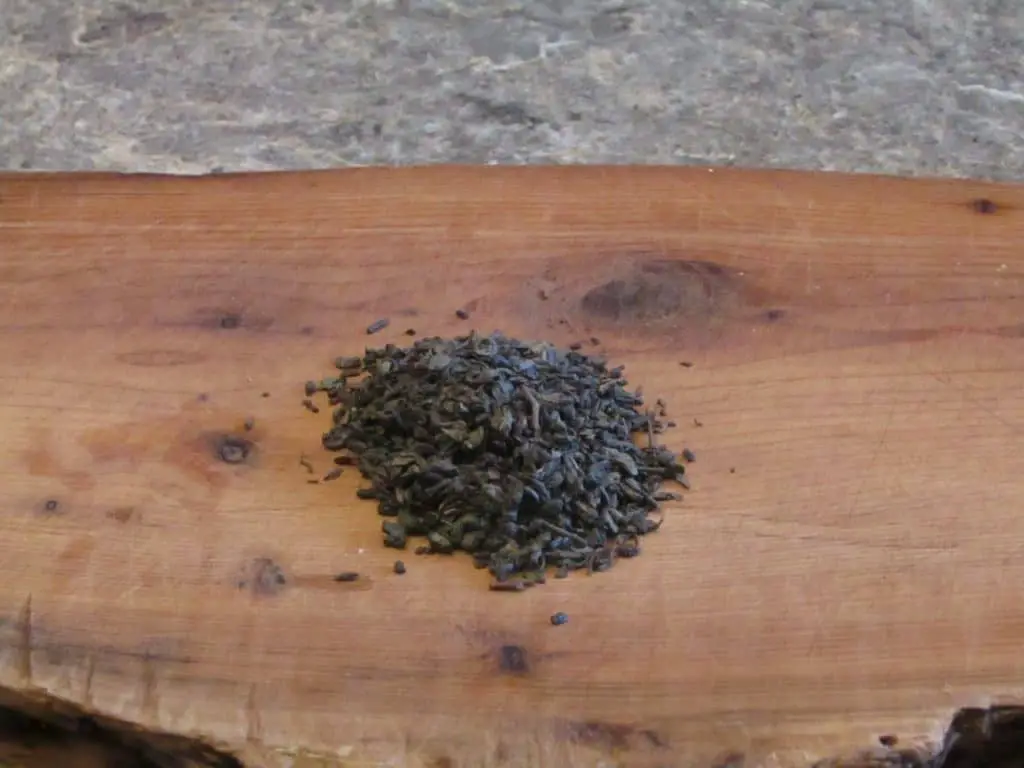
Tea leaves on a cutting board

This is done by the addition of an oak leaf, grape leaf, or tea.  Any leaf which is known for its high tannin content can be used but remember that the flavor of the leaf will be imparted into the pickles. 

Why this works

Proteins makeup a large part of the structure of a cucumber and without them the pickle becomes soft and mushy.  When tannins are added to the pickle jar they protect the proteins from damage by microbial action in two ways.

React with the proteins themselves 

The tannins react with the proteins making them more difficult to digest. The addition of tannin to the pickle jar protects the proteins which makeup some of the structure of the cucumber. 

Reduces the amount of active enzymes

Tannins also react with some of the enzymes produced by the proteins found in the cucumber.  These enzymes help to digest the proteins and are used by microorganisms in their metabolism of protein. 

With less enzymes more of the protein remains once fermentation is complete making for a firmer pickle.

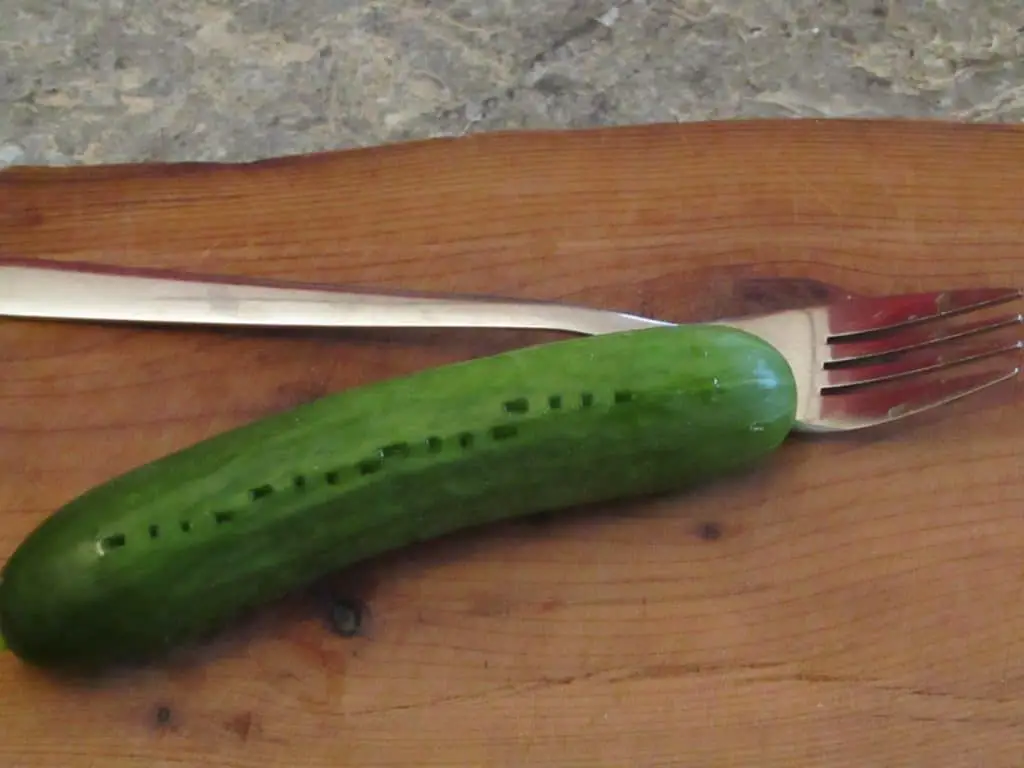
Puncture the cucumbers skin several times

Cucumber stabbed with a fork several times

This helps the salt to draw out the sugar and water from the cucumber.  The holes in the skin of the cucumber act as little doorways for the water and sugar to go through.  

Water is a smaller molecule than sugar which makes it easier for it to escape the cucumber so if the water is removed without some of the sugar the sugar concentration in the cucumber goes up causing the microorganisms to grow rapidly.

This breaks down the structure of the cucumber which leads to soft pickles.  The larger holes allow more of the sugar to escape which ferments outside of the cucumber producing the needed lactic acid in the brine which protects the pickles. 

Start with young cucumbers

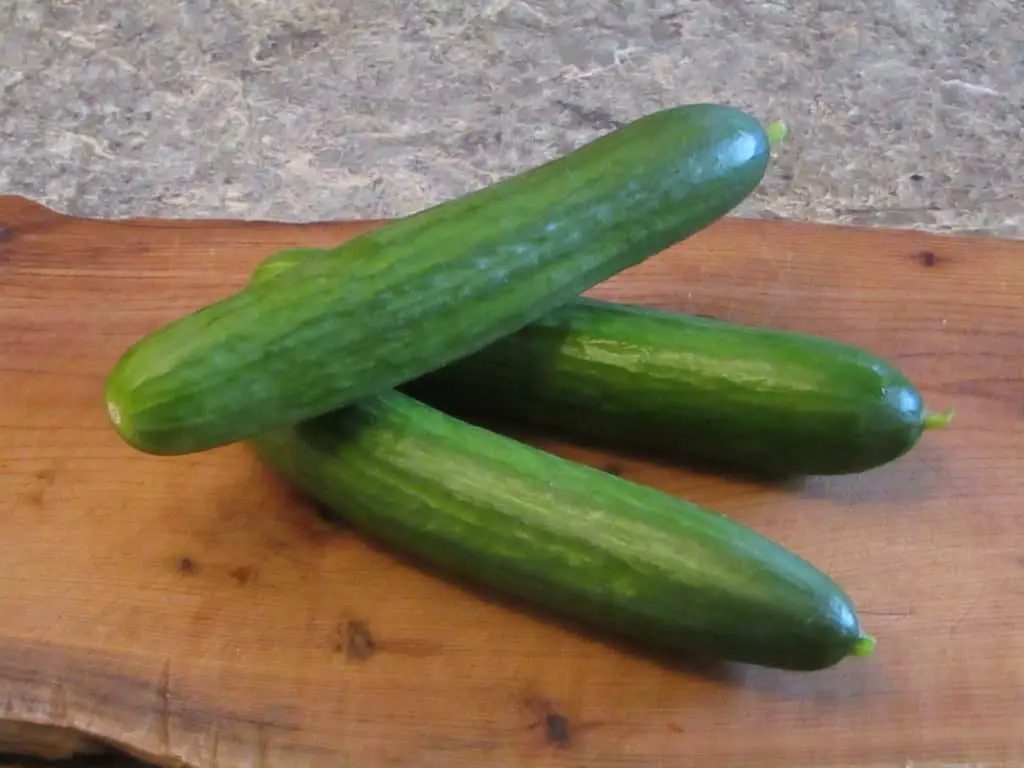
Three fresh cucumbers

Cucumbers are considered a vegetable in the kitchen but are actually in the fruit family.  They have their seeds for the next generation held in the cucumber and as a result rely on the same seed dispersion system that many other fruits have.  The fruit which once it is ripe is eaten by animals and the seeds are spread around the area where they sprout the next year.  

What does this have to do with pickles, well young cucumbers are unripe and still contain large amounts of long chain carbohydrates which form the structure of the cucumber.  These carbohydrates cannot be used by the lactic acid bacteria as fuel and remain untouched by microbial action, leading to a firmer crunchy pickle.

As the cucumber ripens the long chain carbohydrates breakdown into smaller molecules producing more sugar.   These ripe cucumbers make poor pickles because of the lack of structure within the cucumber.

Remove the blossom end of the cucumber

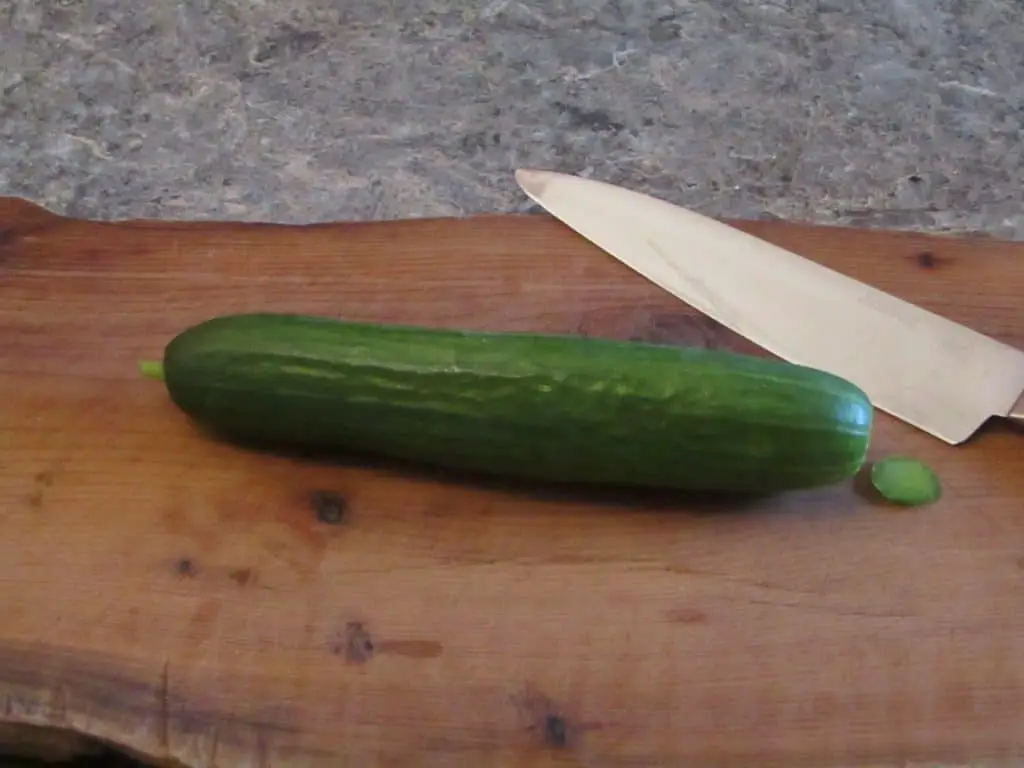
Cucumber with the blossom end removed

This may seem like an old wives tale but there is truth to it.  The blossom end of the cucumber is a path into the fruit which can be used by a variety of spoilage microorganisms.  Yeast species are the most prevalent in the blossom end and as the fruit ripens the population of the yeast increases substantially

By removing the blossom end of the cucumber you are cutting off and discarding some of the yeasts which can enter the cucumber while it is being pickled.  Without this yeast the cucumber remains firmer and the end product is a crispy pickle.

How Long Hot Peppers Can Be Fermented


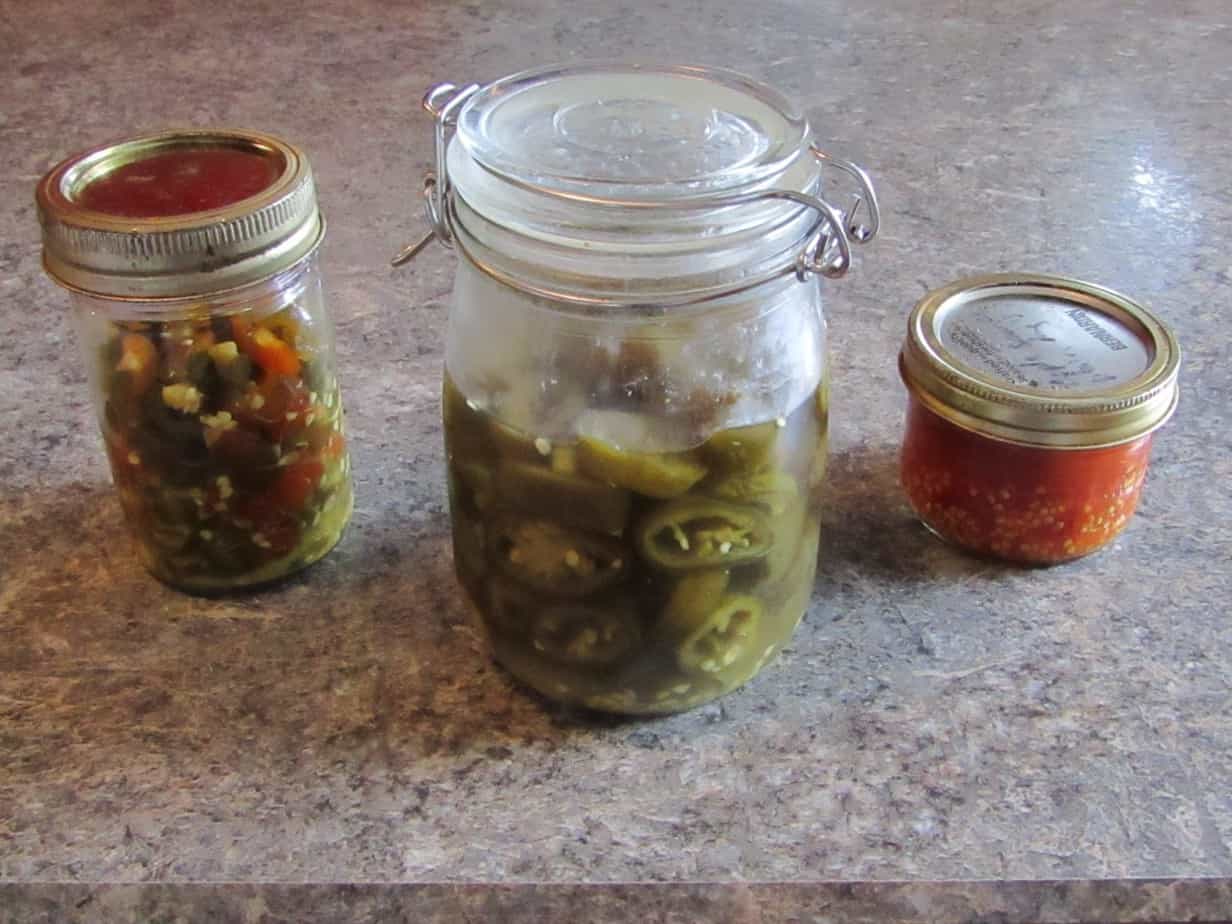
Three Jars of Fermented Peppers

Hot peppers are a fun and interesting fruit to ferment.  They come in a wide variety of shapes, sizes and temperature ratings.  The amount of sugar found in the fruit is the real determination of how long something will ferment.  The more sugars which are available the longer the fermentation can last (within reason).

Peppers will ferment for 14-60 days depending on the type of pepper and the environmental conditions.  Conditions which affect fermentation time include the method used, temperature and the availability of sugar and oxygen.

When discussing hot peppers we seldom consider the amount of sugar in the pepper itself rather we focus on the amount of capsaicin found in the pepper but when it comes to fermentation time the amount of sugar is the important thing to know.

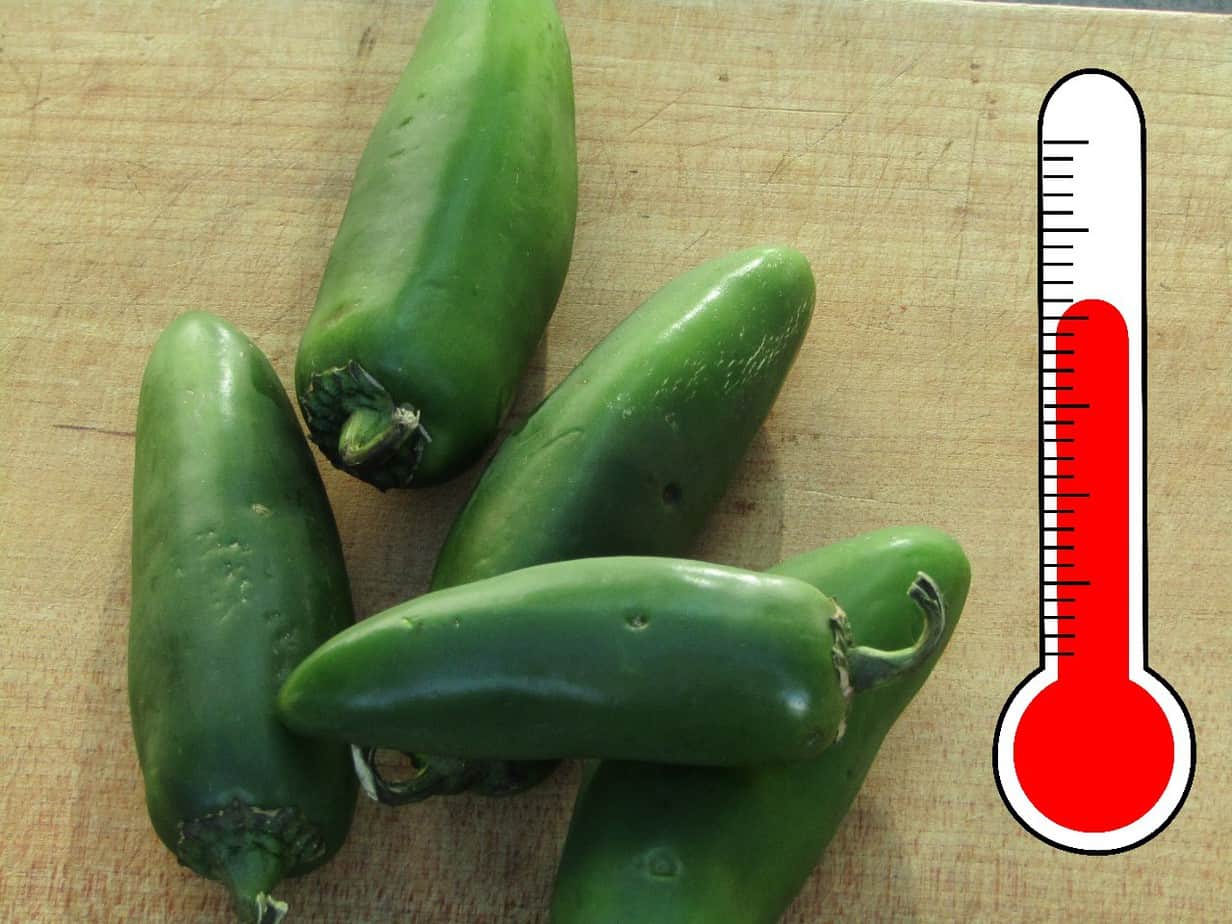
100 grams of jalapenos have a sugar content of 4.1 grams with a Scoville Heat Units (SHU) between 2500 – 5000 whereas 100 grams of cayenne peppers contain 10.0 grams of sugar with a SHU between 30,000 – 50,000.  Here is a chart showing the sugar content of a sample of hot peppers and the SHU range of each.

TypeSugar ContentScoville Heat Units 
Carolina Reaper5.3 grams2,000,000 – 2,200,000
Ghost pepper3.1 grams855,000 – 1,463,000
Habanero5.3 grams350,000 – 855,000
Scotch bonnet5.3 grams100,000 – 350,000
Thai hot peppers4.4 grams50,000 – 100,000
Cayenne10.0 grams30,000 – 50,000
Serrano 3.3 grams5,000 – 15,000
Jalapenos4.1 grams2,500 – 5,000
Anaheim 4.4 grams1,000 – 1,500

Once the active fermentation is complete the peppers will continue to change in flavor and texture.  This is due to the chemical compounds in the peppers reacting with one another and the sides of the container.  Some hot peppers are aged in wooden barrels for 3 – 5 years before they are made into sauce.  This ageing process allows the peppers’ flavor to change even though the fermentation process is complete after a month or two.

How long should peppers ferment?

This is like asking how long to cook a steak.  If you are making hot sauce you may want to ferment your peppers for a month or two.  If you want pickled Jalapenos then they will pickle in two to three weeks.  For a deep complex flavored hot sauce you can ferment your peppers for years.  

The length of time peppers should be fermented is determined by the desired end product and the pepper’s sugar content.  Fresh tasting hot sauce with a sharp flavor and higher amounts of capsaicin can be fermented in a week.  Longer aged peppers are less hot, less sweet with a more complex flavor.

Once the easily fermentable sugar has been consumed the fermentation process will slow down and essentially stop.  Once this happens the fermentation stage is complete and the maturation stage will begin.  This is where the esters and organic acids produced by the fermentation process will begin to react with one another and with the compounds which remain from the original peppers.

A long aging process mellows the flavors and gives the fermented peppers a chance to develop a flavor and texture quite different from the young ferment.  It is similar to the changes which occur in wine as it ages.

How to tell when your peppers have finished fermenting

Fermentation is a word which means to boil due to the active bubbles which are created as carbon dioxide is produced while something is actively fermenting.  This active fermentation continues as long as there is fuel for the various microorganisms to consume.  Fuels which are used in fermentation include simple sugars and alcohols which can be used by the yeast, lactic acid bacteria and acetic acid bacteria.  

The pressure method 

The pressure method is done by placing the peppers into a sealed environment and leaving them for a day or two to determine if the fermentation is still producing carbon dioxide.  Once there is not perceptible pressure buildup the peppers have finished active fermentation.

  1. Place the peppers into a sealable container and place the lid
  2. Place the container in a cool location out of direct light
  3. After 24 hours burp the lid. 
  4. If there is any pressure buildup or bubbles rising from the peppers they are still fermenting
  5. If there is no buildup, place the lid and leave it for two or three days before checking again
  6. Once you have reached a week without any pressure buildup the peppers have finished active fermentation 
  7. Place them into the fridge and consume at your leisure

The pH method

This method requires the use of pH strips or some other pH testing equipment.  They can be found in hardware stores for testing pool chemical pH.  With this method you are not testing to determine if the fermentation is complete instead whether it has a low enough pH to protect the peppers from spoilage bacteria.  Once a pH of 4.0 has been reached you can slow the fermentation down through refrigeration.

  1. Open the jar and dip the pH strip or probe into the liquid  
  2. Check the color of the pH strip 
  3. If it corresponds with a pH of less than 4.0 the peppers can safely be stored
  4. If it is still higher than 4.0, ferment the peppers another few days and check again.

A pH less than 4.6 produces an environment which inhibits the growth of unwanted spoilage bacteria so to be safe ensure the peppers have a pH lower than 4.5 (I like 4.0 to be extra cautious).  Once a low pH has been achieved the peppers will last a long time in the fridge.  Once in the fridge the fermentation process will slow so the production of carbon dioxide will slow and essentially stop.

The Taste test method

This is the least reliable method for long term storage but it is great for fermenting peppers which are going to be used quickly.  Although the peppers may not be fully fermented if they are going to be used within a short period of time, storing them in the fridge will ensure they will last a month without worry.

  1. After a week or so of fermentation taste a pepper
  2. If it has reached a level of tang you like place them in the fridge
  3. If not, ferment them another few days.

Peppers tested this way need to be consumed quickly so only make enough for a month or two and check for mold growth each time you use them. 

How do you know when fermented peppers are bad?

The great thing about fermenting vegetables of all types is that it is a very safe method of preserving food for long time storage.  The fermentation process prevents unwanted spoilage and harmful bacteria from growing in the food but this does not mean that they will last forever or the fermentation process is infallible.

Fermented peppers that have gone bad have a distinctive off smell and may have mold growth on its surface.  The peppers will take on a mushy texture and may form large amounts of sediment on the bottom of the container.  The pH will also begin to rise as spoilage bacteria begin to dominate.

Do not consume peppers which have mold spots.  Mold will be growing on the surface of the container or peppers, will have a fuzzy look and send ‘roots’ into the peppers.  Not all mold is harmful or produces unpleasant flavors but don’t take the chance and pitch any container which has mold growth.

Can you ferment peppers without salt?

Salt is used in lacto fermentation to prevent the growth of unwanted bacteria, yeast and mold which can alter the flavor of the final product.  Lactic acid bacteria are highly salt tolerant whereas most other bacteria found on peppers (and other fruits and vegetables) are not salt tolerant.

Peppers can be fermented without salt to produce vinegar using acetic acid bacteria and yeast.  The vinegar will have varying amounts of capsaicin depending on the type of pepper used and the amount of sugar used to produce the vinegar.

The end product here is not the peppers themselves but the liquid which the peppers have been fermented in.  You can use any type of peppers.  Each type has a unique flavor and heat profile.

Three Reasons Why Your Homemade Yogurt is Sour


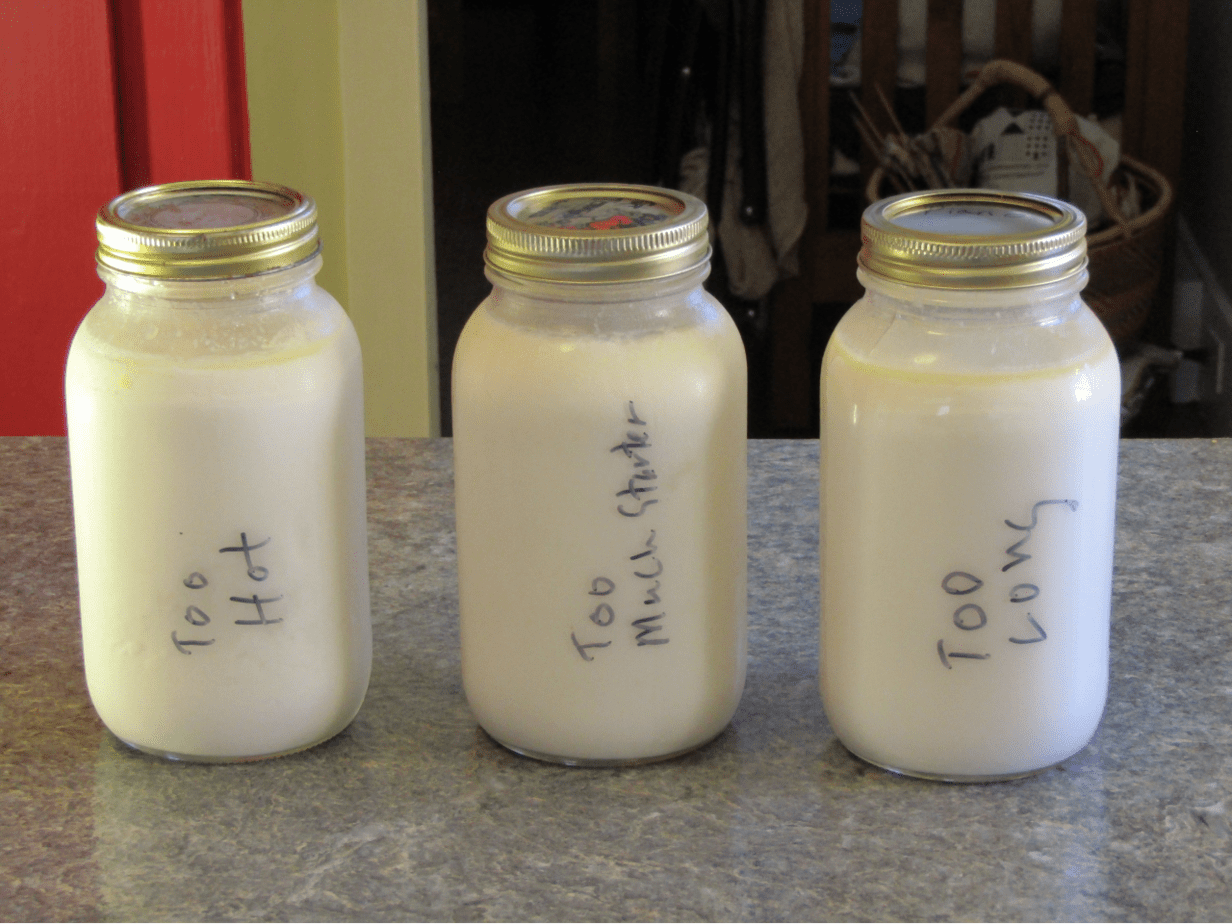
Three Mason Jars filled with yogurt

Yogurt has a slightly tangy flavor accompanied by sweetness from the leftover sugar in the milk so when you add it to a bowl of fruit or on top of cereal it provides a nice tangy addition to the flavor.  But sometimes it can be overly tangy, making your mouth pucker and totally over power the other flavors in a recipe.

Homemade yogurt can become sour by a long fermentation time, warm temperatures and over inoculation. These conditions encourage lactic acid bacterial growth which use more milk sugar producing lactic acid.  The reduction of sugar with a corresponding increase in lactic acid makes sour yogurt.

Any one of these conditions can have a great effect on how sour your yogurt will get.  It takes a while to perfect your yogurt making technique so that you get a yogurt which you like.  For some it is a slightly sweet yogurt with lots of remaining lactose and for others it will be a sour yogurt with little lactose and high amounts of lactic acid.

How fermentation time can make sour yogurt

Yogurt is a living fermentation which continues even after it has been refrigerated.  The lactic acid bacteria which make up the culture uses the lactose in the milk as food energy and produces lactic acid.  

As the lactic acid level increases the proteins in the milk gel with other components on the milk and the yogurt thickens.  This happens once the milk has reached a pH of 4.6.  Once the milk has thickened it can be considered yogurt and refrigerated to slow the fermentation down.  This results in a sweet tangy yogurt which is high in milk sugar (lactose) as the lactic acid bacteria have not had a chance to consume all the sugar in the milk.

As fermentation time increases, lactic acid bacteria consume lactose in milk and produce lactic acid.  Lactic acid bacteria can rapidly consume large amounts of lactose in a short period of time and left long enough most lactose will be used to make lactic acid making for sour yogurt.

There are other affects time has on your yogurt beyond the pH of the milk. To learn more about the full effects of incubation time checkout this article.

How temperature affects how sour yogurt will become

Another factor which affects the growth of lactic acid bacteria is temperature.  Warmer temperatures encourage the rapid growth of lactic acid bacteria.  This rapid growth uses a lot of energy which is supplied by the lactose in the milk.

With an optimal growth temperature range for yogurt is 108℉ to 115℉ (42℃ – 45℃).  When you ferment your yogurt at the  high side of the temperature range it encourages the bacteria to grow exponentially and can convert high amounts of lactose to lactic acid in a short period of time.

Outside of this range the lactic acid bacteria will have problems multiplying. A cooler temperature will slow its growth which can lead to unwanted microorganism growth causing off flavors and spoilage.  Once the temperature surpasses the 115℉ (45℃) the lactic acid bacteria will begin to die off leaving room for higher temperature tolerant microorganisms to grow.  These include yeasts and some molds.

How over inoculation affects how sour yogurt will become

It is the lactic acid bacteria which are the star players in yogurt production.  In the other two conditions it was the growth of the bacterial colony which was discussed.  With more time the colony can grow larger and in warmer conditions the colony multiplies faster.  

Using a large amount of starter culture, whether it is fresh store bought yogurt, powdered yogurt starter or a heirloom yogurt culture, shortens the fermentation time. The high amount of active lactic acid bacteria consumes the lactose quickly which sours the yogurt.

Here you are just starting with a large colony to begin with!  It does not need to grow rapidly or have extra time to increase in numbers.  When lactic acid bacteria are put in an environment which is conducive to growth it will multiply quickly and consume large amounts of sugar in the process.  With a large initial colony this multiplication progresses quickly, essentially jump-starting the fermentation process.

Other reasons why homemade yogurt can get overly sour

Using milk with a high sugar content

Not all milk has the same amount of lactose in it. Skim milk has a higher lactose content than homogenized milk.  Lactose is the sugar which the yogurt culture uses to acidify the milk.  The more sugar in the milk the higher amount of lactic acid the culture can make.

To make a highly sour yogurt use low fat milk and incubate a bit longer.  This will give the lactic acid bacteria time to acidify more of the lactose and produce more lactic acid as a result.

Milk was too old

Milk which has been around for a while will have increasing amounts of bacterial species growing in it.  Pasteurization at the source of milk production helps to control the amount of spoilage bacteria in the milk (including several species of lactic acid bacteria) but it does not eliminate them entirely.  

As a result in time they begin to multiply and consume the lactose in the milk.  This makes the milk pre-acidified before you even start the yogurt making process and as a result can produce overly sour yogurt.

Several conditions combined

It may not be that you are fermenting your yogurt overly long or at too high a temperature or with too much starter.  It may be a combination of all three.  Small changes in these three conditions favoring the microbial growth can drastically change the acidity level or the yogurt.

How to prevent homemade yogurt from becoming too sour

Keep a log

If you are consistently getting yogurt which is too sour for you then start keeping a log which records the three main players in the game: temperature, time and inoculation volume.  When you have a log you will be able to adjust one of these three conditions and gage the result.  If it is still not to your liking you can adjust other factors.  

Once you have a yogurt you like it will be easy to reproduce regularly and if you get a batch which is not what you want you can tell which of the three conditions changed.

Milk was heated too long or at too high a temperature

Heating the milk before making it into yogurt is an important step for making thick flavorful yogurt.  It affects the proteins in a positive way enabling them to react with one another better but it also reduces the pH of the milk (makes it more acidic).  

The acidity level of the yogurt is one of the conditions which your taste buds register as sourness.  By heating the milk too long you pre-acidify the milk a little which can be distinguishable from milk which has been heated a shorter time or at a lower temperature.

Automate the process

When most people start making yogurt they start with a jar and some type of makeshift incubation chamber.  These are varied from ovens with the pilot light on to coolers with hot water bottles but all these makeshift chambers are hard to control and temperature can vary from batch to batch.

To prevent this, invest in a yogurt maker or temperature controlled incubation chamber.  These are great for controlling the temperature which tends to be the hardest variable to control.  

Yogurt makers come in all shapes and sizes from simple insulated chambers to plugin appliances which control the temperature over a long period of time.  They can be found at kitchen supply stores or online.  

Other methods of automation include having dedicated tools for making yogurt such as measuring cups for the amount of milk and starter, the container(s) for fermenting the yogurt and mixing utensils for ensuring the starter is evenly mixed.   

Benefits of making sour yogurt

For some people sour yogurt is the end goal.  Making sour yogurt ensures a low amount of lactose in the yogurt which is good for those who are lactose intolerant.  It also keeps longer, makes better tangy greek yogurt and is great for savory recipes.

Sensitivity to lactose

Some people have a hard time digesting the milk sugar found in dairy products, even commercially fermented milk products like yogurt or sour cream but if the milk is fermented for a long period of time the amount of lactose left in the milk is small enough to allow them to digest it with no problem. To learn more about low lactose yogurt checkout this article here.

Yogurt of this type is regularly fermented for 24 hours or longer.  This gives the lactic acid bacteria enough time to reduce the lactose content in the milk enough to make it digestible but it also sours the yogurt much more than normal yogurt.

To help the sour taste use higher fat milk.  The high fat content in the milk tends to smooth out the sour flavor giving the yogurt a more creamy texture and buttery flavor which masks some of the sour flavor in the long fermented yogurt.

Yogurt for non-refrigerated conditions

Before refrigeration was available ambient environmental temperatures caused milk to spoil quickly.  Making yogurt was a method of milk preservation.  Lactic acid bacteria acidified the milk which protected it from spoilage, producing an environment not conducive for spoilage microbial growth.

Today taste trumps longevity and we prefer a sweeter product.  In fact we often add sugar to the final product with fruit on the bottom yogurt or vanilla flavoring with added sugar. Yogurt which has a low pH and low sugar levels will last longer than yogurt which is sweeter with a higher pH.  It is the acidity level and lower amount of easily consumable sugar which increases the shelf life of the yogurt.

Quick Bread baking 

Quick bread baking uses a chemical reaction to create the rising effect.  The reaction of the rising agent like baking powder or baking soda with the acid in the liquid part of the batter produces CO2 which gets caught in the thick batter causing it to become fluffier.  

When you use sour yogurt as a replacement for the milk in the recipe there is more acid available to react with the baking soda or powder.  This is the same effect you get when using buttermilk for buttermilk pancakes.

Does Vinegar Kill Fermentation Bacteria and Yeast?


three bottles of different types of homemade vinegar

There are few things in the kitchen which are as versatile as vinegar.  It is used in recipes, cleaners, food preservation, sanitation and in some cases even medicine.  It is prevalent in almost everything in the kitchen and has even made it to the garden by way of weed killer!

Acetic Acid (vinegar)  in concentrations of 3% w/v essentially kills yeast fermentations.  Vinegar at concentrations above 0.6% w/v have inhibitory effects on growth of brewers yeast and some spoilage bacterial species at a concentration of 3% w/v but does not adversely affect lactic acid bacteria.

Vinegar can be used to slow or stop fermentation when used in high enough concentrations but in most cases vinegar is used to provide inhibitory effects on spoilage microorganisms in the first stages of fermentation.

How Vinegar Effects Yeast Fermentations

Vinegar is the bane of alcoholic fermentations.  If it begins to form in an alcoholic medium it can cause spoilage quickly by lowering the pH and the alcohol content.  This is why the beer and wine industries go through such extreme measures to prevent the growth of acetic acid bacteria in their products.

Acetic acid (vinegar) inhibits the growth of yeast by causing yeast cells to use energy on repair rather than growth and by altering specific chemicals within the cell to signal cell death.  Yeast is affected by vinegar depending on food availability, temperature and the pH of the solution. 

Not only does live acetic acid bacteria sour a fermentation but even the presence of vinegar in a yeasted fermentation has negative effects on the fermentation process.  Yeast species are varied and can survive in varied conditions from elevated temperatures to high ethanol concentration.  Most yeast species are negatively affected by the presence of acetic acid.

Effect of low to high acetic acid concentrations on yeast

When yeast is present in a low acetic acid solution it has to protect itself from the detrimental effects of the acid.  It does this by increasing its activities to strengthen its cell membrane and repair its mitochondria.  As a result of this there is less energy to spend on energy intense activities such as cell duplication.  This reduces the growth rate and the fermentation slows.

Low acetic acid concentrations are affected more when the temperature of the fermentation is higher.  This could be due to increasing the acid activity on the cell membrane requiring additional energy expenditures on healing activities.  

As the pH of a solution drops the action of the acid on the cell membrane increases, requiring more energy to be spent on repair and defence until the yeast can no longer absorb enough energy to keep the process going and it dies.

Effect of acetic acid on programmed cell death in yeast

The concentration of the acid does not explain all of the inhibitive effects of acetic acid on yeast fermentations.  There is another process involved which has been studied which may account for some of the discrepancy.  

Programmed cell death or apoptosis is where the cell may still have enough energy to continue to survive but becomes too damaged to repair itself.  Acetic acid can penetrate the cell membrane and alter the chemical balance in particular ways.  This leads to the mitochondria of the cell to decide to produce natural killer chemicals which can trigger cell death.  

How Vinegar Effects Bacteria Fermentations

The bacterial tolerance of acetic acid depends on the type of bacteria and the environmental conditions in which it is found.  Some bacteria are very sensitive to acid whereas some are highly tolerant to low pH solutions.

The Effect of Vinegar on Acid Sensitive Bacteria

Many types of bacteria are sensitive to acetic acid and are strongly inhibited once the pH drops to below 4.0.  This is why a pH below 4.5 for long term food storage is recommended.  Unwanted bacteria not only spoil the food but can also be toxic.  The use of vinegar to pre-acidify a fermentation is a common method of protecting a ferment from spoilage in the early stages.

How Vinegar Affects Acid Tolerant Bacteria

Acetic acid is produced by a family of bacteria called acetic acid bacteria (surprising I know).  This type of bacteria is very tolerant of acetic acid.  Unlike yeast which produces alcohol as a waste product, acetic acid has the ability to use acetic acid as energy.  This happens in vinegar solutions when all other sources of food energy are consumed.

Other types of acid tolerant bacteria like lactic acid bacteria are unaffected by acetic acid due to their ability to resist low pH solutions which they also produce to protect their environments from unwanted competitive bacteria.  Lactic acid bacteria and acetic acid bacteria are frequently found together in traditional fermentations like kombucha, kefir and sourdough.

Not all acid tolerant bacteria are beneficial.  Some species like E. coli can cause sickness as well as food spoilage.  Adding vinegar to fermentations does not prevent the growth of these types of bacteria so other methods of preservation need to be present to ensure safety.

Fermentations like kombucha, kefir and vinegar production use other environmental conditions to prevent the growth of unwanted bacteria.  To learn more about how fermentation improves the safety of food read Is Food Fermented with Yeast and Bacterial Cultures Safe.  The addition of vinegar to unfermented food without further processing (whether by intentional environmental control or through pasteurization) is unsafe and can lead to sickness.

How Vinegar Can be Used to Ferment Vegetables

Although vinegar is a product of fermentation it does not act as a fermentation medium for vegetables.  The use of vinegar in fermentation is limited to its inhibitory effect on unwanted microbial growth in the first stages of fermentation and for adding flavor once a fermentation is complete.

Vinegar can be used in vegetable fermentations to reduce the chances of mold and yeast growth in the early stages of fermentation.  Vinegar reduces the pH of the substrate making it harder for unwanted microbes to grow.  

Vinegar is used to pickle vegetables by submerging the vegetables in a vinegar solution and pasteurizing the container to prevent spoilage bacterial growth.  This is not the same as fermenting the vegetables.  Fermentation only happens when there is microbial growth in the vegetables.

This is a common misconception when fermenting vegetables, especially recipes which include tomatoes or peppers (which are actually fruits).  The recipe usually reads something like:  “Add two tablespoons of raw vinegar to add live probiotic bacteria and to help prevent mold growth.”  Only half of that is true.

Vinegar in concentrations of less than 3%, raw or otherwise, prevents the growth of mold and other unwanted bacteria in vegetable fermentations due to its acidic nature but live acetic acid bacteria in finished vinegar are very low in number and cannot qualify as a probiotic.  In fact there will be more live acetic acid bacteria found on the vegetables themselves than in raw vinegar.

Vegetable fermentation is done in anaerobic conditions in a salt brine.  This prevents the growth of acetic acid bacteria and other bacterial and yeast species.  The fermentation of vegetables is done by lactic acid bacteria which is both salt tolerant and anaerobic.

Fermentations which use Vinegar 

Vinegar is prevalent in fermentation not only as a product of fermenting ethanol with acetic acid bacteria but as an ingredient to help protect a fermentation in the early stages. 

Recipes which use Vinegar as an Inhibitory Agent

  1. Fermented tomato salsa
  2. Ketchup
  3. Moustard 
  4. Fresh Fruit Vinegar
  5. Fermented Italian Tomato Sauce
  6. Wine Vinegar